Questions Answered
Battery Backup
Real R&D + Manga
Frequently asked cave questions
FAQ
Solar Man Cave is part real ABC Solar R&D history, part manga comedy, and part practical explanation of battery backup, critical loads, peak rates, solar thermal, and blackout-proof comfort.
Start here
Solar Man Cave FAQ
Solar Man Cave is the story of a real ABC Solar research and development shed, now expanded into a manga comedy about solar batteries, blackout-proof comfort, critical loads, mini-fridges, SCE rate tantrums, and one ridiculous room that still works when the grid goes dark.
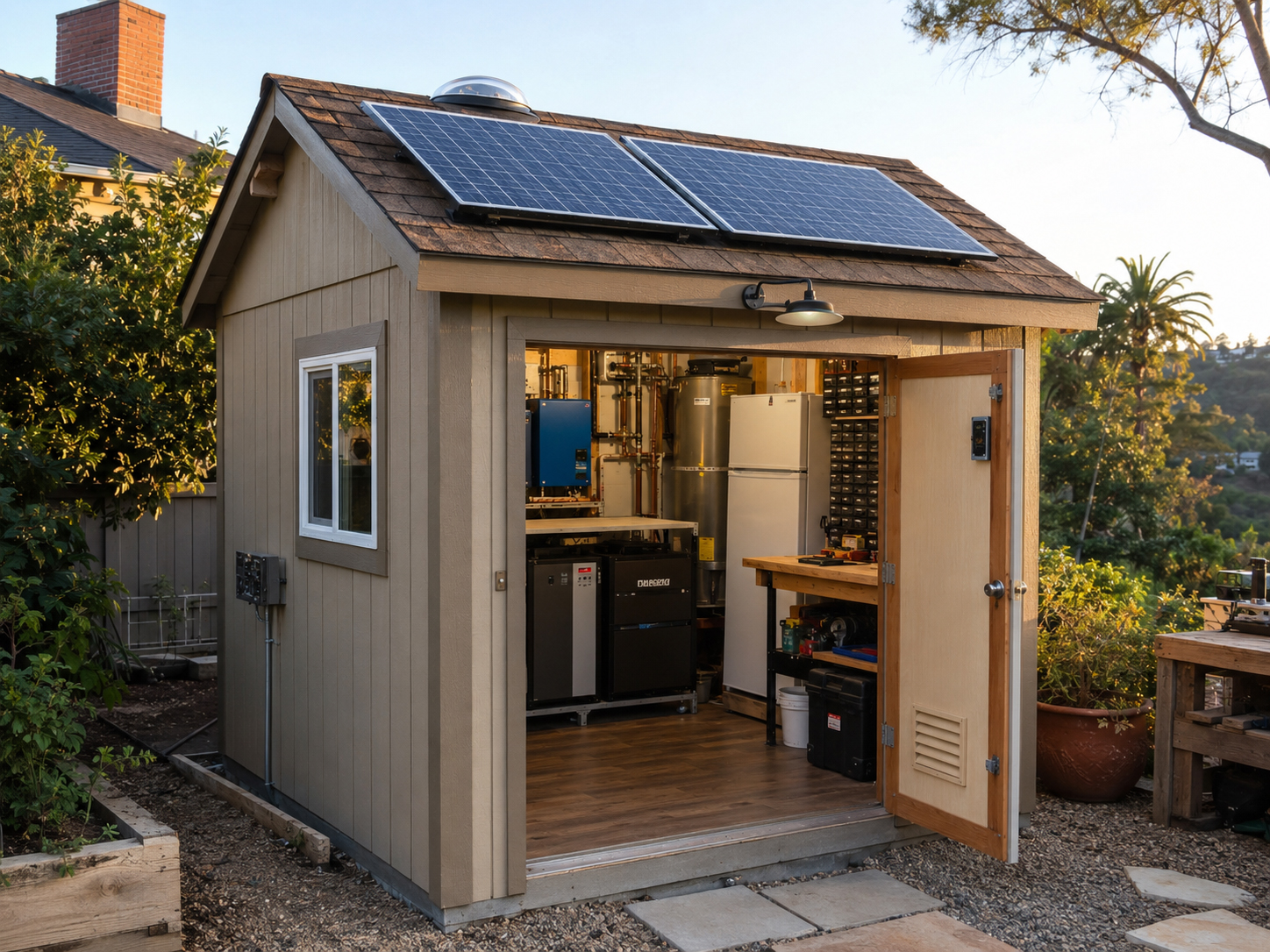
Yes. The original Solar Man Cave was an 8' x 10' ABC Solar R&D shed used to test practical renewable-energy ideas: solar panels, batteries, inverter equipment, DC refrigeration, solar thermal storage, hot-tub systems, pumps, and off-grid fire-protection thinking.
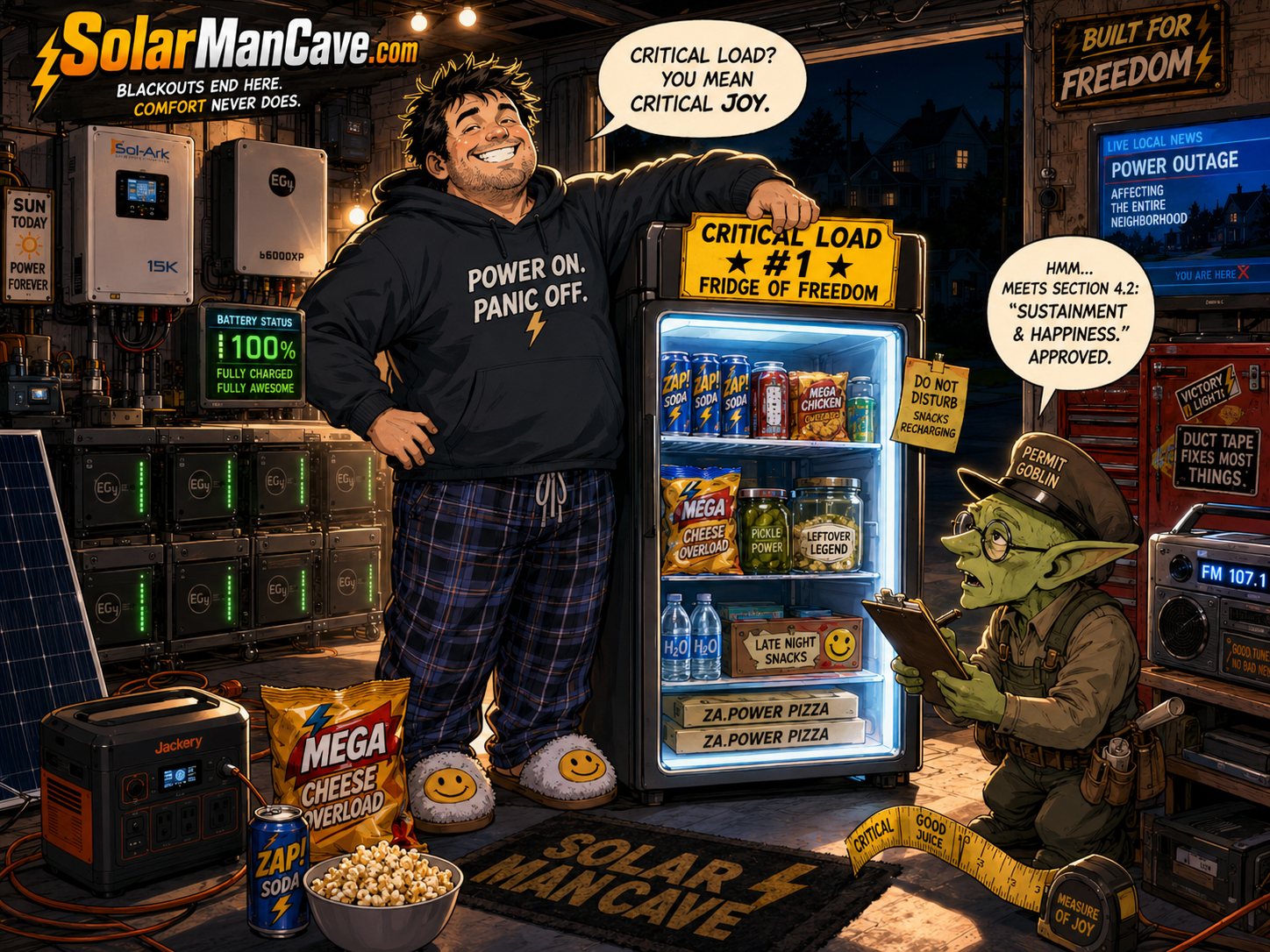
Because the comedy makes technical ideas easier to remember. Captain Recliner explains comfort loads. Madame Kilowatt explains peak-rate pain. The Permit Goblin explains inspection and load proof. Tomoko Reality Check explains design honesty. The battery wall explains storage and runtime.
A critical load is a circuit, appliance, or device selected for battery backup. Common examples include refrigerator, freezer, selected lights, modem/router, medical equipment, pumps, controls, garage access, and safety equipment. Solar Man Cave also talks about comfort loads, like TV, gaming, home theater, and mini-fridge, as long as they are honestly sized.
Usually it is a comfort or morale load, not a true emergency load. That is the joke. But refrigeration itself can be very important. The original Solar Man Cave used a SunFrost DC refrigerator/freezer, which is the serious ancestor of the mini-fridge comedy.
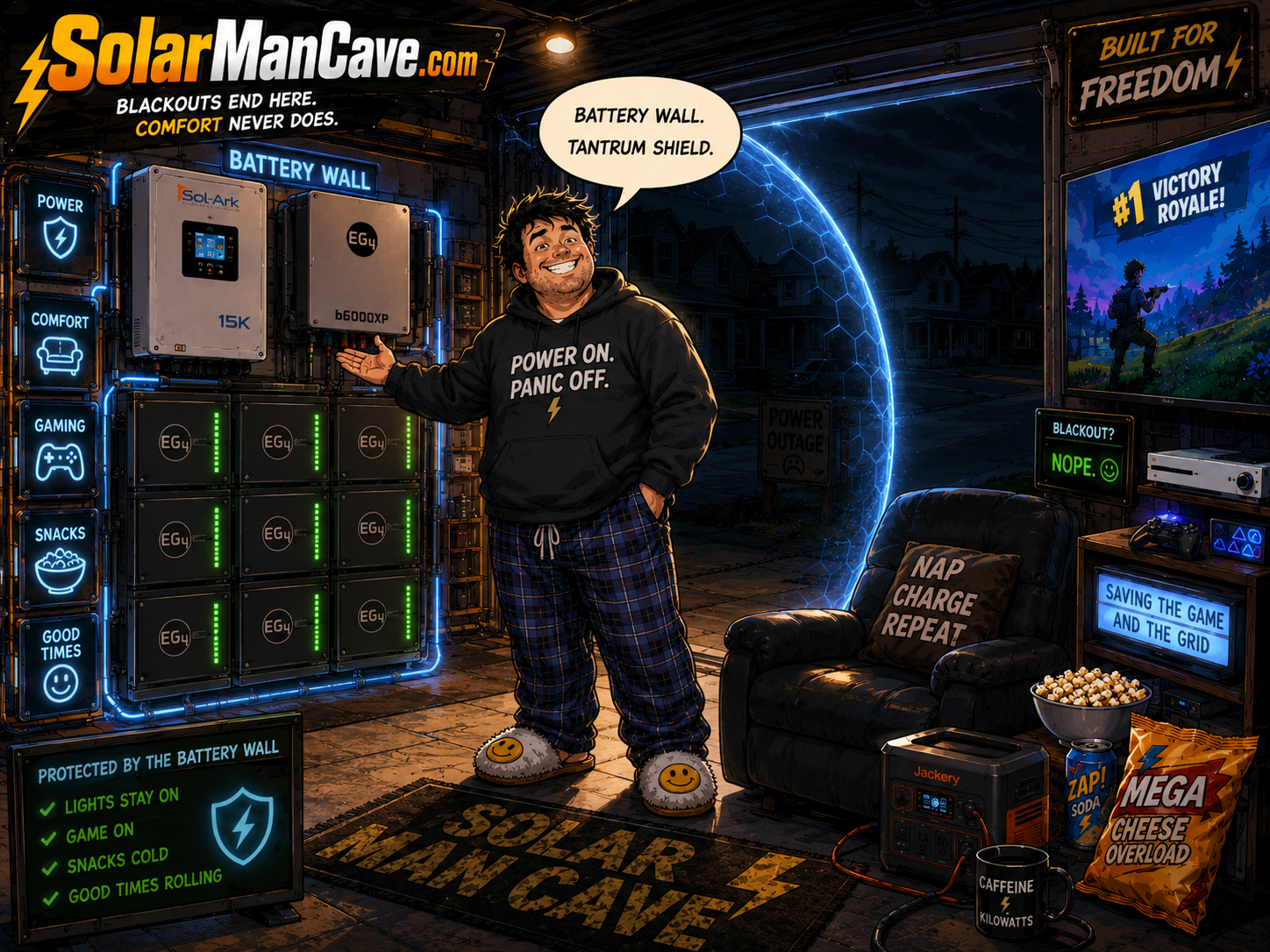
The battery wall stores energy so selected loads can keep running when grid power fails or when stored solar energy is useful during expensive time periods. It does not run everything forever. It protects chosen loads for a designed runtime.
Sometimes, depending on system size, load behavior, inverter capacity, battery capacity, and customer expectations. But Solar Man Cave focuses on the more honest question: what should be protected first? Refrigerator, Wi-Fi, lights, pumps, controls, tools, or comfort rooms?
Runtime is how long the battery can support selected loads. Runtime depends on how much energy the battery stores and how much power the protected loads use. Add more loads, and runtime drops unless battery capacity increases.
Solar can recharge batteries when the system is designed to do that, but production depends on sun, season, weather, shading, panel size, and how much energy the loads are using at the same time.
Because rate pain is real. The SCE Rate Tantrum turns utility bill frustration into a practical conversation about timing. Solar produces during the day. Loads often rise later. Batteries can help shift stored solar energy into more useful or expensive hours.
Madame Kilowatt is the manga villain of peak-rate electricity. She appears when the house wants power and the bill wants revenge. Her purpose is to make time-of-use rates and evening electricity cost easier to understand.
Captain Recliner is the defender of comfort loads, cup holders, snacks, screens, and blackout-proof dignity. His real lesson is prioritization: not every load gets protected just because the cave owner wants it.
Tomoko Reality Check is the character who keeps the comedy honest. Her core line is: “This is not a cave. This is an emotional support utility room.” She reminds the cave owner that battery backup needs priorities, not fantasy.
The SunFrost DC refrigerator/freezer was part of the real Solar Man Cave R&D setup. It showed how solar and battery power can support practical cold storage, and it gives the modern mini-fridge jokes real engineering credibility.
The hot tub system explored solar thermal energy: storage tank, collectors, plumbing, pumps, heat exchange, circulation, and comfort. It showed that solar is not only about electricity. Solar can also move and store heat.
The off-grid fire station control hub is the serious resilience side of Solar Man Cave. It connects stored solar energy to pumps, pressure, valves, water reserve, controls, and sprinkler defense concepts.
Yes, if the system is designed around real garage loads. Garage lighting, tool chargers, garage-door access, freezers, workbench equipment, and controls can be protected, but tools and motors may have startup demands that need proper sizing.
Yes, as comfort loads, if the customer understands the tradeoff. Screens, consoles, audio equipment, Wi-Fi, lights, and snack loads use battery capacity. They can be included when the system is sized for them, but essential loads should usually come first.
Name the loads. Size the battery. Respect runtime. Tell the truth before the outage does.
Best next pages
Read these three next.
These pages explain the main Solar Man Cave logic: how it works, battery backup, and critical loads.