Peak Rate Comedy
Battery Timing
Utility Bill Shock
When the bill attacks
SCE Rate Tantrum
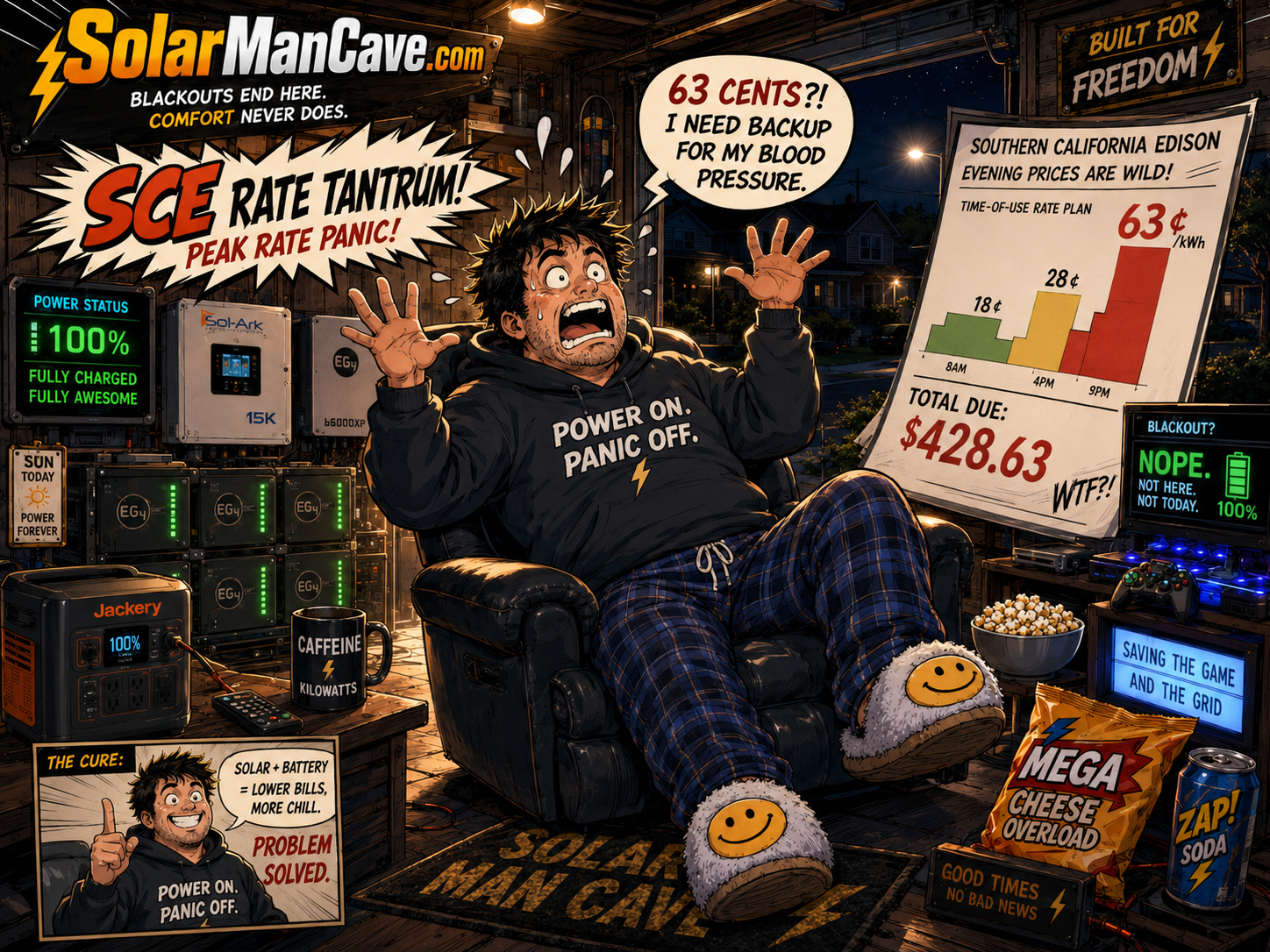
The SCE Rate Tantrum is what happens when a man cave owner sees peak-rate electricity on the bill and realizes his blood pressure may need battery backup too. The comedy is loud. The storage lesson is real.
Peak-rate panic becomes useful
The tantrum is funny. The timing problem is serious.
The SCE Rate Tantrum is one of the core Solar Man Cave episodes because it turns utility bill frustration into a character moment. The cave owner sees the bill, sees the peak-rate pain, sees the evening electricity cost, and reacts with the emotional discipline of a cartoon volcano.
That reaction is exaggerated, but the underlying issue is real: electricity timing matters. Solar produces during the day. Many homes use power heavily later. If the customer pays more during evening periods, storage can become a timing strategy, not just a blackout strategy.
Why peak rates create drama.
A flat electric bill is annoying. A time-of-use bill is personal. The customer may use the same device at a different hour and get a different cost impact. That makes electricity feel less like a utility and more like a trap door.
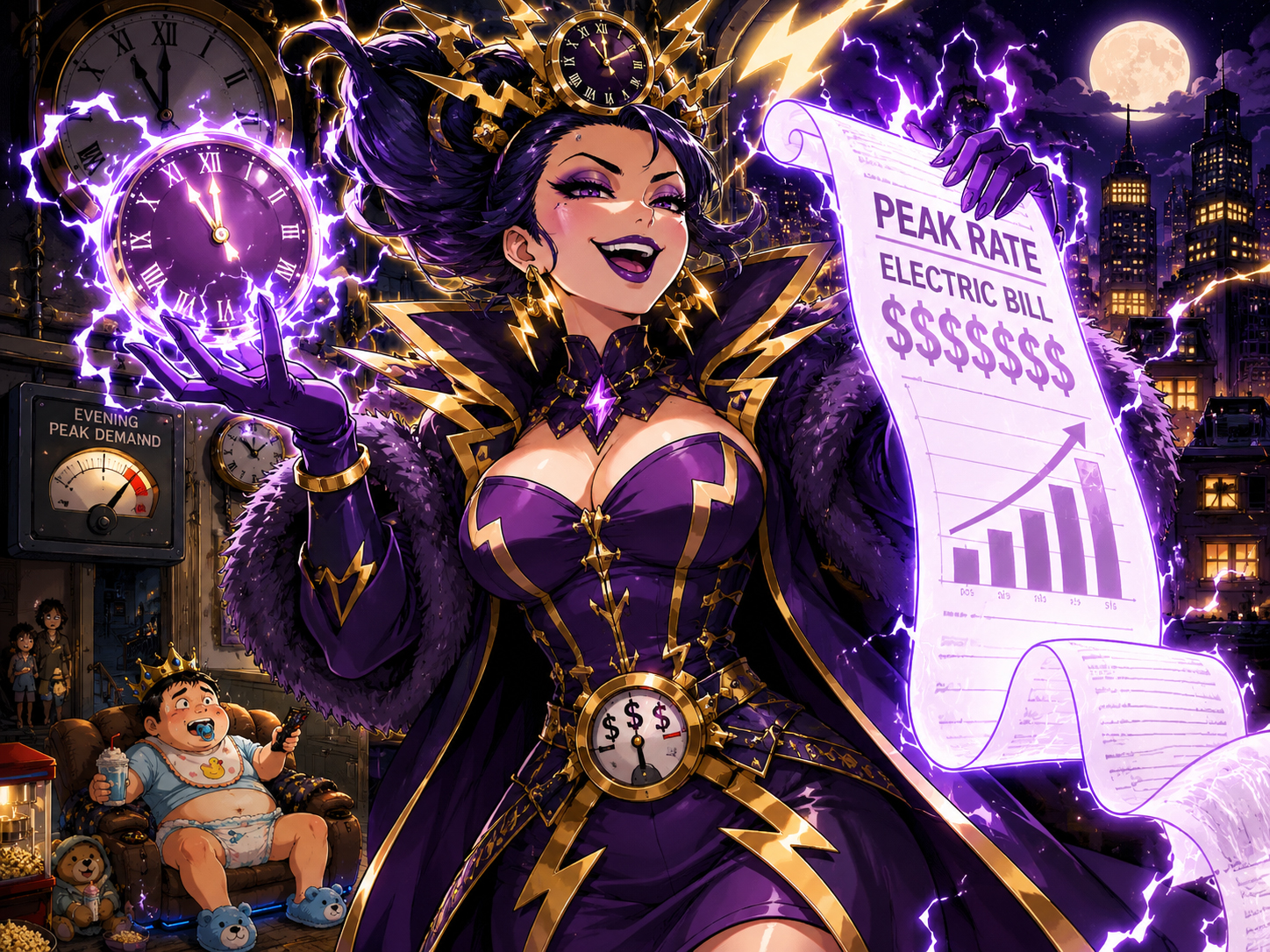
In the Solar Man Cave manga universe, that trap door has a face: Madame Kilowatt. She arrives when the sun is low, the house is busy, and the cave wants comfort. The owner responds with the SCE Rate Tantrum.
Peak rates are not just expensive. They are badly timed.
The battery wall changes the timing.
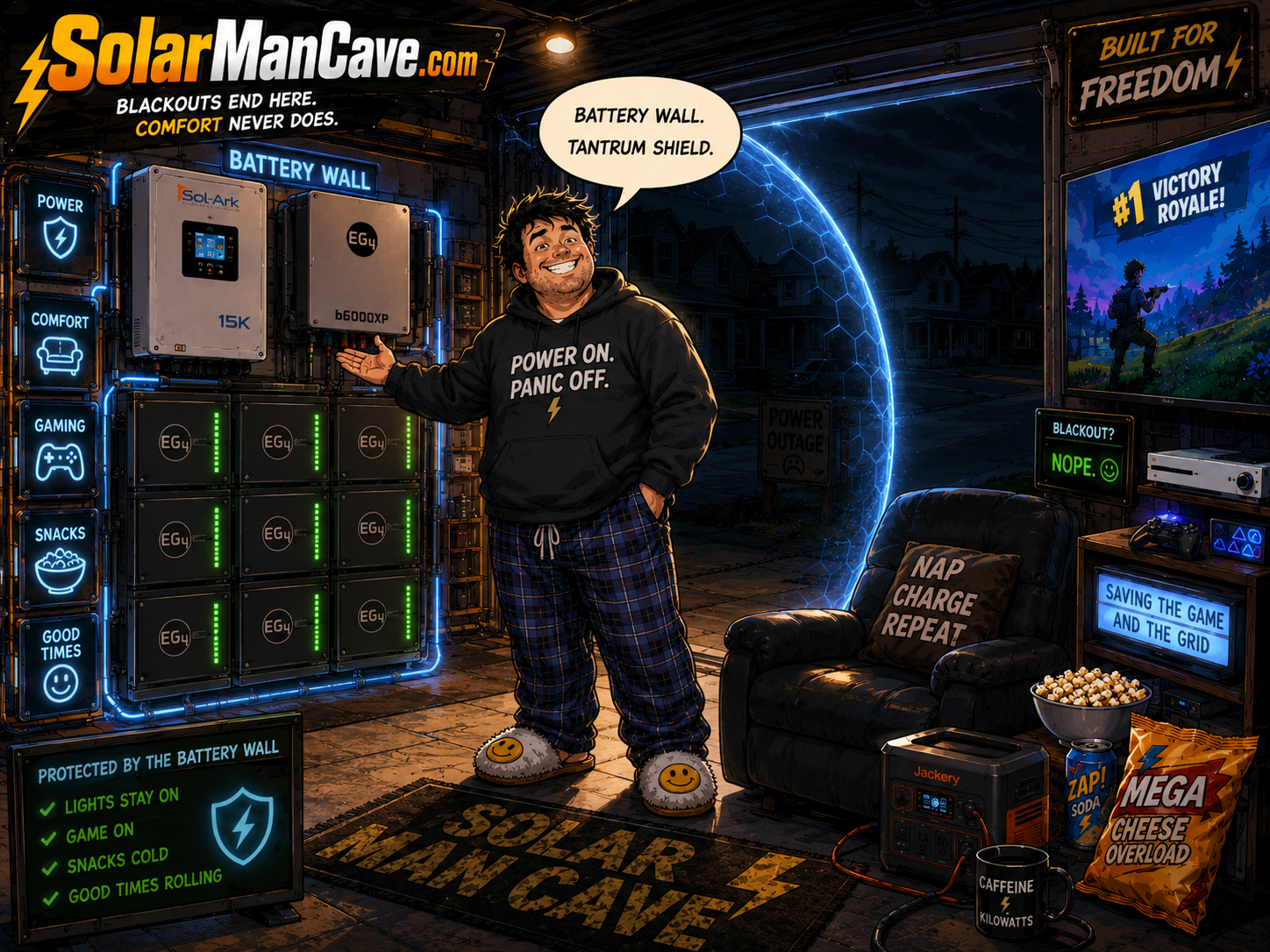
A battery wall can help because storage changes when solar energy is used. Solar may produce earlier in the day. The battery can hold some of that energy for later, when the house or cave actually needs power.
That does not mean storage is magic. It has limits. It has capacity. It has losses. It must be programmed and sized correctly. But it gives the customer a tool for managing timing, not merely surviving outages.
Solar Man Cave translation
Technical version: use storage to shift solar value, reduce expensive grid draw, and protect selected loads during outages.
Tantrum version: Madame Kilowatt attacks at dinner. The battery wall says, “Not today.”
The rate tantrum should become a design checklist.
A tantrum alone does not lower the bill. The useful move is to turn frustration into a practical checklist. What hours are expensive? Which loads run during those hours? Which loads can shift? Which loads need storage? Which loads should stay off backup?
- Identify the expensive time windows.
- List the major evening loads.
- Separate essential loads from comfort loads.
- Use solar production when available.
- Store energy when storage makes sense.
- Reduce high-cost grid draw where practical.
- Do not oversell the battery as infinite.
Comfort loads can be part of the strategy.
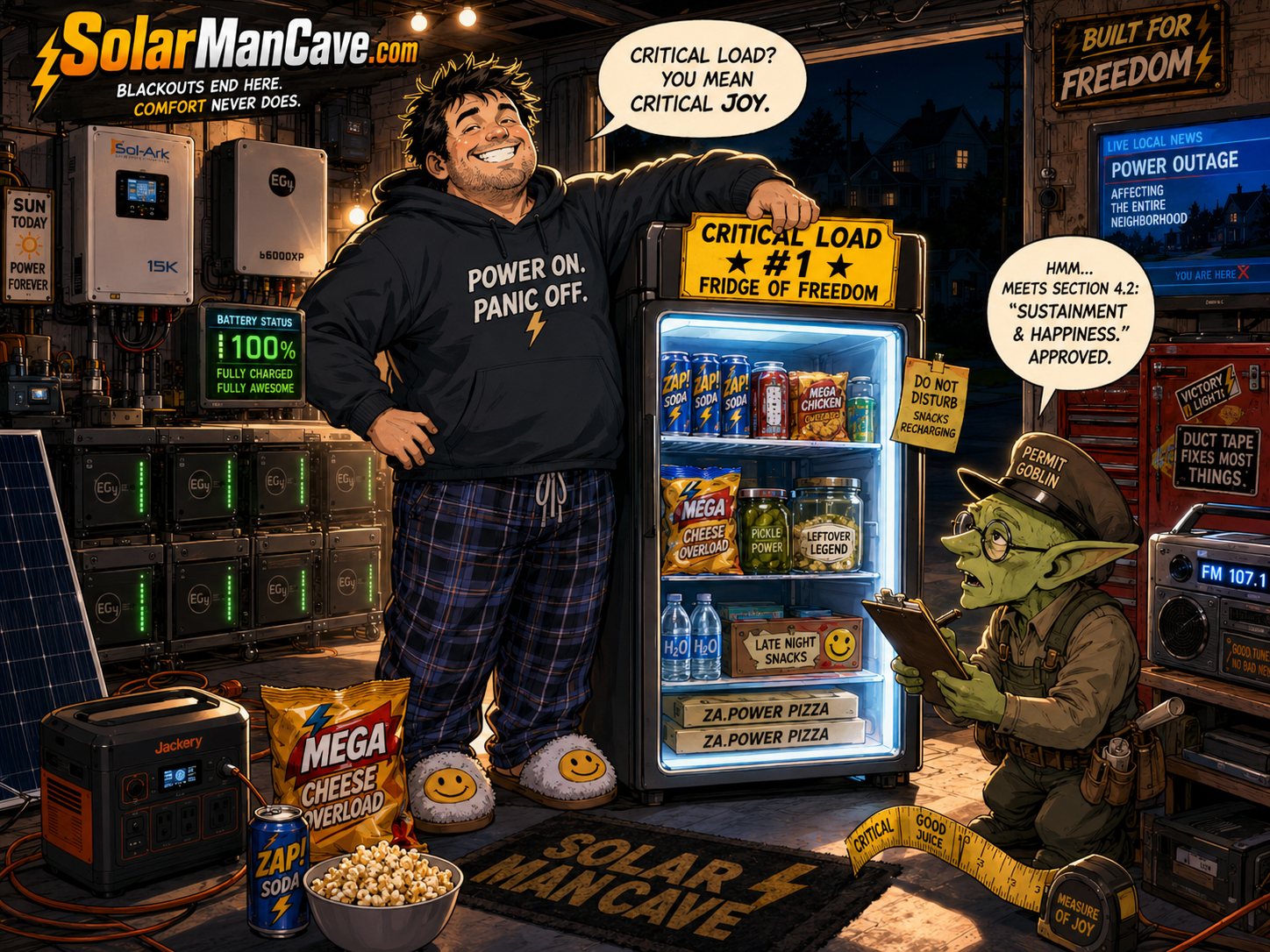
The Solar Man Cave is honest about comfort. The cave owner wants lights, Wi-Fi, TV, gaming, theater, tools, and refrigeration. Some of those loads are essential. Some are comfort. Some are pure morale.
Peak-rate strategy does not require pretending comfort does not matter. It requires knowing what comfort costs, when it runs, and whether solar plus storage can support it intelligently.
The battery does not eliminate choices. It gives the customer better choices.
Why this page matters for ABC Solar.
The SCE Rate Tantrum page lets ABC Solar explain cost pressure without sounding like a rate manual. People remember the image: the bill, the panic, the batteries glowing calmly in the background, and the idea that the solution is not yelling. The solution is design.
That design may include solar production, battery storage, protected-load circuits, load shifting, demand awareness, and customer behavior. The exact answer depends on the site, the rate schedule, the load profile, and the customer’s goals.
The useful question
During the most expensive hours, which loads truly need grid power, and which loads can be served by stored solar energy?
The real Solar Man Cave connection.
The original Solar Man Cave was a working R&D shed. It tested solar panels, batteries, inverter equipment, refrigeration, thermal systems, pumps, and controls. It made energy visible.
The SCE Rate Tantrum makes energy timing visible. Instead of only asking whether there is power, this page asks when the power is needed and what it costs when it is drawn from the grid.
The page takeaway.
The SCE Rate Tantrum is comedy, but the message is direct: utility bill pain should become a storage and load-timing conversation. The battery wall is not just a blackout tool. It can also be a timing tool.
Tantrum converted to strategy
Stop yelling at the bill long enough to list the loads, study the timing, and design the system around real usage.
Continue the peak-rate fight
The villain, the wall, and the load list.
Peak-rate pain becomes useful when it leads to storage timing, protected-load design, and realistic customer expectations.