Protecting the Man Cave
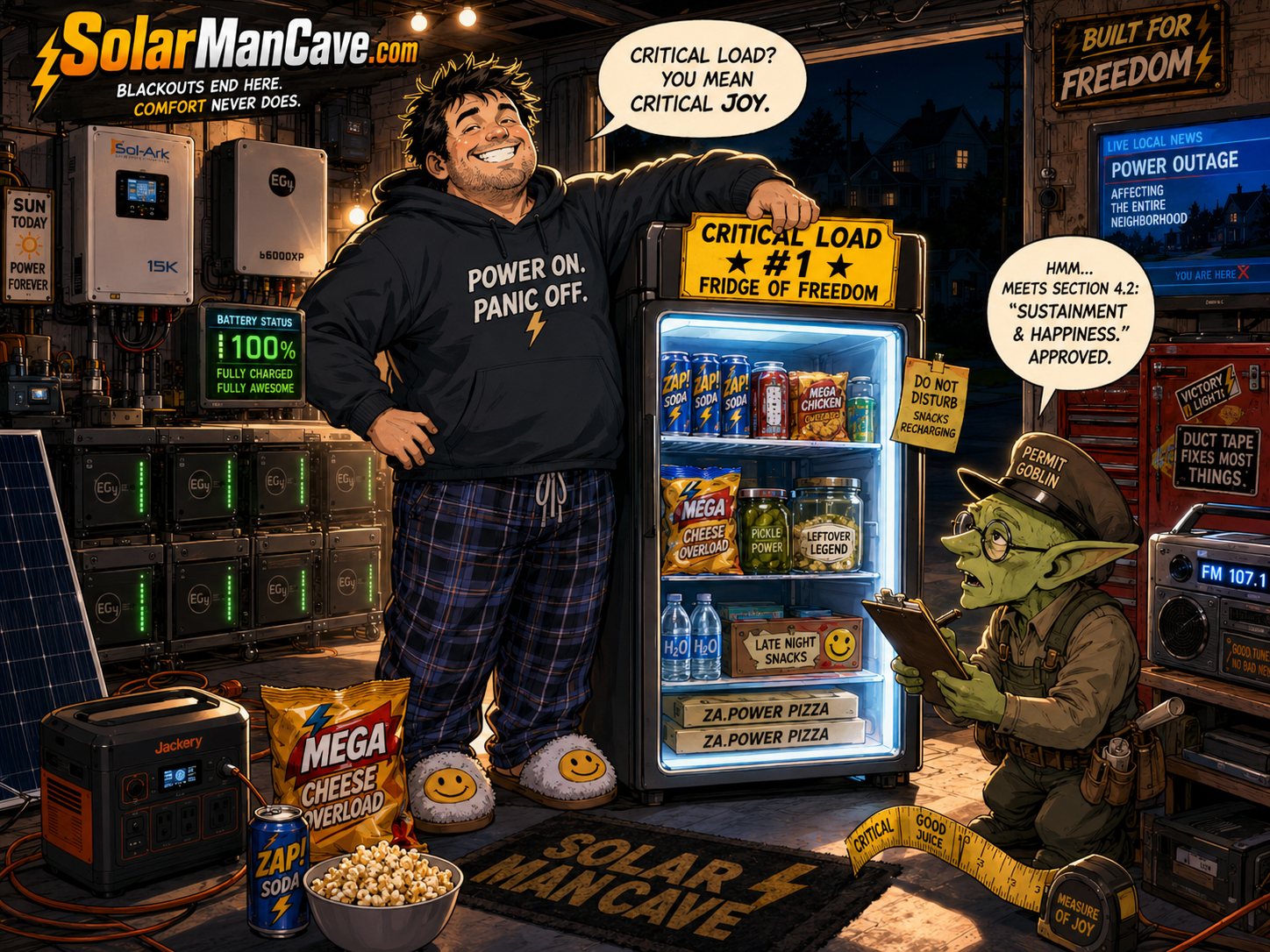
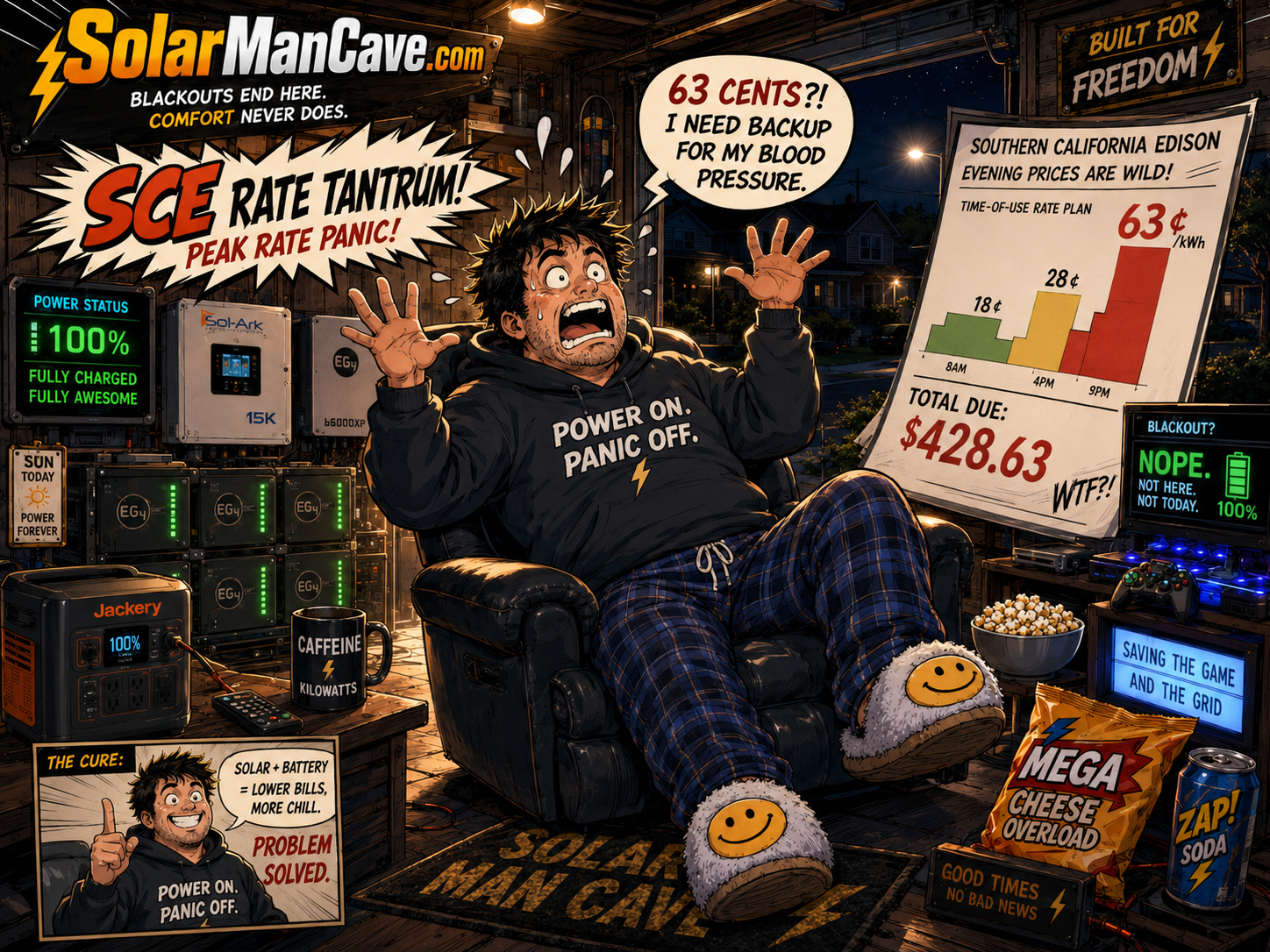
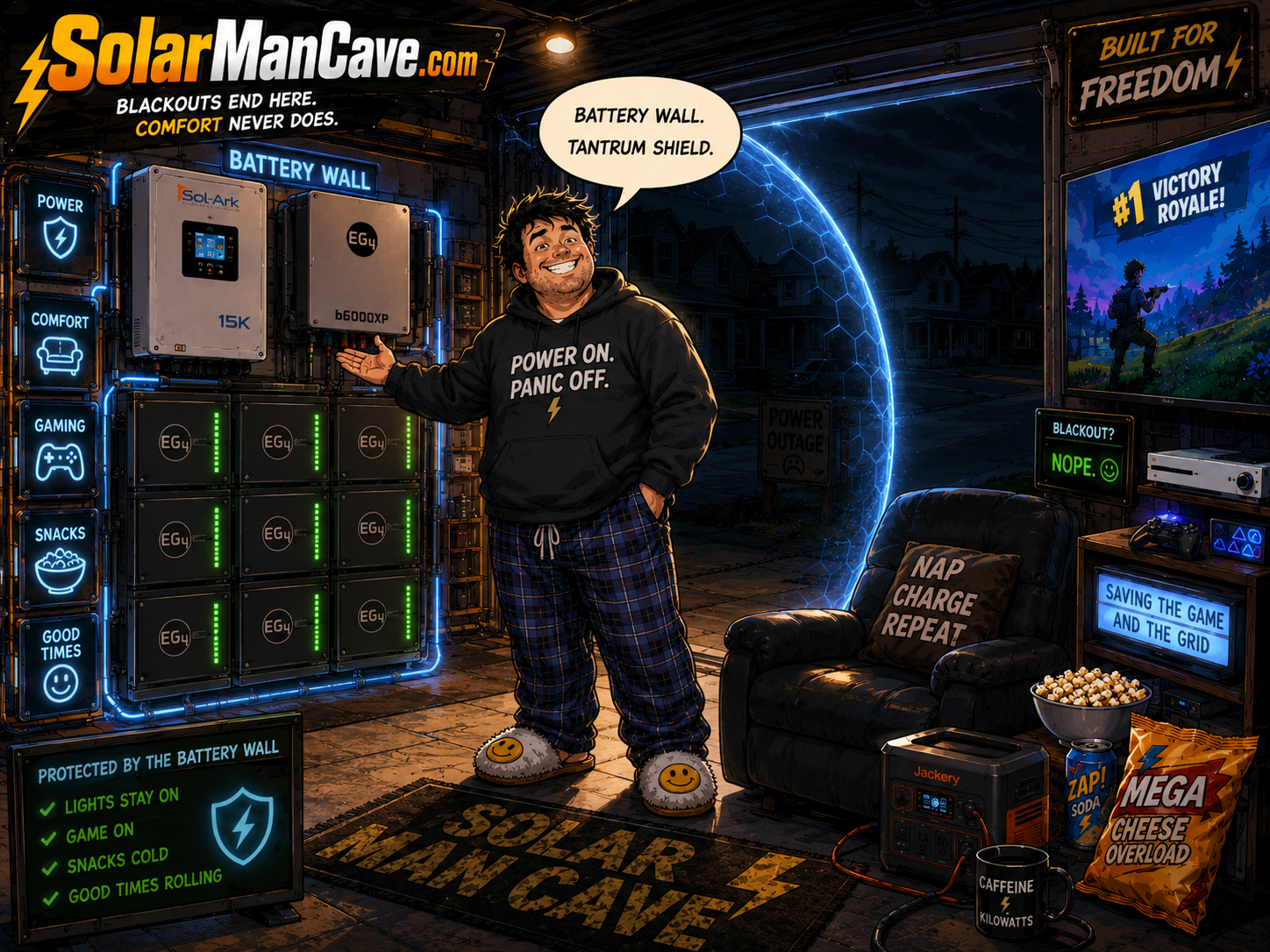
The battery wall is the tantrum shield for comfort, lights, games, and refrigeration.
Open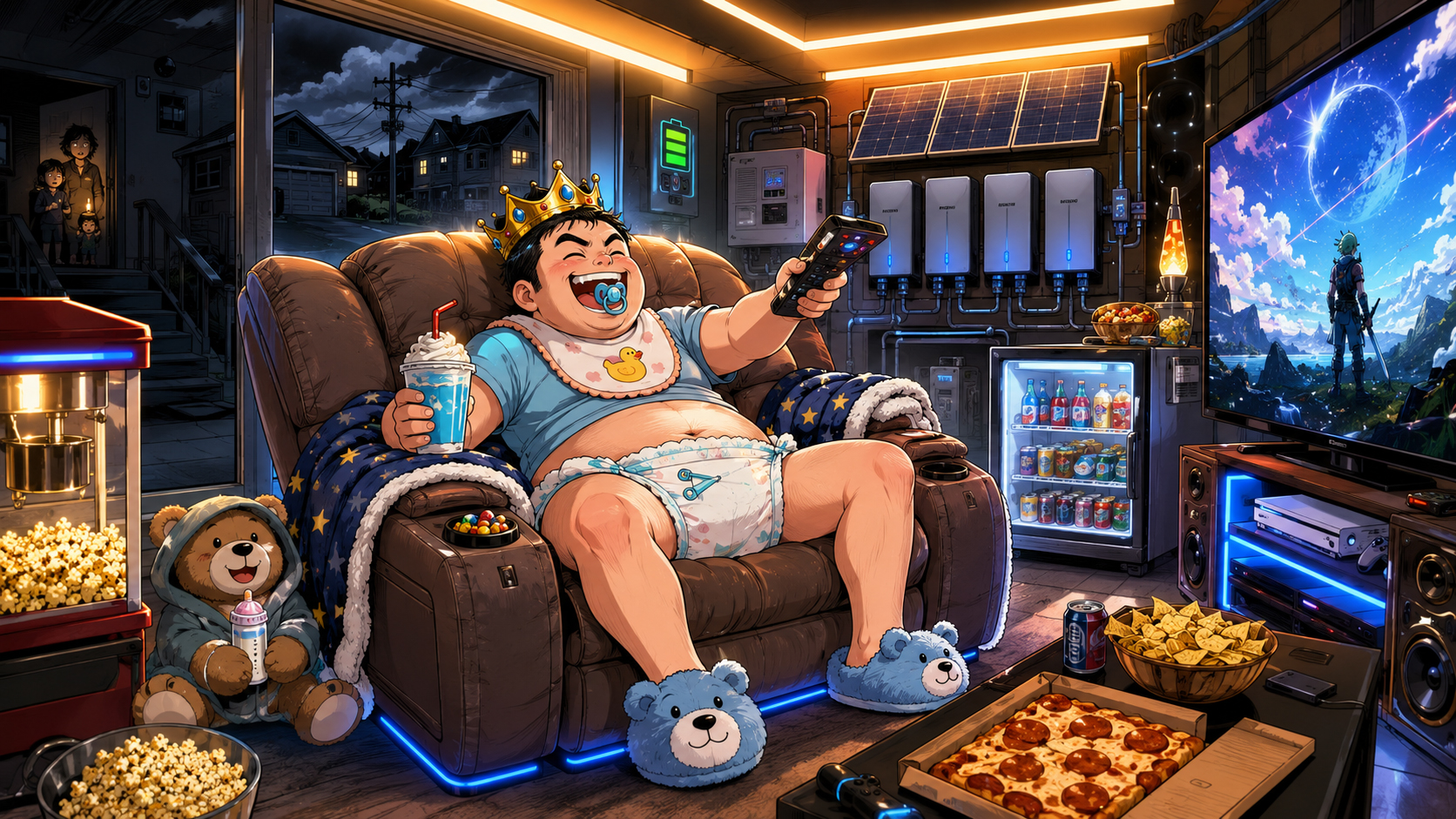
The sacred chair survives
The grid goes down. The neighborhood goes dark. But behind one glowing door, the Solar Man Cave recliner king remains fully powered: TV, lights, snacks, mini-fridge, Wi-Fi, games, and royal comfort intact.
Manga comedy, real solar lesson
The Blackout-Proof Recliner King is the perfect Solar Man Cave image because it explains battery backup without making people read a technical manual. The joke is obvious: one grown man has built a ridiculous comfort kingdom around his chair. The engineering question underneath is just as clear:
What do you want to keep running when the grid quits?
The answer may be funny on the surface: television, remote control, game console, popcorn machine, mini-fridge, Wi-Fi, and the sacred recliner. But that is exactly how real backup design starts. You list the loads. You decide what matters. You size the system around reality.
This page is the bridge between the real ABC Solar R&D shed and the manga comedy universe. The original Solar Man Cave tested panels, batteries, a DC refrigerator, thermal storage, and fire-protection controls. The manga version translates those lessons into everyday comfort.
A homeowner may not want to talk about inverter sizing first. But they can immediately answer whether they want the TV, Wi-Fi, refrigerator, lights, garage door, medical equipment, computer, or security system to stay alive in an outage.
Technical version: identify protected loads, calculate power draw, estimate runtime, size inverter capacity, size battery storage, and design recharge.
Man cave version: when everything goes dark, what still gets to work?
The recliner king is funny because he looks like the center of the universe. But in solar design, the center is not the person. The center is the load list. Every protected-load system should begin with a clear inventory.
That means separating “nice to have” loads from “must have” loads. A refrigerator, modem, medical device, pump controller, security system, garage door, or lighting circuit may belong in the first group. A home theater may belong in the second group unless the customer explicitly wants comfort backup.
Solar Man Cave lets both truths exist at once. Some loads are essential. Some loads are morale. Both should be named honestly.
A straight battery conversation can become dry quickly. People hear kilowatts, kilowatt-hours, transfer switches, subpanels, inverters, and load calculations. They stop picturing their own house.
The Solar Man Cave approach starts with a room. That makes the conversation practical. What happens in that room? What needs to work? How long should it work? What happens at night? What happens after several cloudy days? What are you willing to turn off?
The room is the story. The load list is the design.
A battery wall is not decoration. It has to support the loads it promises to protect. That means the system must be designed around actual use, not fantasy.
The recliner king may be ridiculous, but the system behind him must be disciplined. Otherwise the cave is just a poster.
The Blackout-Proof Recliner King is the funny front door to a serious solar battery lesson: backup power only works when the load list is honest.
The real Solar Man Cave began with an 8' x 10' research shed. It tested the practical work of solar: producing energy, storing energy, keeping cold storage alive, moving water, heating water, and supporting resilience.
The Blackout-Proof Recliner King is the modern comic expression of the same idea. Solar is most persuasive when it does useful work people can see. Sometimes that useful work is fire protection. Sometimes it is refrigeration. Sometimes it is one glowing room that keeps morale alive when the grid fails.
Continue the manga cave
Each manga page explains one practical battery idea through one ridiculous room, villain, or appliance.
ABC Solar Incorporated
The joke is the recliner. The real question is the protected-load list: refrigerator, Wi-Fi, lights, controls, pumps, garage, tools, and comfort.