ABC Solar R&D
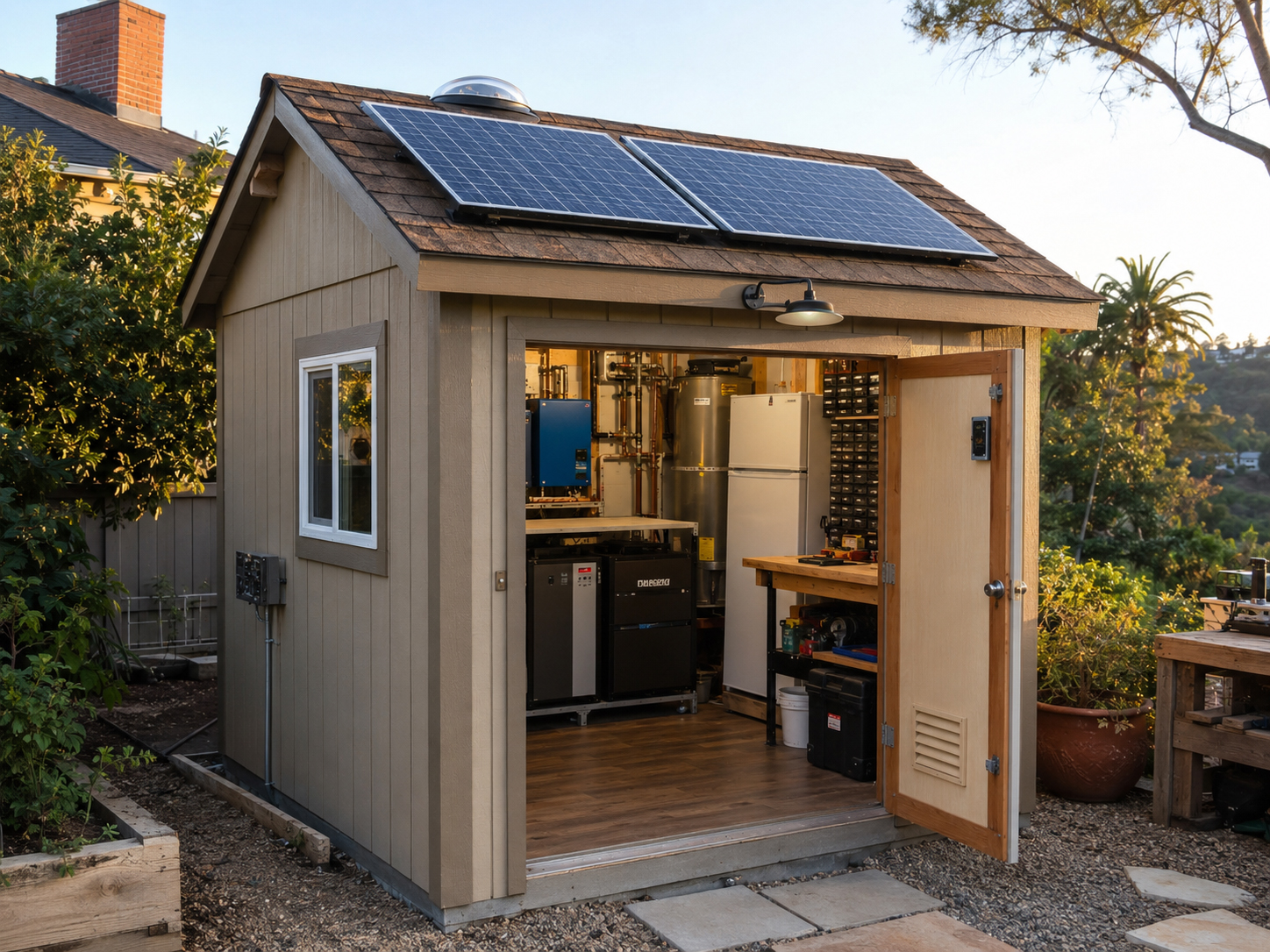
Original 8' × 10' Shed
Real Equipment History
The real history behind the cave
Solar R&D History
Solar Man Cave did not start as a cartoon. It started as a real ABC Solar research shed where panels, batteries, DC refrigeration, solar thermal, hot-tub circulation, water pressure, pumps, and off-grid fire protection were tested in one compact space.
From working shed to solar legend
The R&D shed gives the comedy credibility.
SolarManCave.com is now a manga comedy about blackout-proof comfort, peak-rate villains, mini-fridges, recliners, battery walls, and the sacred right of one ridiculous room to keep working when the grid fails. But the reason the comedy works is that the story begins with real experimentation.
The original Solar Man Cave was an 8' x 10' ABC Solar research and development shed. It was small enough to understand and crowded enough to force discipline. Every panel, battery, refrigerator, tank, pump, pipe, wire, and controller had to justify its place.
The roof carried the first proof.
The roof used two 165-watt Mitsubishi solar panels from 2002. By modern standards, that is not a large PV array. But it is a valuable historical lesson. The panels show that solar equipment can have a long useful life and can continue teaching long after the original installation.
Those panels charged a battery bank connected to older inverter equipment. The shed became a small system where production, storage, and load behavior could be observed together.
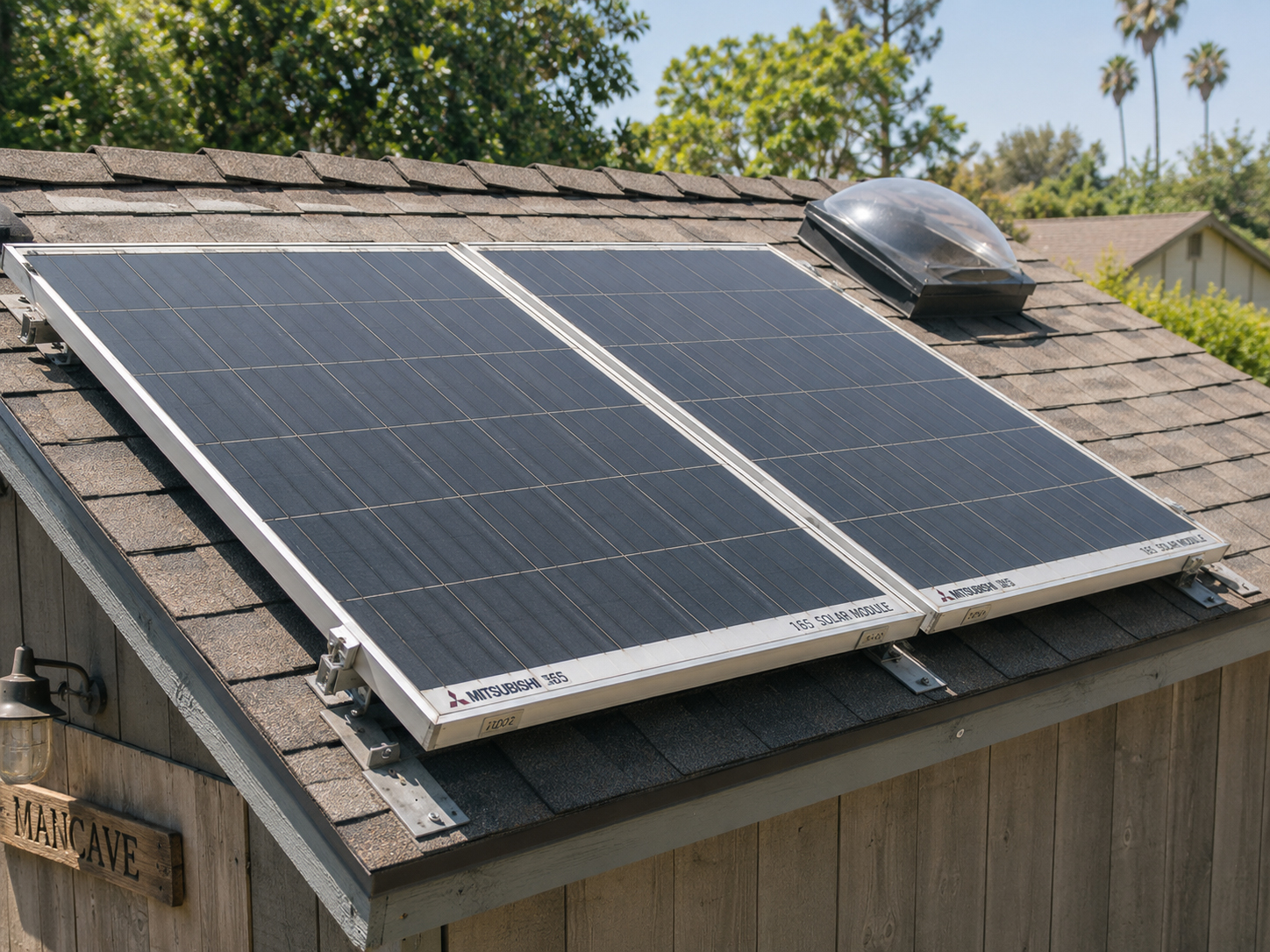
The joke is the recliner. The proof is the roof.
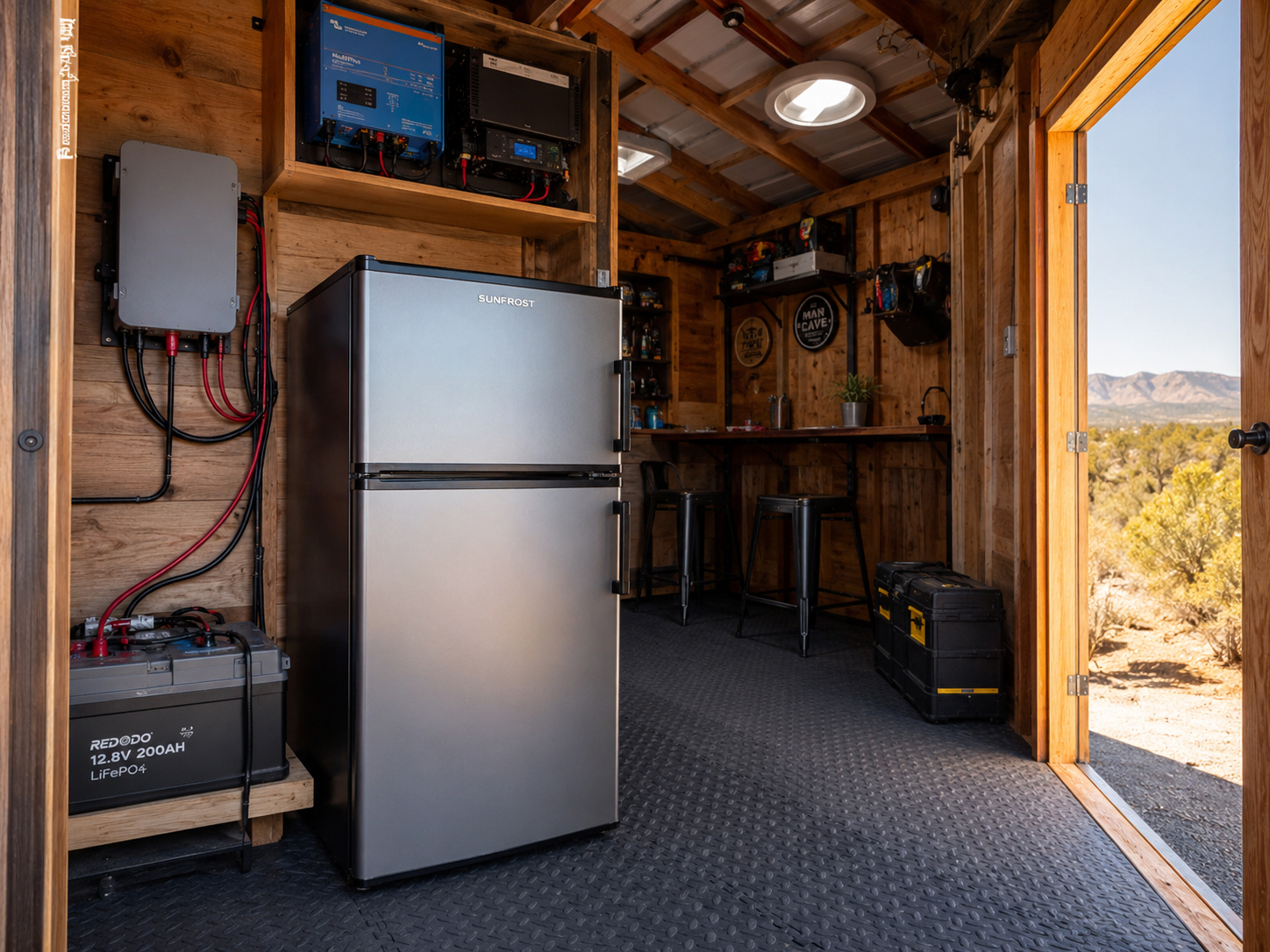
The refrigerator made the power useful.
Inside the shed, the SunFrost DC refrigerator/freezer gave the Solar Man Cave one of its most practical loads. Refrigeration makes backup power immediately understandable. It protects food, supplies, comfort, and potentially medicine or sensitive materials.
That real DC refrigerator is the ancestor of the Solar Man Cave mini-fridge comedy. The manga pages exaggerate the snack fridge, but the underlying lesson is serious: cold storage belongs in the protected-load conversation.
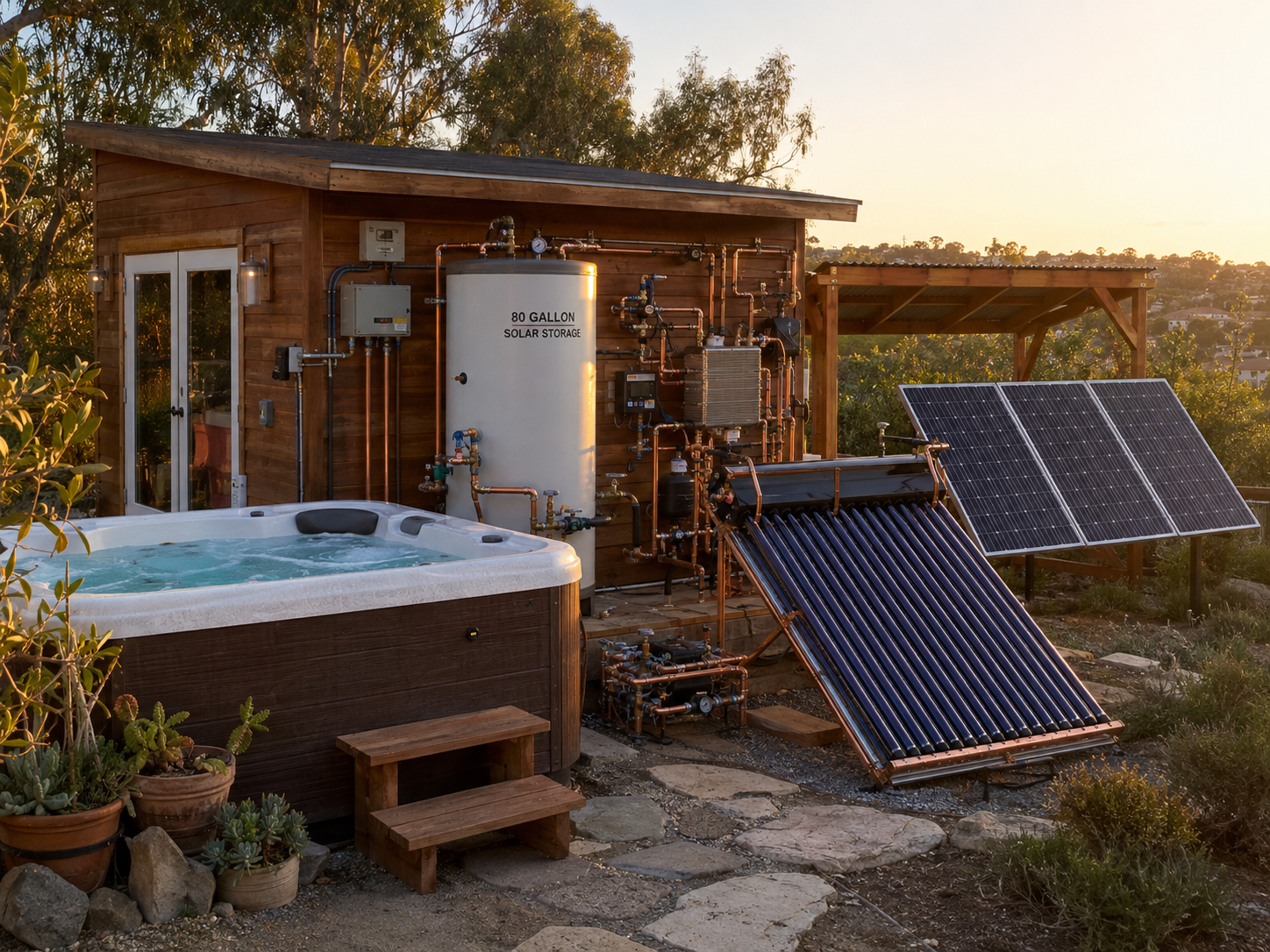
The system was thermal too.
Solar Man Cave was not only about electricity. The R&D story included solar thermal storage, heat exchange, pumps, hot-tub circulation, and water heating. That broadened the experiment from watts to heat, from batteries to tanks, and from backup power to comfort.
The hot tub made the engineering human. Warm water is not abstract. It is felt. That is the Solar Man Cave method: make the energy visible, useful, and connected to life.
The serious turn: off-grid fire protection.
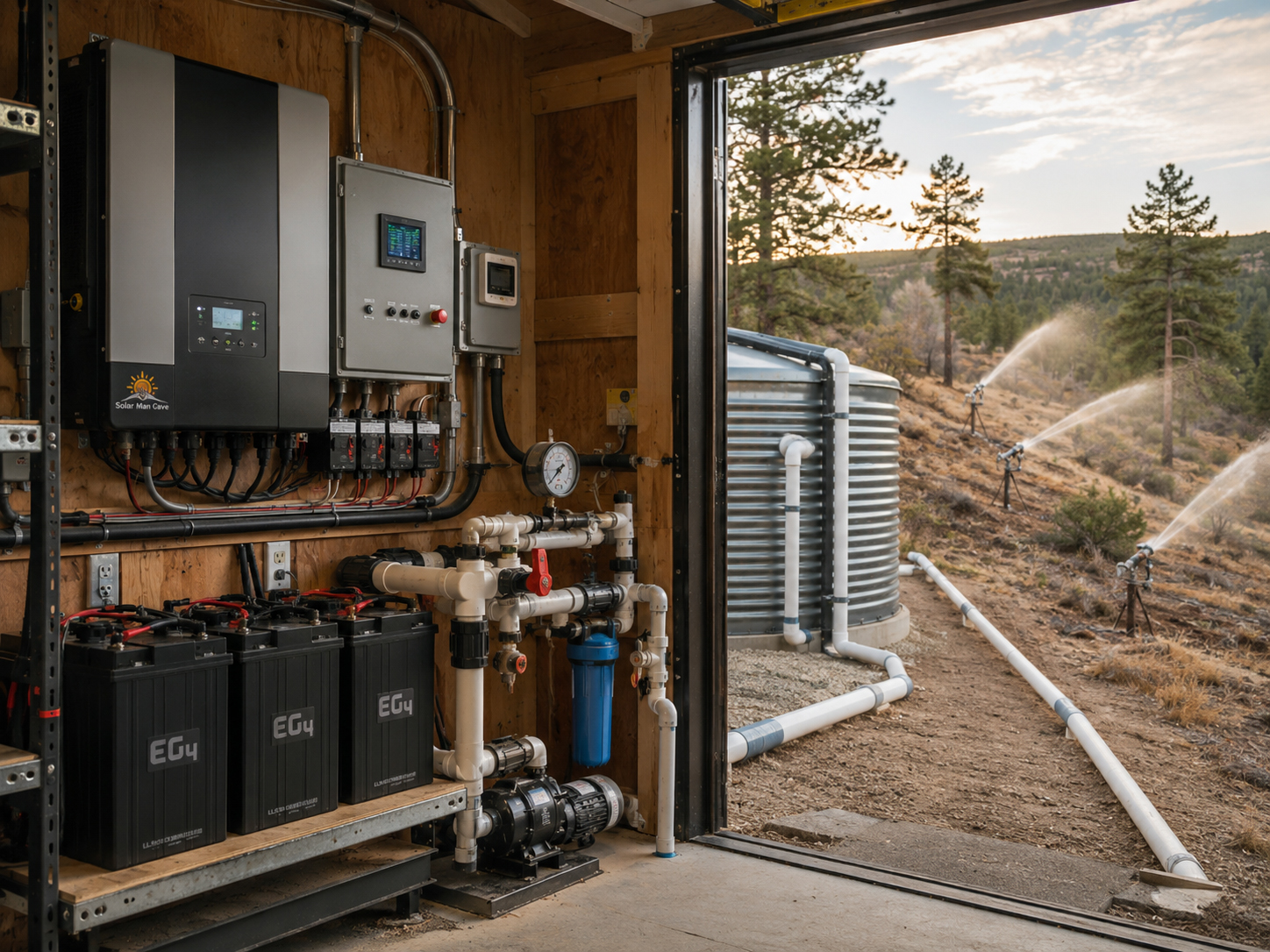
The strongest resilience lesson came from the off-grid fire-station control hub. Batteries, inverter equipment, pump controls, valves, pressure gauges, water reserve, PVC plumbing, and sprinkler concepts turned the Solar Man Cave into more than a comfort story.
This is where the site’s tone changes. A blackout-proof recliner is funny. A battery-backed control hub for water and fire protection is serious. Solar Man Cave holds both ideas because solar can support both comfort and safety.
The R&D pattern.
The history is not just a list of equipment. It is a pattern of thinking: take a real load, connect it to solar, store the energy when needed, observe the behavior, and learn from the system.
- Produce energy: solar panels on the shed roof.
- Store energy: battery bank and inverter equipment.
- Use energy: refrigerator, lights, pumps, controls, and comfort systems.
- Move heat: solar thermal collectors, tank, and heat exchange.
- Move water: hot tub circulation and fire-protection concepts.
- Protect loads: decide what must keep working during an outage.
The Solar Man Cave rule
Make the system visible. Make the load understandable. Make the lesson useful.
Why the manga belongs on top of the history.
The manga layer is not a distraction from the R&D story. It is the teaching engine. Captain Recliner, Madame Kilowatt, the Permit Goblin, Tomoko Reality Check, the battery wall, and the SCE Rate Tantrum all explain serious solar ideas through memorable comedy.
The real shed explains why the site has authority. The manga explains why people will remember it.
- Captain Recliner explains comfort loads and wish-list discipline.
- Madame Kilowatt explains peak-rate timing.
- The Permit Goblin explains inspection, rules, and load proof.
- Tomoko Reality Check explains system honesty.
- The Battery Wall explains storage, runtime, and protected circuits.
- The Mini-Fridge explains refrigeration as a protected-load gateway.
The R&D shed is the credibility. The manga is the memory.
The historical takeaway.
Solar Man Cave is valuable because it connects invention, humor, and practical design. It began as a real place where solar technology was tested in small, visible ways. Now it becomes a better way to explain backup power to customers.
The message stays the same: solar should do useful work. Batteries should protect chosen loads. Comfort is allowed, but runtime must be respected. Resilience is serious. And every good solar system should be honest before the outage proves it.
The page takeaway
Solar R&D history gives SolarManCave.com its backbone: real equipment, real experiments, real loads, and a new manga language for explaining them.
Explore the R&D trail
The real system has five foundation pages.
These pages preserve the serious ABC Solar invention story under the manga comedy layer.
2002 Mitsubishi Panels
Legacy solar hardware proving long service life and real-world durability.
Open