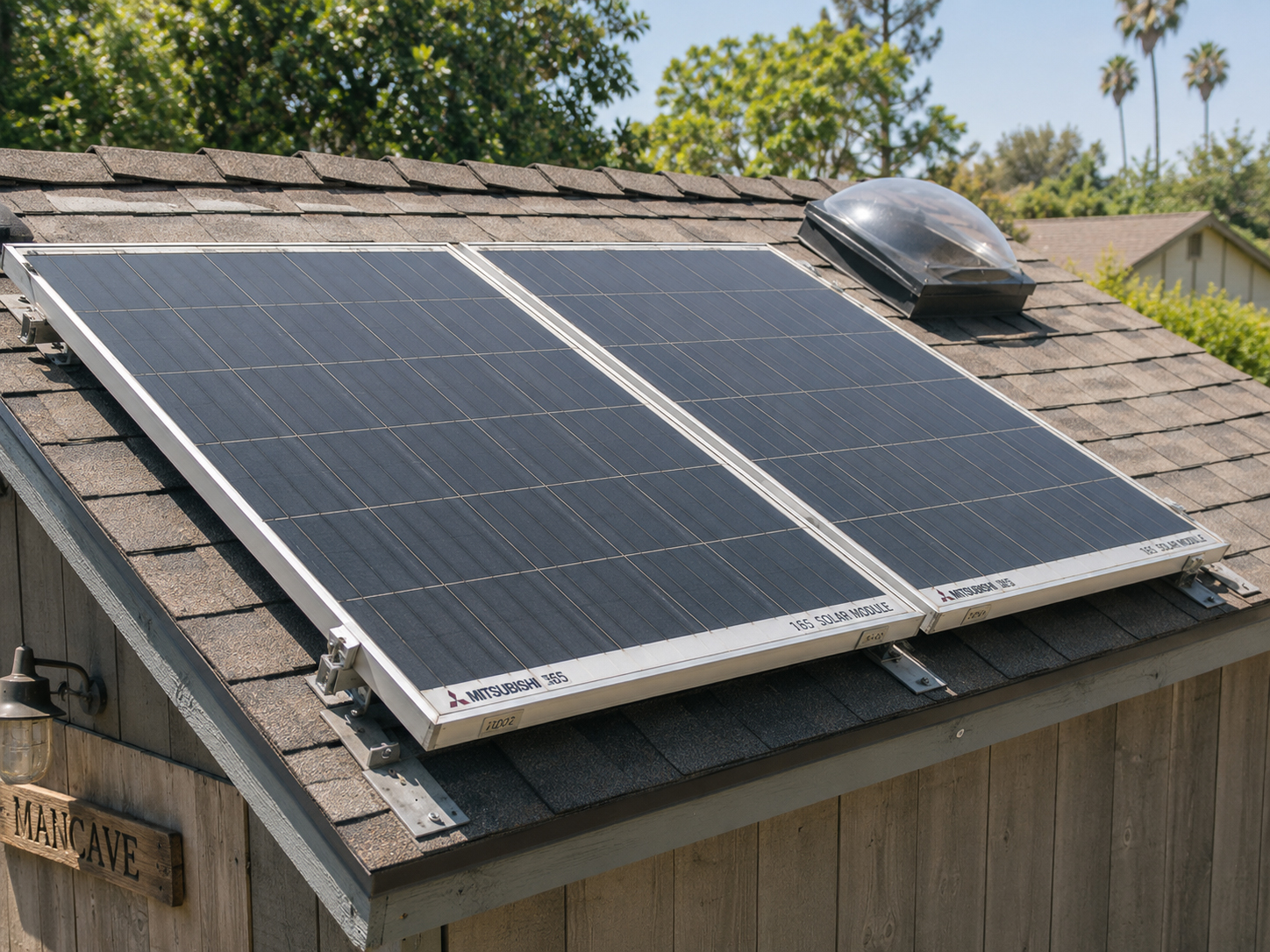
2002 Mitsubishi Panels
The electrical side of the cave began with durable rooftop solar hardware.
Open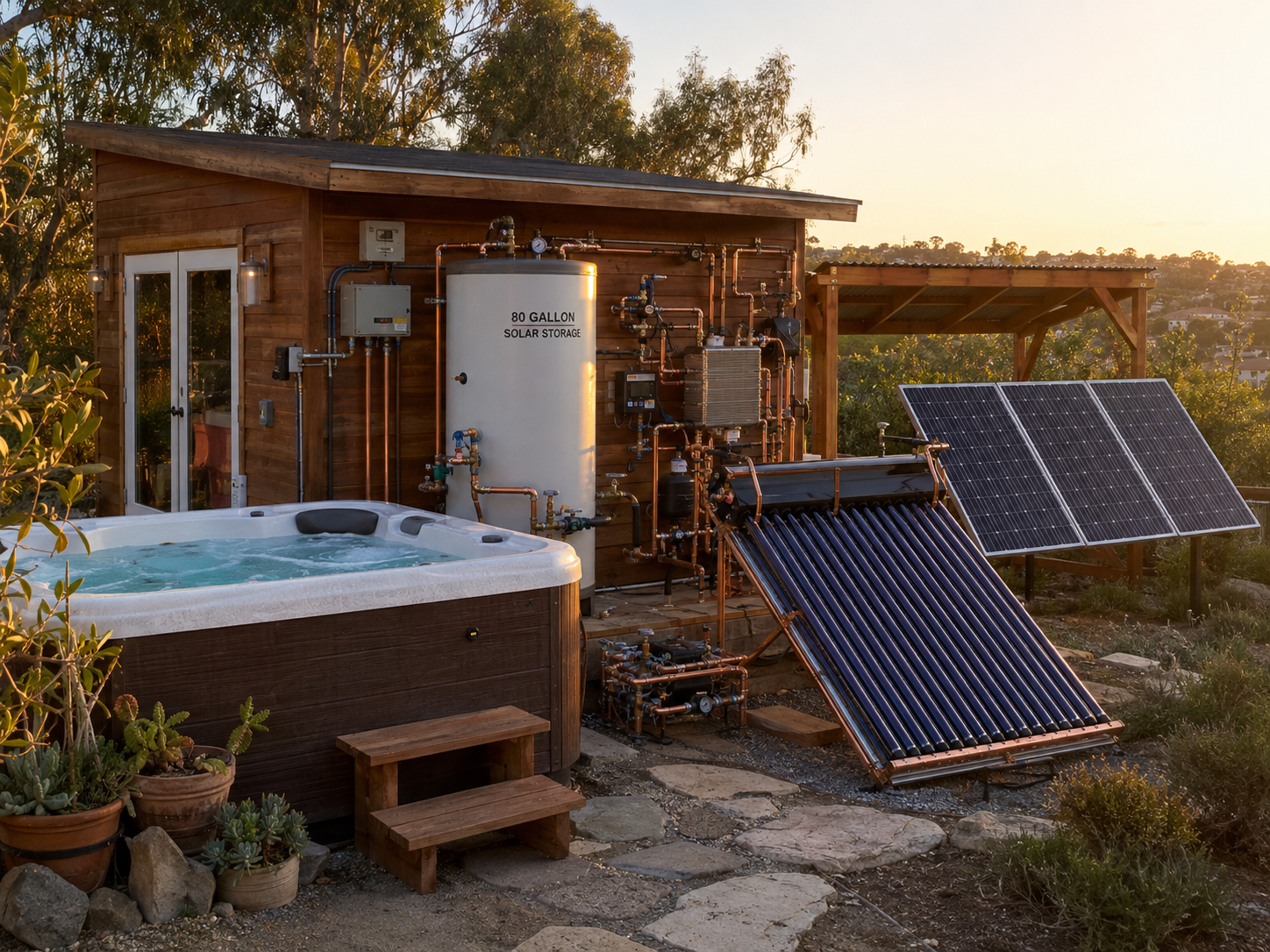
When sunlight becomes warm water
The Solar Man Cave was not only about panels and batteries. It explored solar thermal storage, heat exchange, pumps, circulation, filtration, and comfort — because a good solar experiment should eventually make warm water.
Solar comfort engineering
Solar panels and batteries get most of the attention, but the Solar Man Cave also explored another beautiful use of sunlight: heat. The hot tub and solar thermal system connected collectors, storage, pumps, heat exchange, and water movement into one practical backyard experiment.
That matters because solar is bigger than electricity. A good renewable-energy laboratory should test comfort, water, temperature, storage, and controls. The Solar Man Cave did exactly that.
At the heart of the thermal side was an 80-gallon solar storage tank. A tank is not glamorous, but it is essential. Thermal systems need somewhere to hold heat, just as battery systems need somewhere to hold electrical energy.
That parallel is one of the best lessons from the Solar Man Cave. Batteries store electricity. Tanks store heat. Both are storage. Both require controls. Both depend on the relationship between production, use, and timing.
Electrical storage says: keep the lights, fridge, and controls alive.
Thermal storage says: keep the water warm when the sun has already done its work.
The system used solar thermal collectors, plumbing, pumps, and heat-exchange thinking to move heat from the collectors into stored water and then into useful comfort. This is where solar becomes physical. You can see the pipes. You can hear the pump. You can feel the result.
The heat exchanger made the system practical. Instead of treating the hot tub as a simple electric load, the Solar Man Cave explored how solar thermal energy could do the heavy lifting. That is a more sophisticated kind of backyard energy experiment.
The hot tub is important because it turns abstract energy into a direct human experience. Nobody has to explain the value of warm water on a cool evening. You feel it.
That is the Solar Man Cave method: take a serious technical idea and connect it to something people understand. Solar thermal can sound like a mechanical diagram. A solar hot tub sounds like a reason to pay attention.
The tank stores the heat. The plumbing moves the heat. The hot tub proves the point.
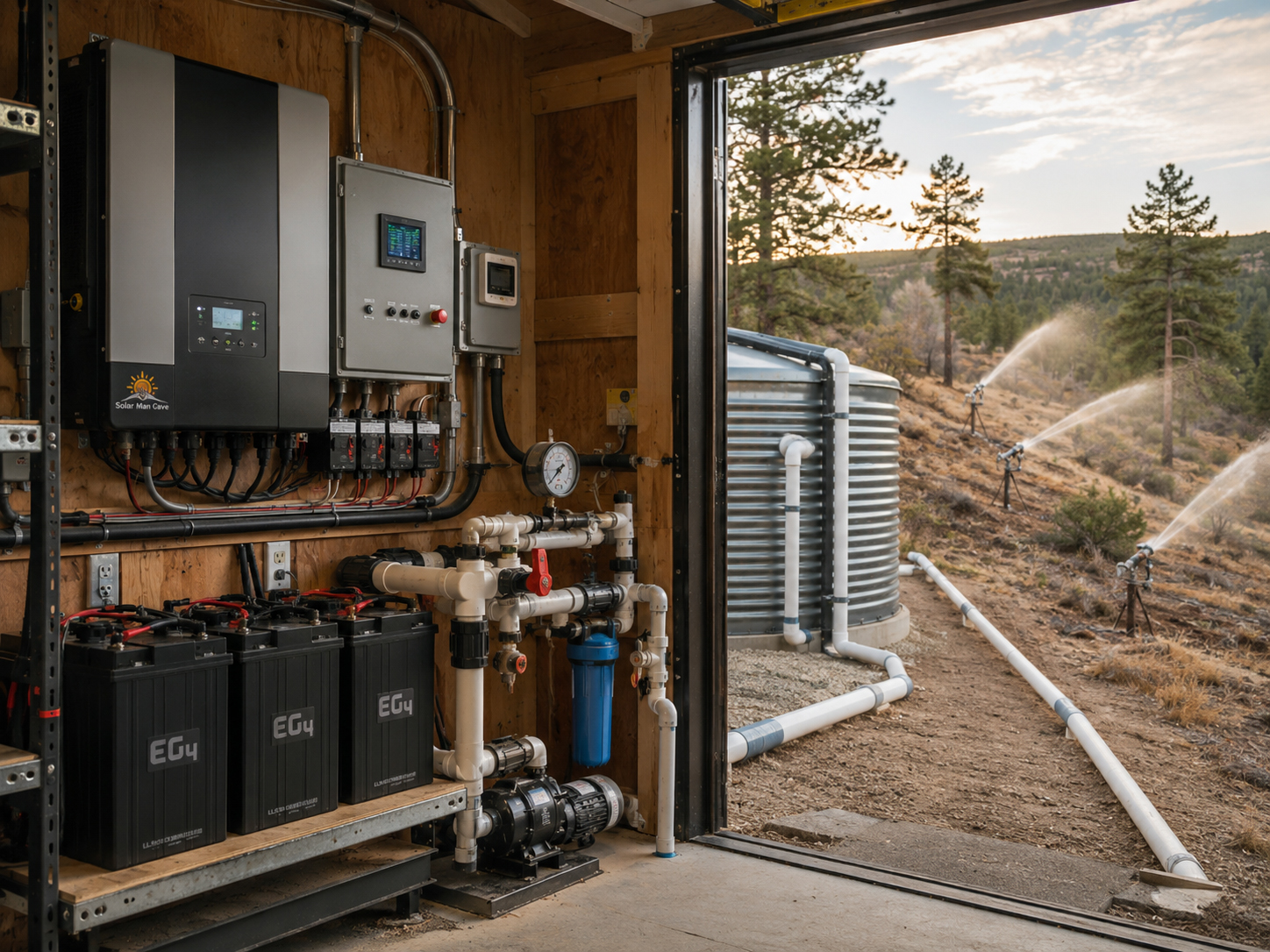
The hot tub story also connects back to PV and batteries. Pumps, UV sterilization, circulation, filtration, sensors, and controls all need power. That means the hot tub system becomes a hybrid lesson: thermal energy for heat, electrical energy for movement and control.
The Solar Man Cave used this kind of overlap to test the relationship between multiple systems. It was not one technology sitting alone. It was a small ecosystem: PV, battery storage, DC loads, thermal storage, water movement, and practical comfort.
The new manga pages are funny because they exaggerate comfort. Recliners, snacks, home theater, games, and mini-fridges all make backup power memorable. But this solar hot tub page shows that comfort was part of the real R&D story from the beginning.
Solar Man Cave is not anti-comfort. It is proof that comfort can become an engineering question. How do you heat it? How do you move it? How do you store it? How do you power the pump? How do you keep the system useful?
Solar thermal belongs in the Solar Man Cave story because it expands the meaning of solar: not just watts, but heat; not just backup, but comfort; not just equipment, but experience.
The hot tub system connects naturally to the rest of SolarManCave.com. A battery-backed man cave is about keeping chosen loads alive. A solar thermal hot tub is about using the sun to create a better daily experience.
Together, they make the same argument: solar is most persuasive when people can see, touch, and enjoy the work it does.
Continue the experiment
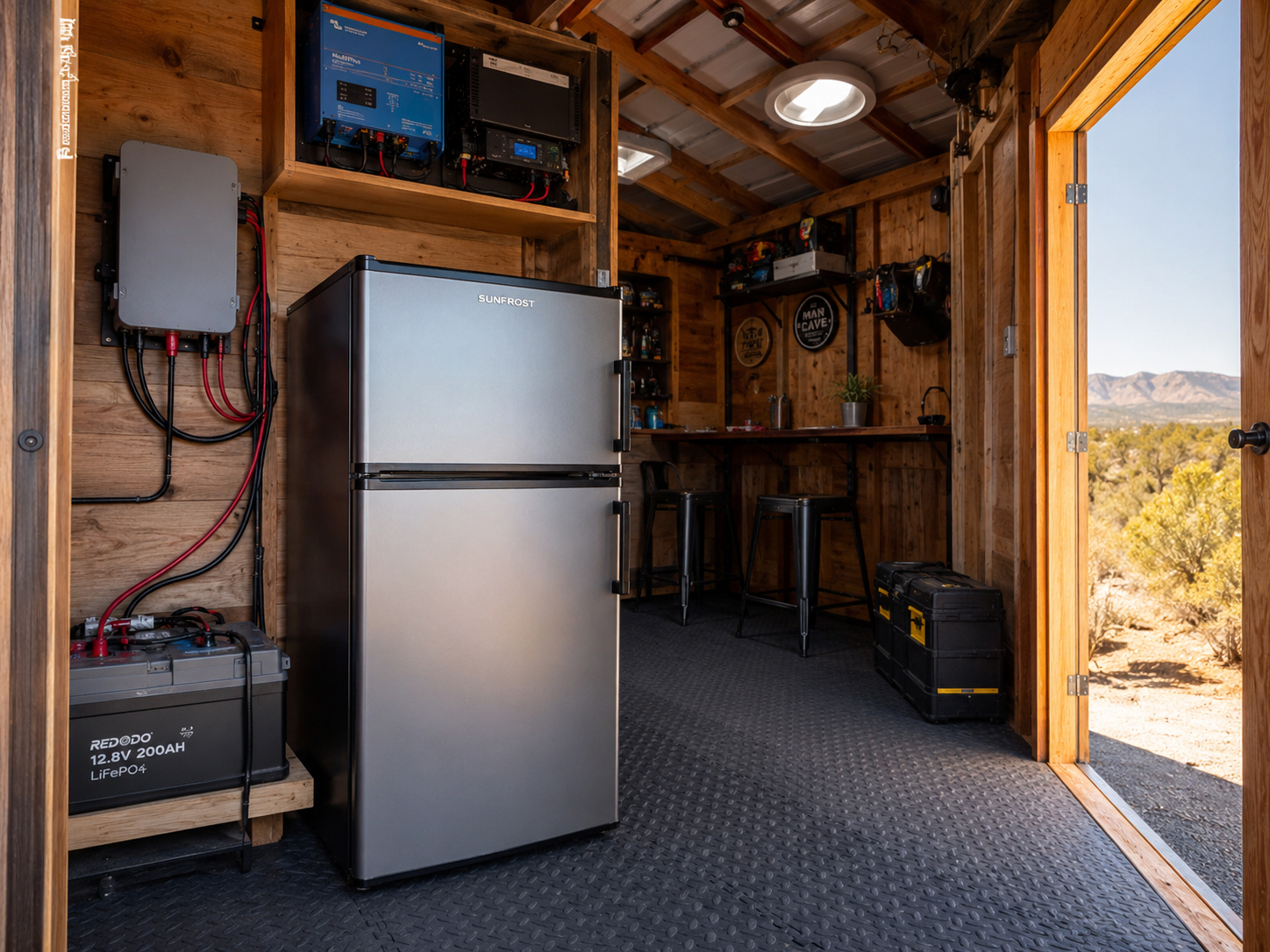
The Solar Man Cave story works because every system connects: panels, batteries, refrigeration, thermal storage, and fire protection.
ABC Solar Incorporated
Heat water. Charge batteries. Keep food cold. Run pumps. Power controls. Protect the loads that matter.