Solar R&D History
The original 8' x 10' shed, legacy panels, batteries, DC fridge, and experiment culture.
Open
The real cave behind the comedy
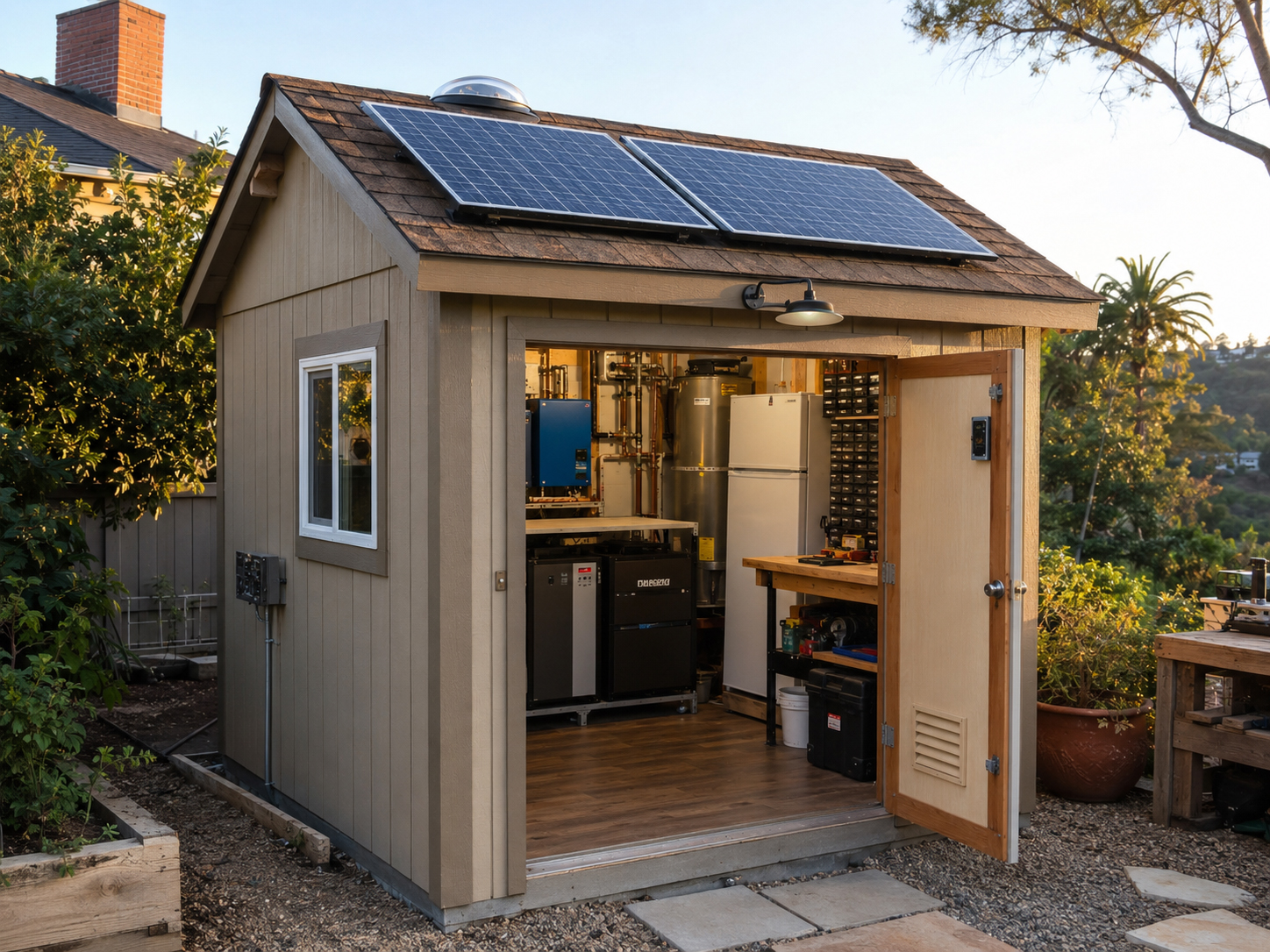
Before Solar Man Cave became a manga comedy about backup power, peak-rate tantrums, mini-fridges, and blackout-proof comfort, it was a real 8' x 10' ABC Solar research and development shed built to test what solar could actually do.
Welcome to the heart of solar innovation
The Solar Man Cave began as a compact 8' x 10' shed, but the purpose was never small. It became a hands-on ABC Solar research space where renewable energy could be tested, connected, adjusted, broken, improved, and understood.
This is the important part: Solar Man Cave is not just a joke about a man hiding in a powered room with snacks. The joke works because the underlying story is real. The cave was a practical, experimental, working demonstration of solar power, battery backup, DC refrigeration, thermal storage, water movement, and resilience.
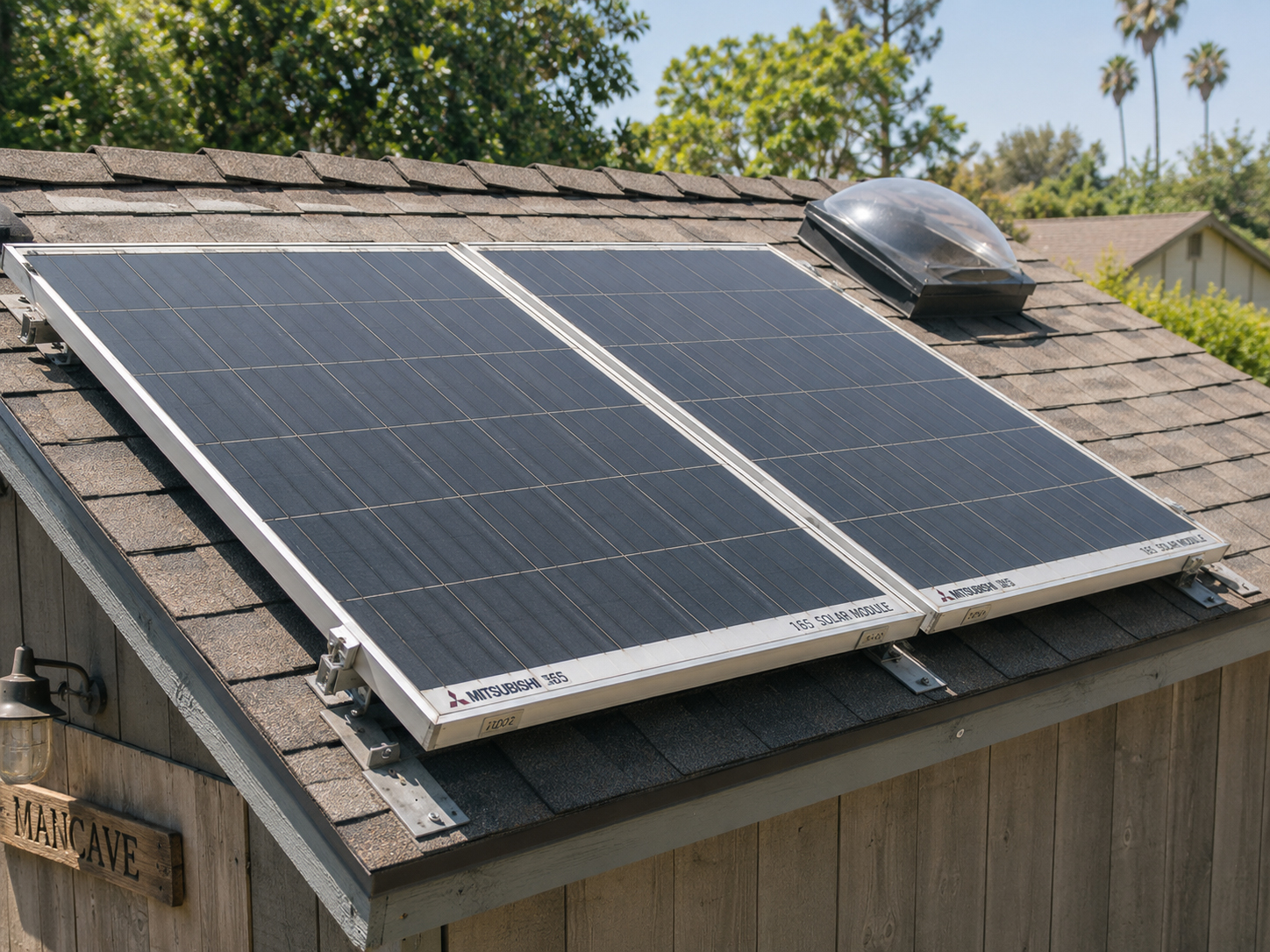
The roof of the Solar Man Cave carried two 165-watt Mitsubishi solar panels from 2002. That matters because it tells a better story than a sales brochure. Solar is not a disposable novelty. Properly installed equipment can keep working year after year, quietly producing energy and proving its value.
Those panels charged a battery bank connected to a 2000-watt inverter from the year 2000. That combination turned a small shed into a living demonstration of early solar durability, practical backup power, and long-term renewable-energy experimentation.
A small system can teach big lessons when every part of it is visible: panels, batteries, inverter, loads, controls, heat, water, and human comfort.
The Solar Man Cave was not just equipment stuffed into a box. It was built around the realities of heat, light, and comfort. A solar tube brought natural daylight into the interior without depending on electric lighting. The walls used insulation and reflective surfaces to help manage heat inside the shed.
That is why the man cave idea is useful. A powered room is not just about having a battery. It is about the whole space: the envelope, the loads, the heat, the cooling, the light, and the reason the room matters.
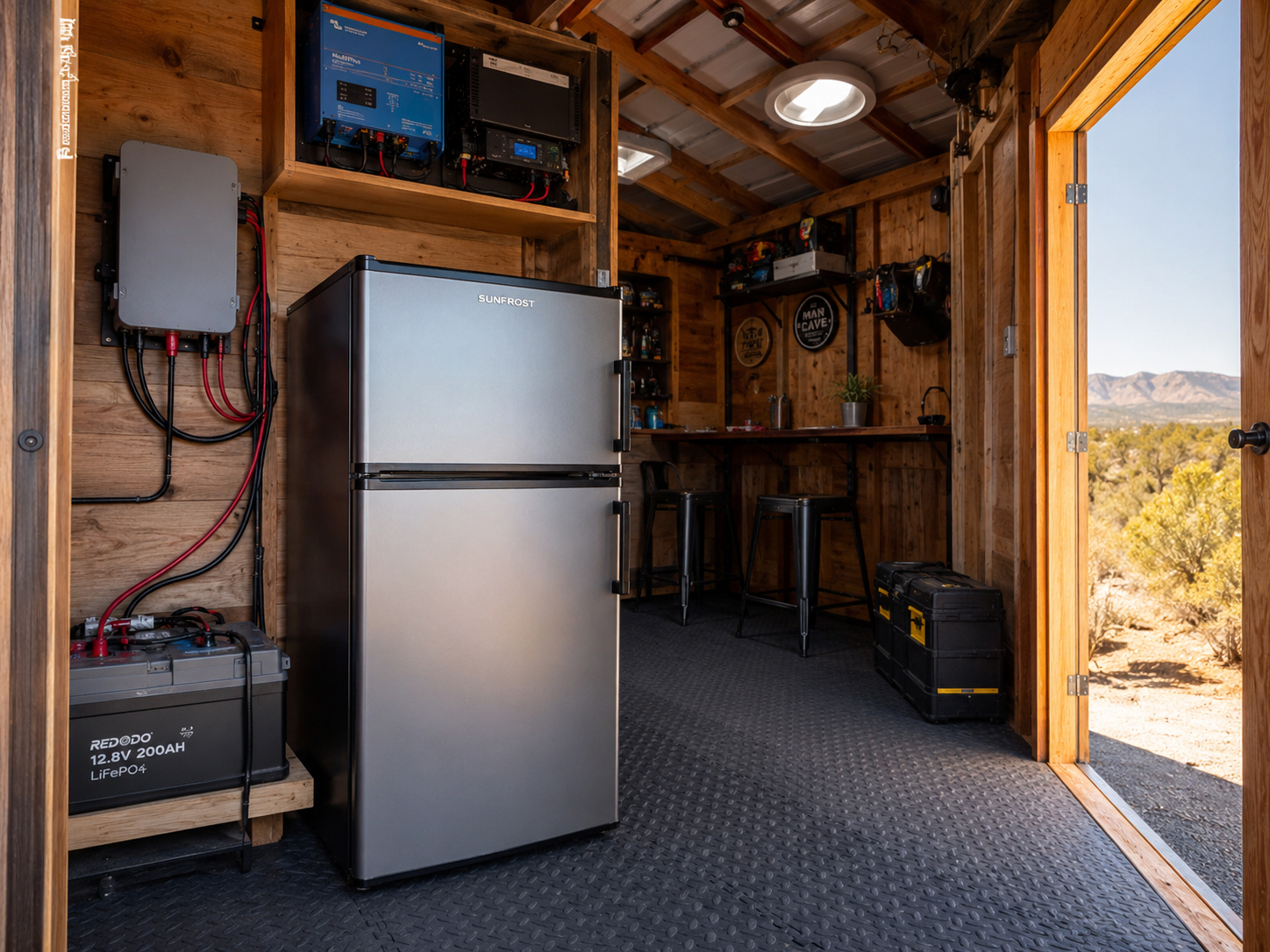
Inside the cave, the SunFrost DC refrigerator/freezer became a symbol of practical solar use. It was not decorative. It was a real load, powered by the battery system, proving that solar energy could support everyday needs.
This is where the modern mini-fridge comedy comes from. The Permit Goblin can inspect the snack fridge all he wants, but the real point is simple: refrigeration is one of the easiest ways for people to understand critical loads.
“Critical load” sounds technical. “Keep the fridge cold when the grid quits” makes sense immediately.
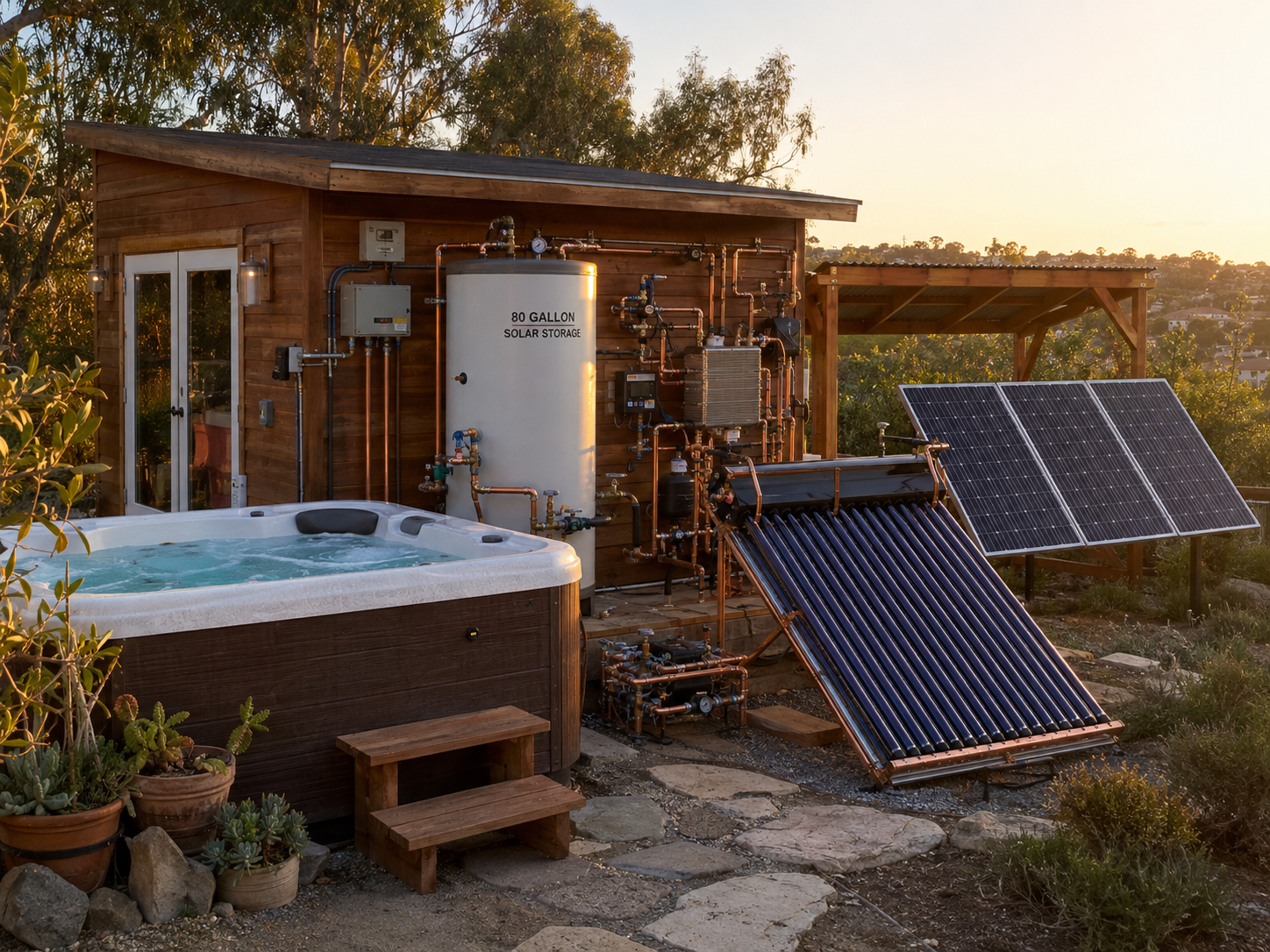
Solar Man Cave was also connected to thermal experiments. An 80-gallon solar storage tank, copper-framed solar thermal collectors, heat exchanger plumbing, and pumps turned sunlight into usable heat.
The hot tub idea made the system human. Solar thermal was not just a diagram. It became warm water, circulation, filtration, and comfort. That is classic Solar Man Cave thinking: take the engineering seriously, then connect it to something people actually enjoy.
The most serious layer of the Solar Man Cave story is fire protection. The cave became part of an off-grid fire-protection concept, using stored energy, controls, pressure, pumps, valves, plumbing, and water delivery to support remote sprinkler defense.
That is the bridge between comedy and resilience. A blackout-proof recliner is funny. A battery-backed fire-protection control hub is not funny at all. Solar Man Cave holds both ideas together: comfort and survival, jokes and engineering, snacks and pressure gauges.
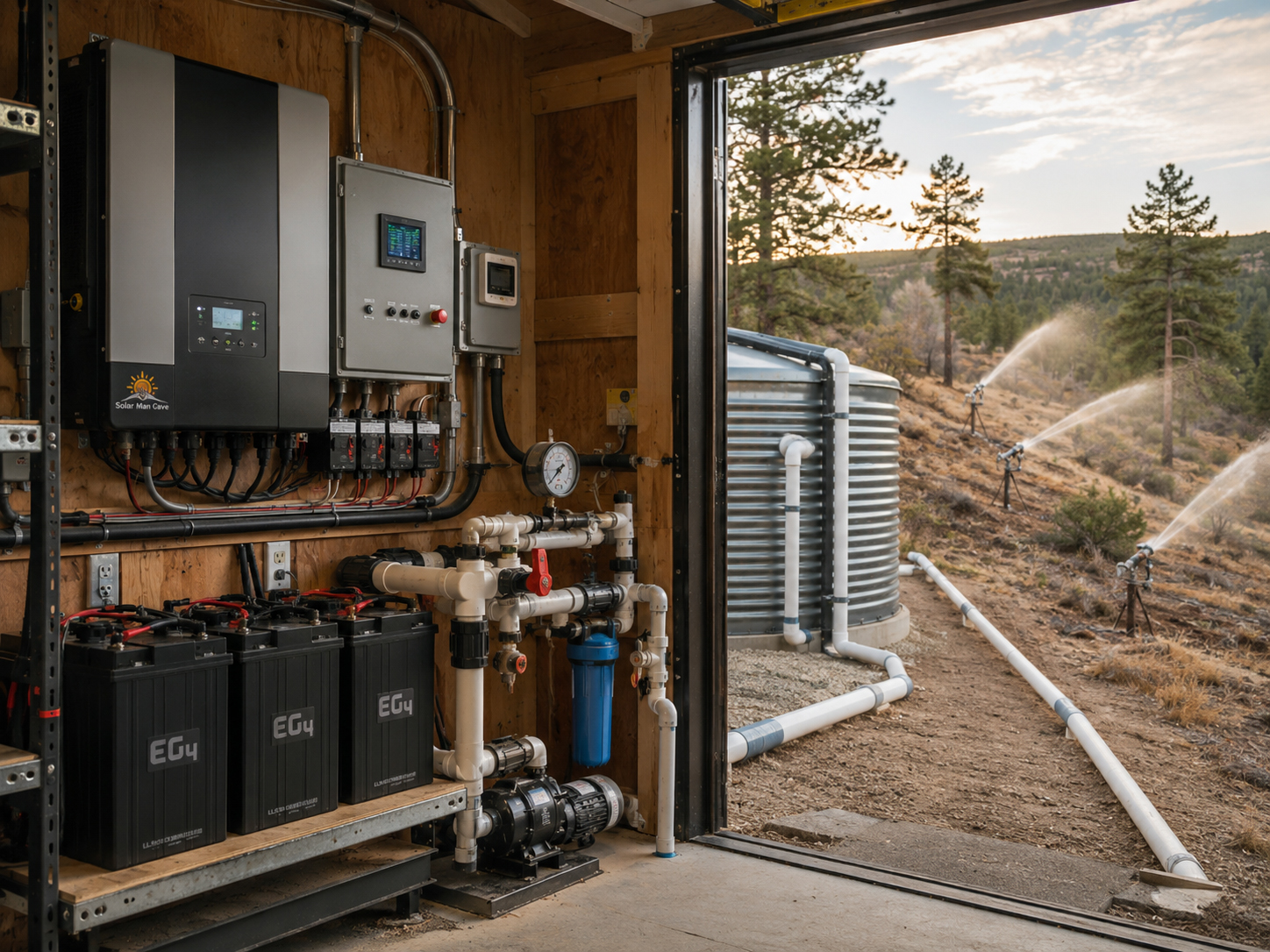
The new SolarManCave.com adds a manga comedy layer on top of this real history. Captain Recliner, Madame Kilowatt, Tomoko Reality Check, the Permit Goblin, the SCE Rate Tantrum, and the battery wall are all funny ways to explain serious solar topics.
The formula is simple:
The grid may fail. Rates may spike. The house may go dark. But with the right solar and battery design, the loads that matter can keep working.
Sometimes the load is a refrigerator. Sometimes it is a fire system. Sometimes it is one ridiculous room that keeps morale alive.
Explore the cave
The best Solar Man Cave pages should connect one visual joke to one practical solar idea.
The original 8' x 10' shed, legacy panels, batteries, DC fridge, and experiment culture.
Open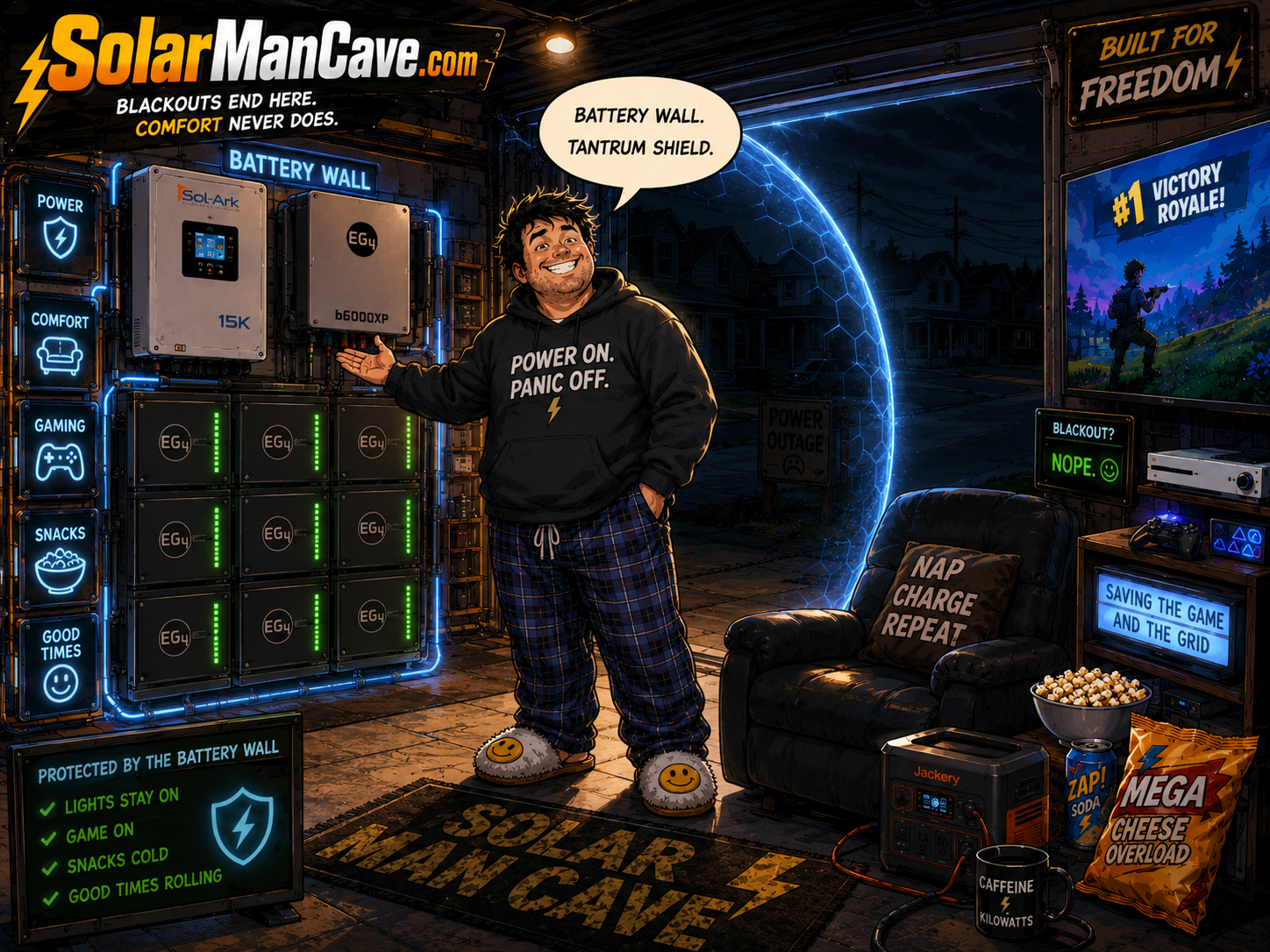
The battery wall is the practical answer to blackout comfort and protected loads.
Open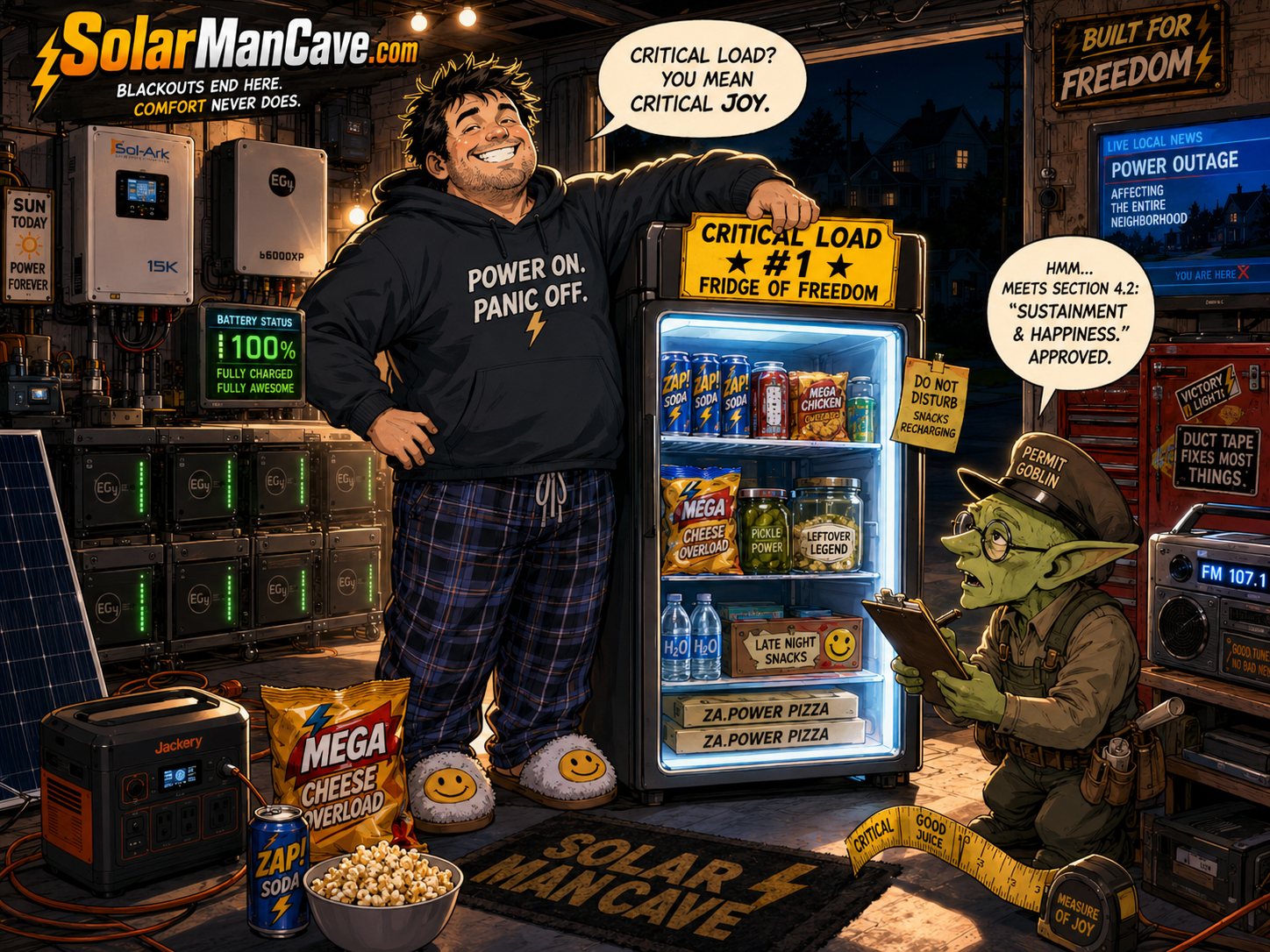
The fridge, the Wi-Fi, the lights, the garage, the pumps, and the things that matter.
OpenABC Solar Incorporated
Solar Man Cave is funny, but the design question is real: what do you need to keep running when the grid fails?