Battery Backup
Protected Loads
Runtime Reality
The tantrum shield with limits
Battery Backup
Battery backup is the heart of the Solar Man Cave. It keeps selected loads alive: refrigerator, Wi-Fi, lights, tools, controls, pumps, and maybe the sacred recliner room — but only when the system is sized around real loads and honest runtime.
Stored energy with a job description
The battery is not the goal. Useful work is the goal.
Solar Man Cave makes battery backup easy to understand because it starts with visible loads. Not abstractions. Not mystery boxes. Real things: a refrigerator, a modem, lights, a garage workbench, a mini-fridge, a home theater, a gaming room, pump controls, and one ridiculous chair that believes it deserves protected status.
The battery backup system is the bridge between solar production and useful work after the grid fails or peak-rate electricity becomes painful. But the battery is not magic. It has capacity. It has limits. It has to be matched to the loads it is expected to protect.
What battery backup actually does.
A battery stores energy so selected loads can continue operating when grid power is unavailable, expensive, or strategically avoided. In the Solar Man Cave world, that means the cave can stay useful while the neighborhood is dark or while Madame Kilowatt is attacking at peak hours.
In practical terms, a battery backup system can support:
- Selected refrigerator and freezer circuits.
- Modem, router, Wi-Fi, and communications equipment.
- Important lighting circuits.
- Garage doors, tool chargers, or workbench equipment where properly sized.
- Security, controls, pumps, or fire-resilience equipment.
- Selected comfort loads such as TV, home theater, gaming, or mini-fridge.
Solar Man Cave translation
Technical version: battery storage supports selected protected circuits through an inverter for a designed runtime, with solar recharge when available.
Cave version: the grid goes dark, but the chosen stuff still works.
The protected-load panel is the truth serum.
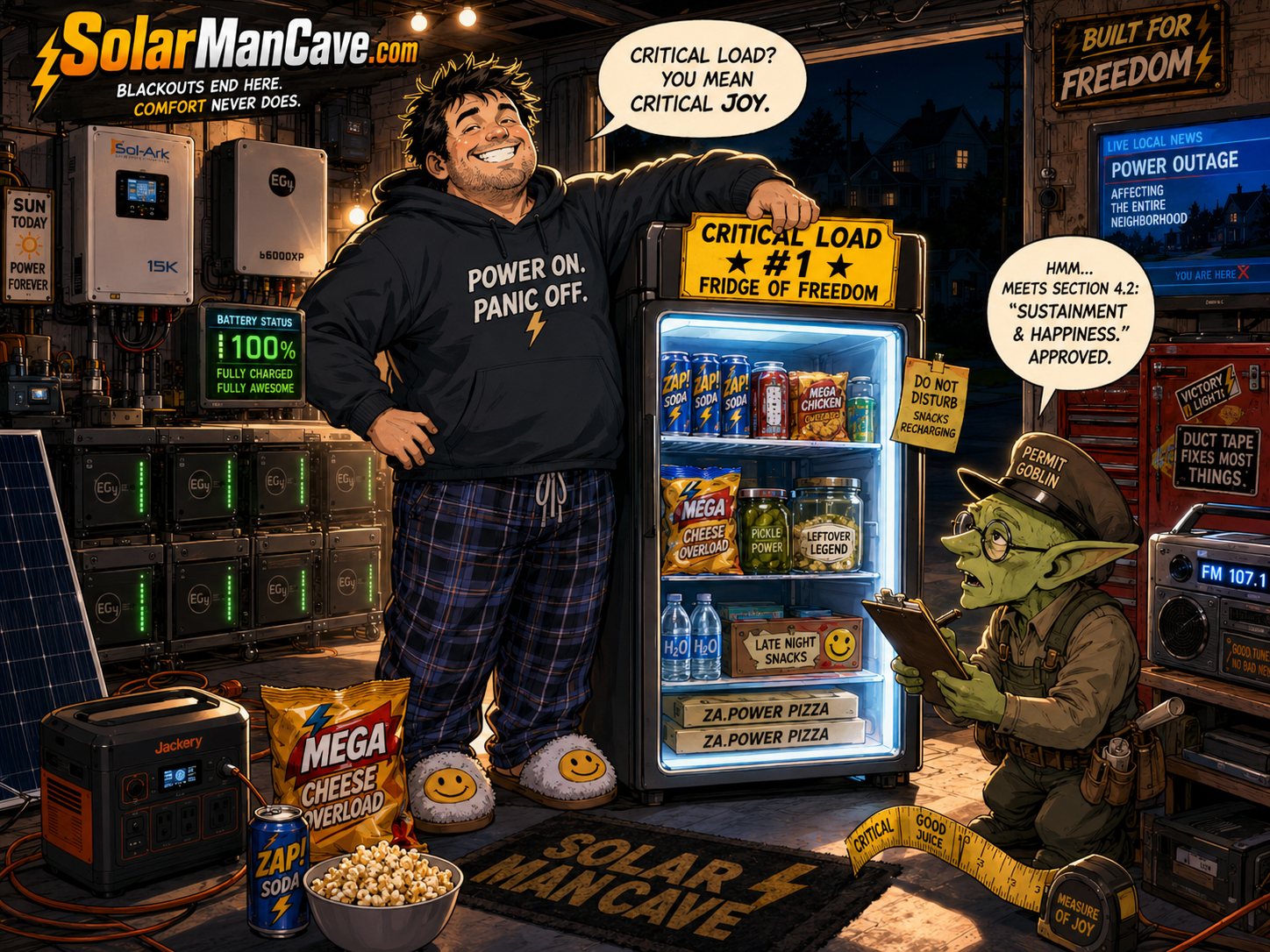
Battery backup becomes serious when the protected-load panel is defined. That panel, or protected circuit list, decides what gets power and what does not. It forces the customer and installer to tell the truth.
Captain Recliner may demand the entire cave: home theater, gaming screens, mini-fridge, popcorn machine, garage tools, and heroic lighting. Tomoko Reality Check asks the correct question: what actually belongs on backup, and what happens during a long outage?
A battery backup system is not a wish list. It is a priority list.
Runtime is where fantasy meets engineering.
Runtime is the real test. A battery may handle selected loads for a short outage, but a long outage changes the conversation. Every watt-hour used by comfort is a watt-hour not available for essential loads.
That does not mean comfort loads are forbidden. It means they must be counted honestly. If the customer wants a home theater or gaming room backed up, the system must be designed around that expectation.
- Short outage: comfort loads may stay on without much sacrifice.
- Overnight outage: lights, refrigeration, and communications may outrank entertainment.
- Multi-day outage: protected loads should be reduced to essentials unless storage is large enough.
- Cloudy weather: solar recharge may be lower than expected.
- High-draw equipment: runtime can drop quickly.
Solar recharge is not guaranteed magic.
Solar panels can recharge the battery, but solar production depends on sun, roof design, shading, season, weather, panel capacity, and what loads are running while the battery is trying to refill.
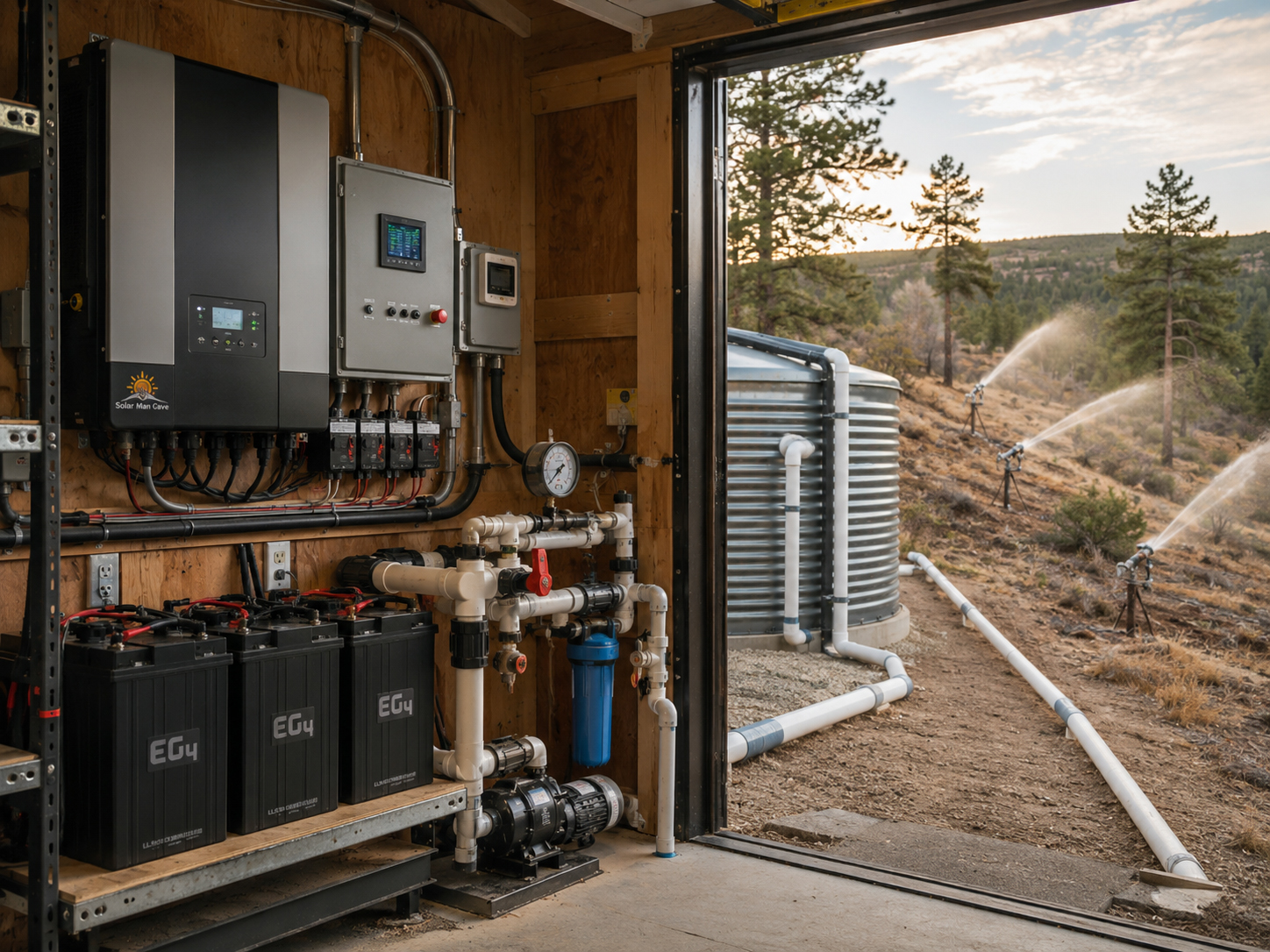
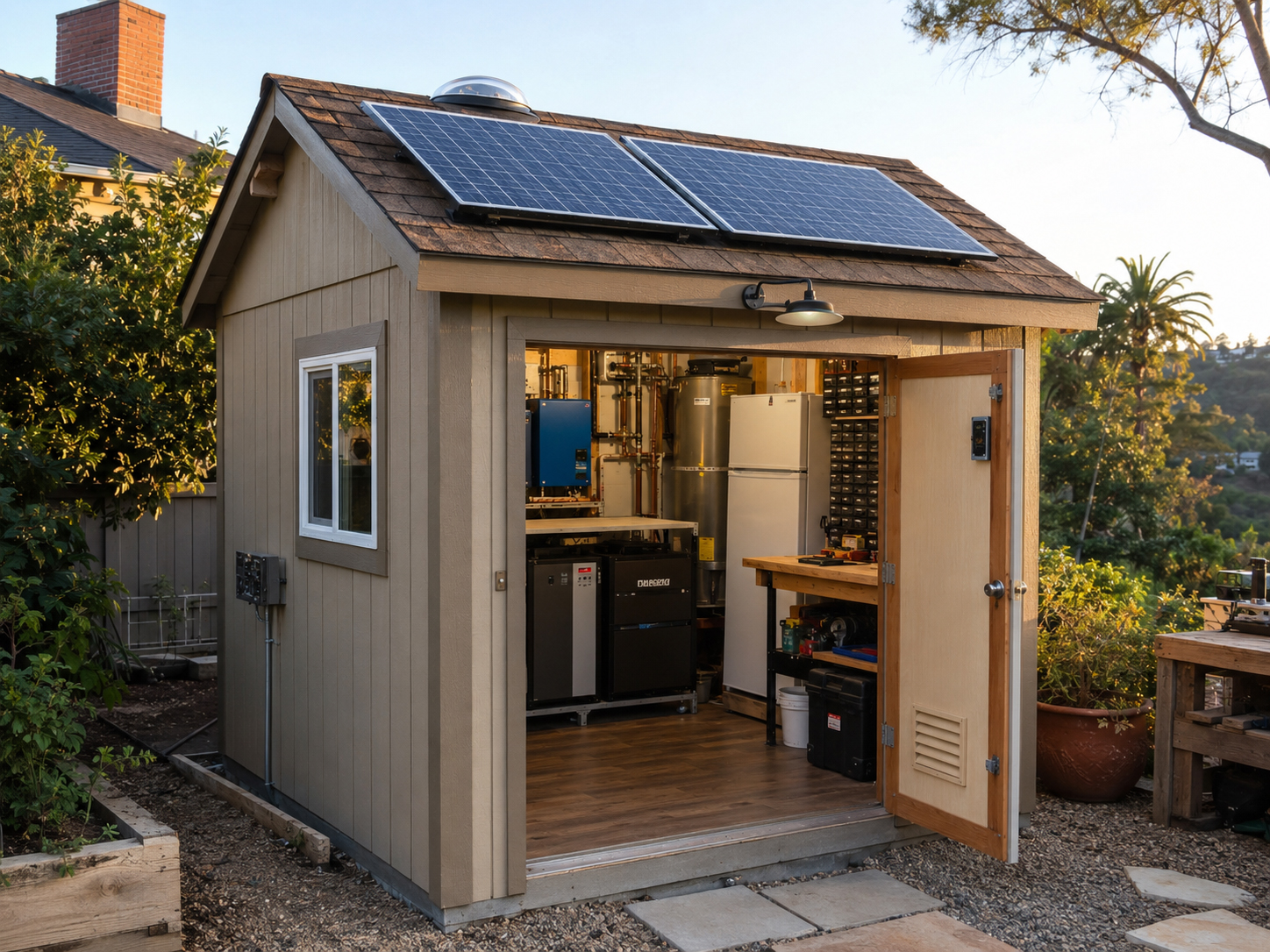
The original Solar Man Cave demonstrated this in miniature. The 8' x 10' R&D shed used real panels, batteries, inverter equipment, refrigeration, thermal systems, and controls. It showed that solar is most useful when the load, storage, and recharge strategy are understood together.
The battery fights blackouts and bad timing.
Battery backup has two big Solar Man Cave jobs. First, it fights blackouts by keeping selected circuits alive when the grid fails. Second, it can help with timing by storing solar energy for hours when grid electricity is expensive or inconvenient.
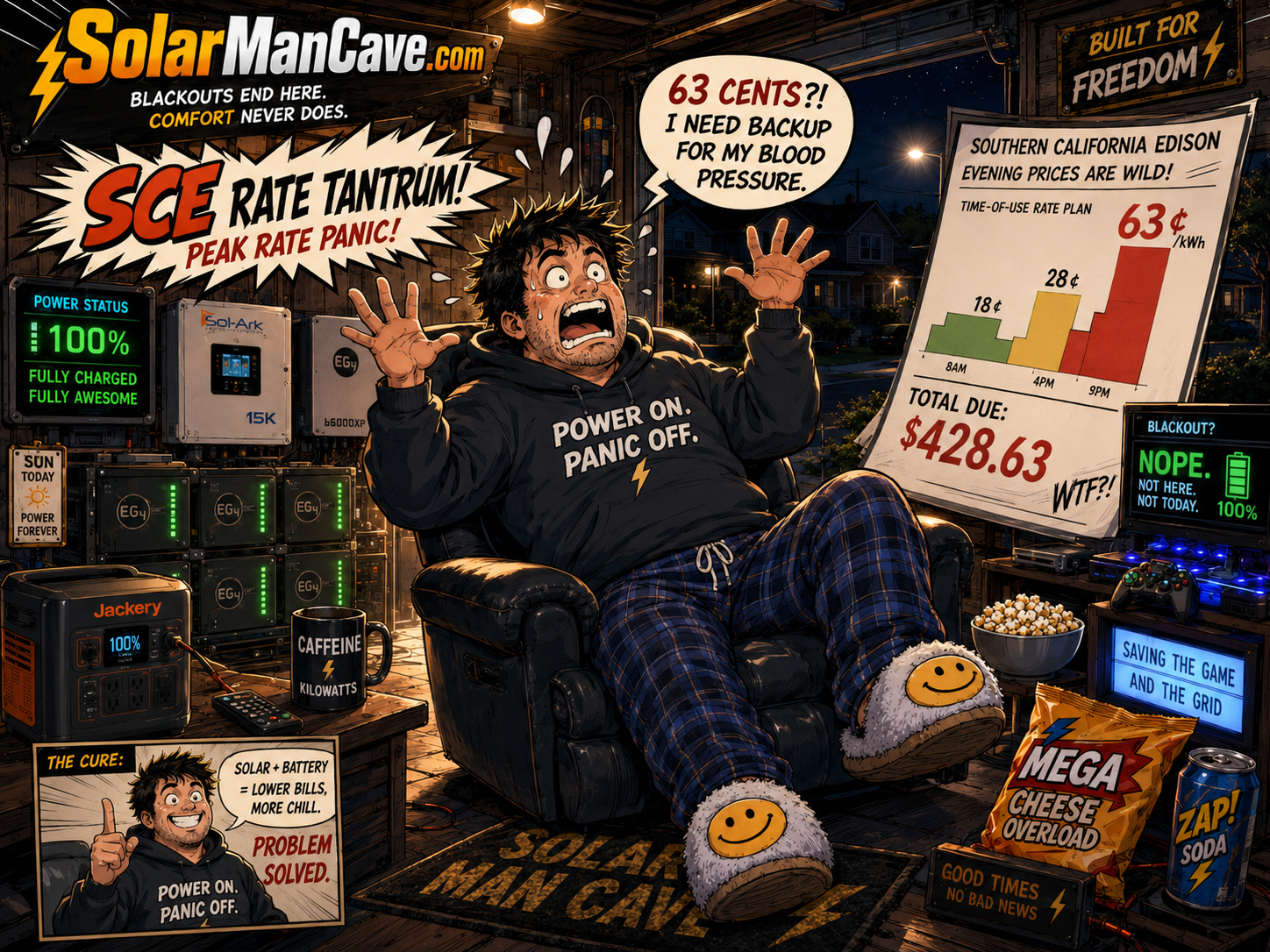
That is why the SCE Rate Tantrum page belongs next to battery backup. Peak-rate frustration is not just a complaint. It can become a storage strategy.
Blackouts are a power problem. Peak rates are a timing problem. Batteries can help with both.
Comfort backup is allowed — if it is honest.
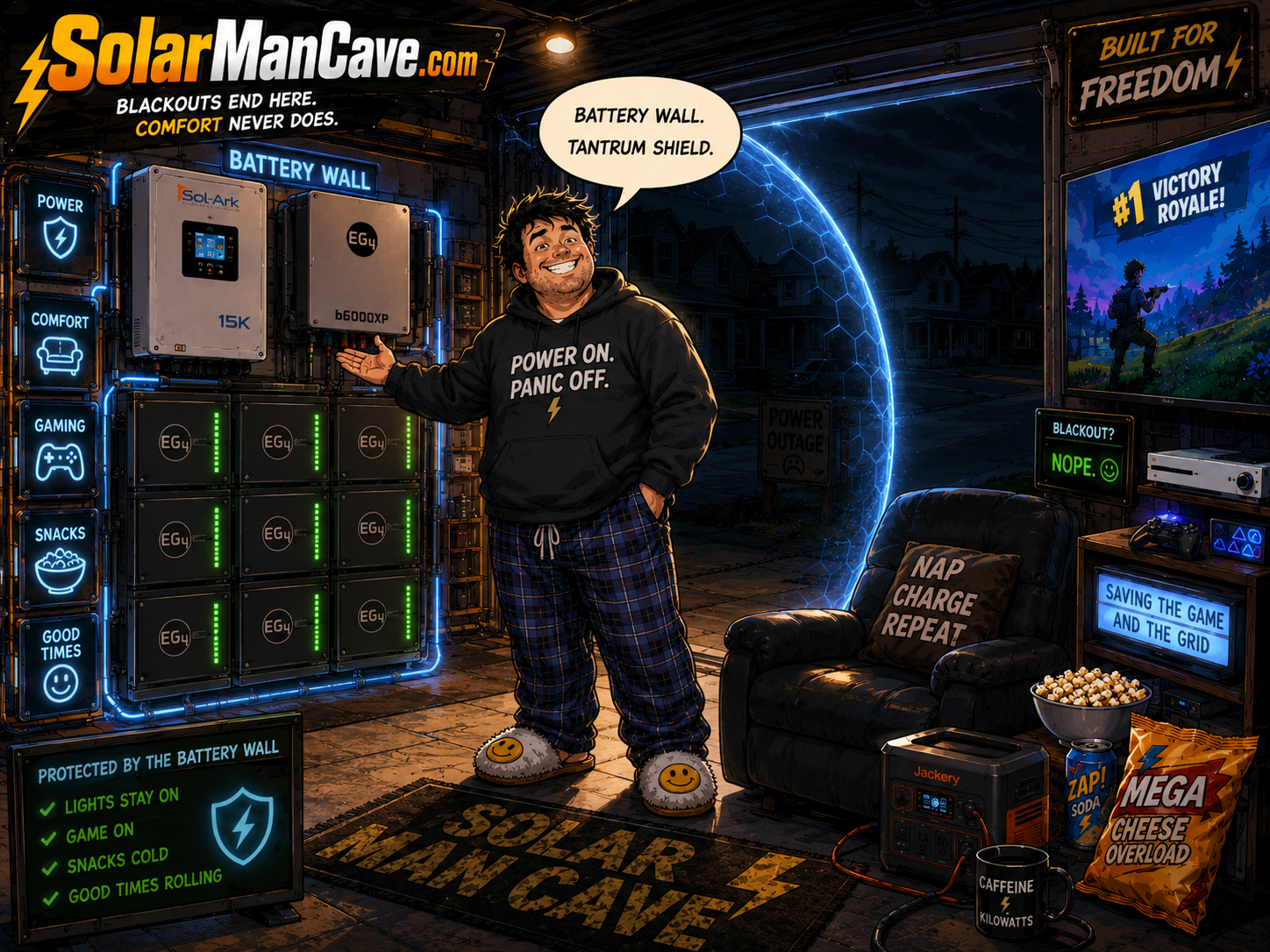
Solar Man Cave is built around the idea that comfort matters. A working room during an outage can keep morale up. A lit garage can support repairs. A gaming room can keep a household calm. A home theater can turn a blackout into a tolerable evening.
But the comfort loads must not sneak in ahead of essential loads unless the customer makes that choice knowingly and the battery is sized accordingly.
Tomoko Reality Check
“This is not a cave. This is an emotional support utility room.”
And if it is a utility room, it needs utility-room discipline.
The battery-backup checklist.
Before promising backup power, the system should answer these questions:
- Which circuits are protected?
- Which appliances and devices are on those circuits?
- What is the normal power draw?
- Are there startup surges?
- How long should the loads run?
- What loads get turned off during a long outage?
- How much solar recharge is realistic?
- What does the customer need to know before the outage?
The page takeaway.
Battery backup is the center of Solar Man Cave because it connects every part of the story: real R&D history, critical loads, rate pain, blackout comfort, refrigeration, pumps, tools, theater, gaming, and resilience.
The best Solar Man Cave message is direct:
Name the loads. Size the battery. Respect runtime.
The battery wall protects the cave only when the system is designed around truth.
Continue the backup story
The battery page connects the whole cave.
Critical loads, peak rates, comfort rooms, and the original R&D shed all point back to the same design discipline.