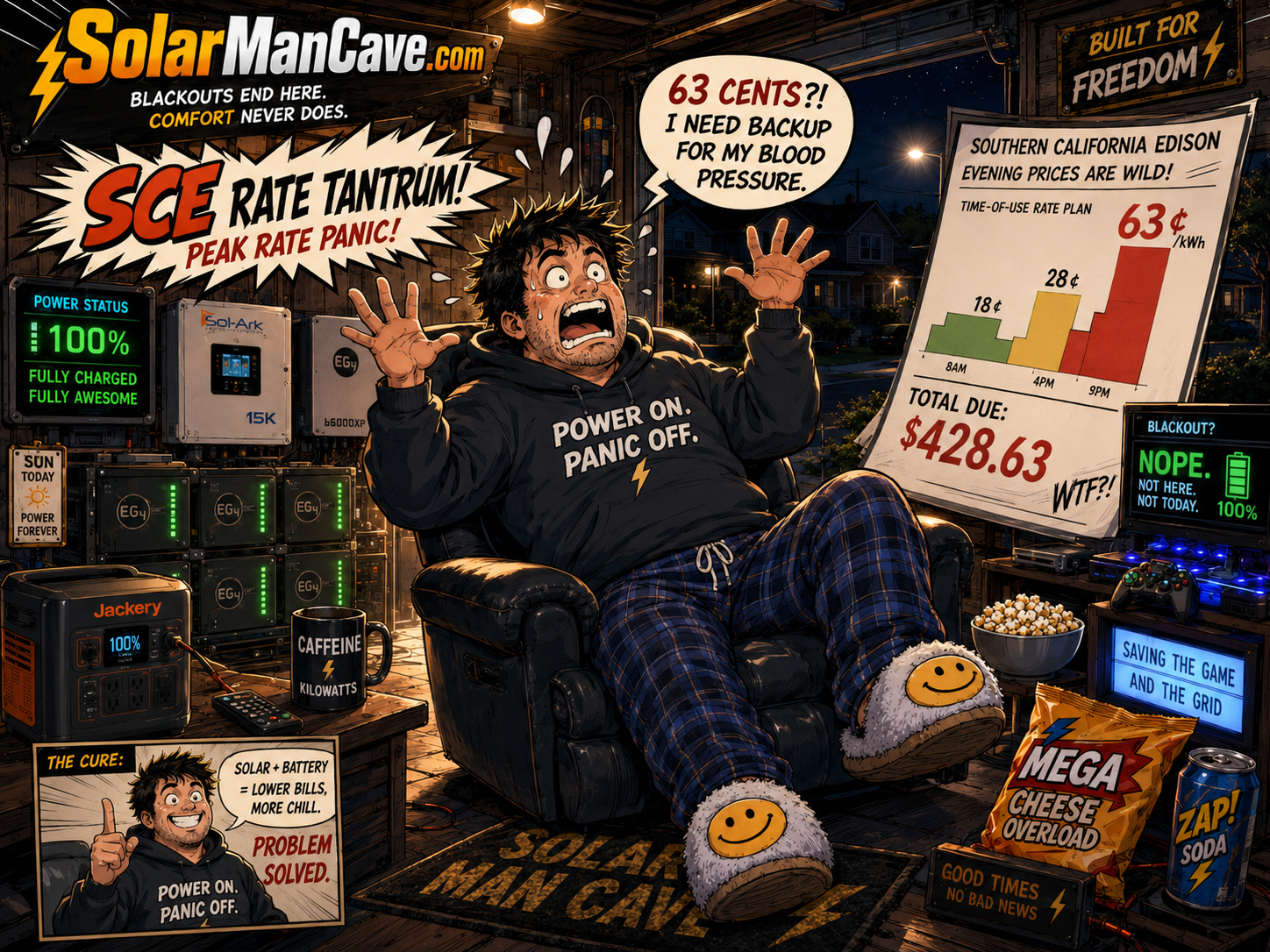
Name the cave.
Is it a garage workshop, gaming room, home theater, utility room, fire-control hub, or the emotional support recliner kingdom?
The simple version
Solar Man Cave works by asking one plain question first: what do you actually want to keep running when the grid fails or peak rates attack? Once the loads are honest, the solar and battery design can be honest too.
The Solar Man Cave method
Do not start with fantasy. Start with the load list: refrigerator, Wi-Fi, lights, tools, pumps, controls, garage, theater, gaming room, and the comfort loads the owner insists are “essential.”
Is it a garage workshop, gaming room, home theater, utility room, fire-control hub, or the emotional support recliner kingdom?
Every protected circuit starts with real objects: lights, fridge, modem, router, pumps, tools, chargers, TV, freezer, or controls.
Thirty minutes, one evening, overnight, or longer. Runtime is where battery backup becomes real instead of decorative.
The inverter must handle the loads that run at the same time, including startup behavior from certain equipment.
Battery capacity must support the selected loads for the expected duration. More comfort loads mean less runtime unless storage increases.
Solar production helps refill the battery, but weather, season, shading, and daytime usage all affect recharge expectations.
The real origin
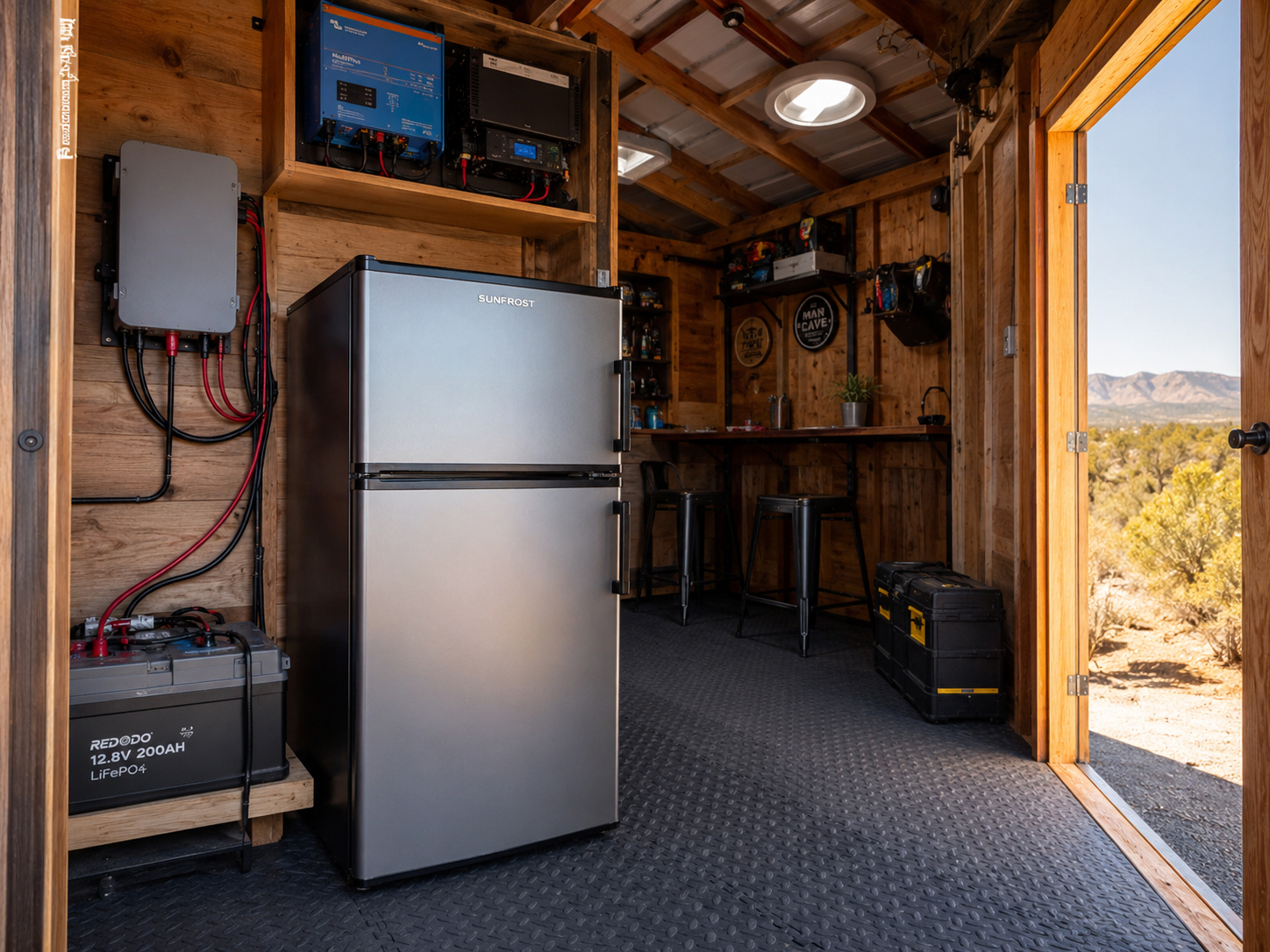
Solar Man Cave began as a real 8' x 10' ABC Solar research and development shed. It used legacy solar panels, batteries, a DC refrigerator, thermal storage, hot-tub equipment, pumps, and off-grid fire-protection thinking.
That old shed is the serious foundation under the new manga comedy. The cartoons make the lesson memorable. The R&D history makes the lesson credible.
See the Original Shed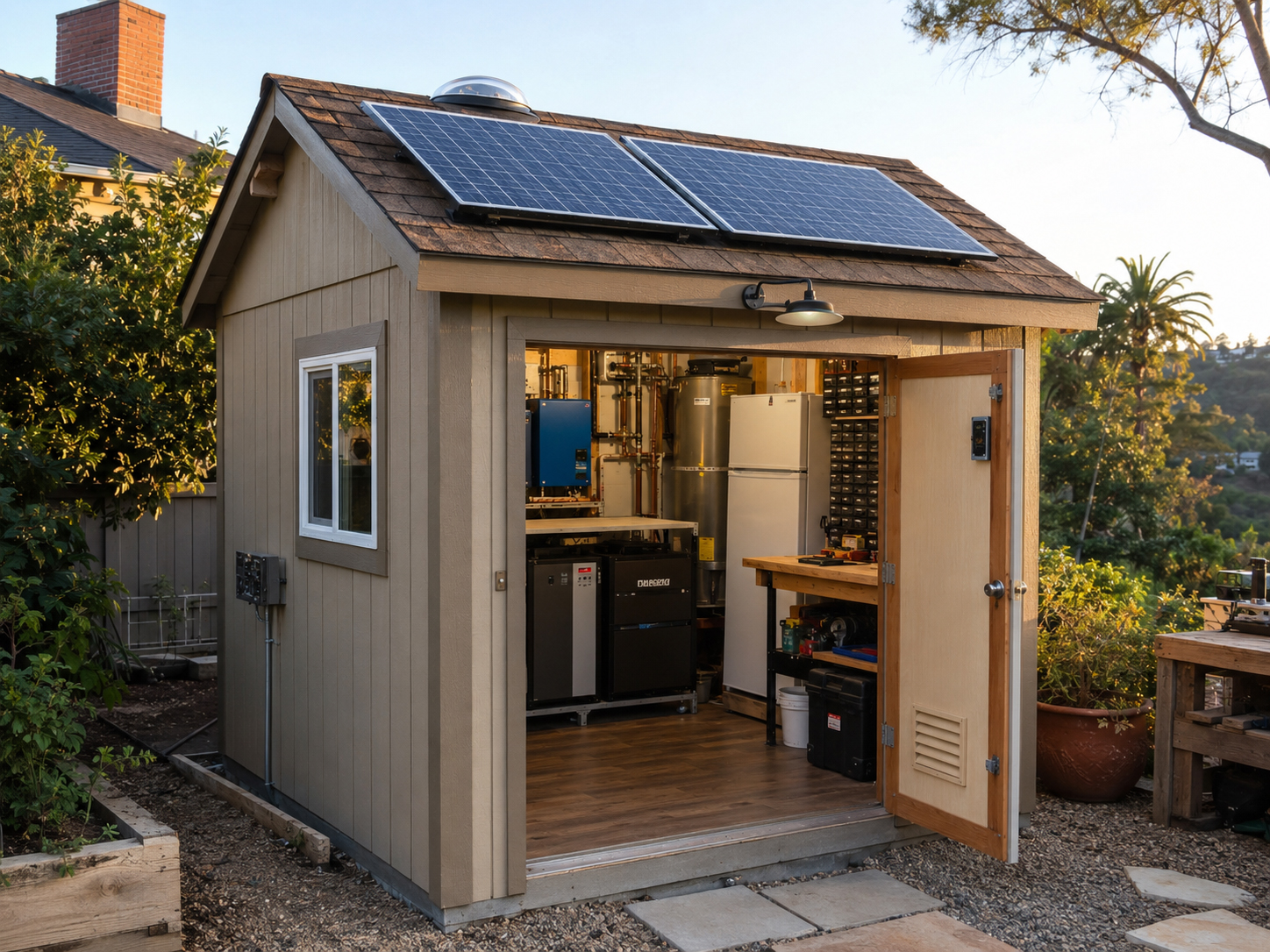
The protected-load rule
The Solar Man Cave owner may want everything powered forever. Tomoko Reality Check knows better. A good backup system is not a wish list. It is a priority list.
The practical design separates loads into categories. That lets the system protect what matters without accidentally wasting battery capacity on loads that should be off during a long outage.
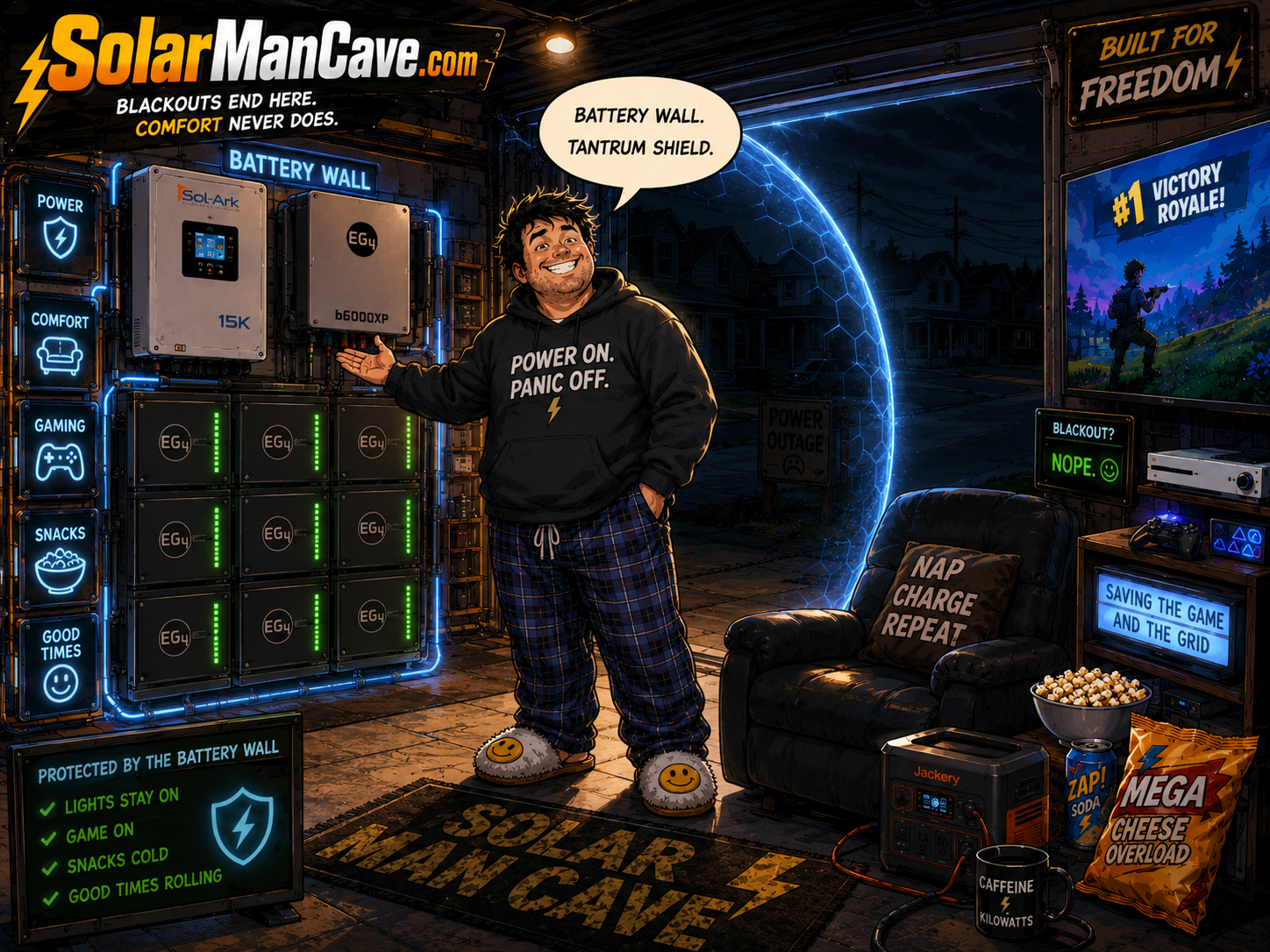
The battery wall is not magic. It is stored energy with a job description.
Solar Man Cave uses comedy characters to explain the system without turning the page into an engineering manual. Each character carries one practical solar lesson.



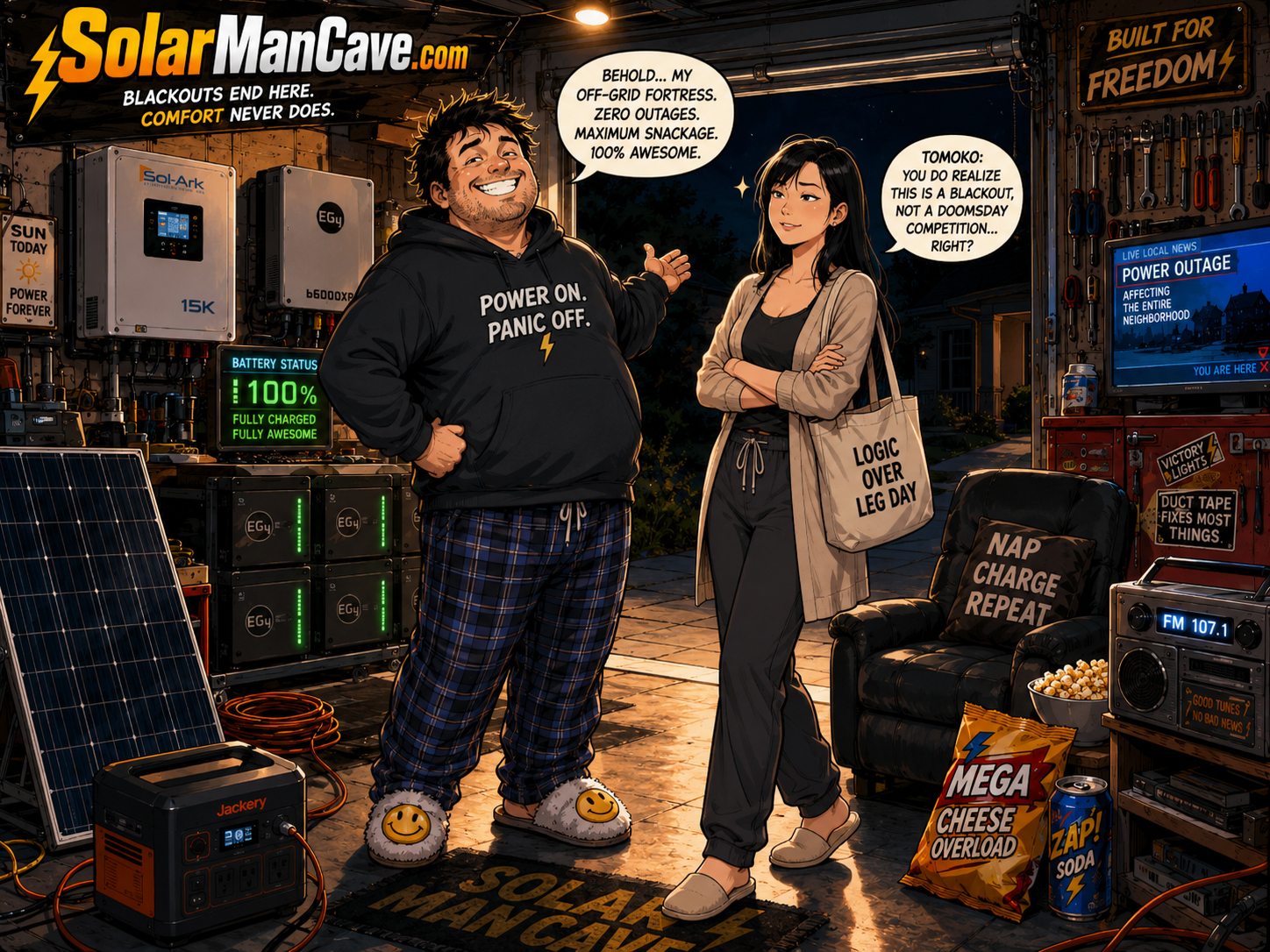
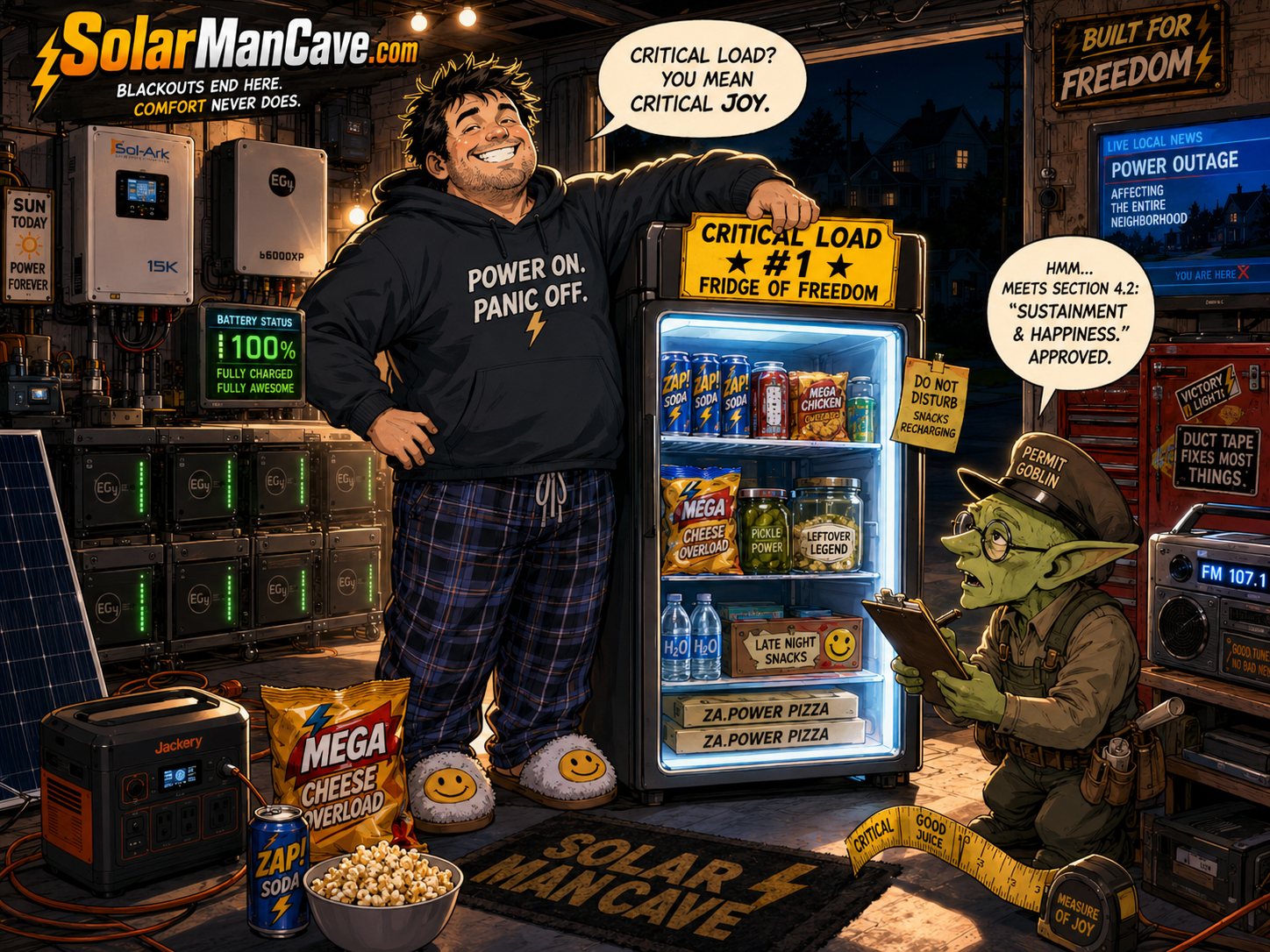
Example: the mini-fridge
The mini-fridge is the perfect Solar Man Cave example. It is funny because the owner treats snacks like emergency infrastructure. But refrigeration is also one of the clearest ways to explain protected loads.
The correct design question is not “is the mini-fridge funny?” The correct question is: how much power does it use, how long should it run, and what more important loads share the same battery?
See Mini-Fridge Critical LoadsThe practical flow
The Solar Man Cave system conversation should follow this order. This keeps the design grounded and prevents the customer from assuming the battery will run everything forever.
Solar Man Cave works when the comedy leads back to discipline: name the loads, size the battery, respect runtime, and tell the truth before the outage does.
Explore the system
Start with battery backup, critical loads, and the SCE rate tantrum. Those three pages explain the core Solar Man Cave value.
ABC Solar Incorporated
Solar Man Cave is comedy, but the design process is serious: list the loads, size the system, and explain the limits.