Mini-Fridge Critical Loads
The snack fridge becomes the funniest doorway into protected-load design.
Open
The inspection nobody asked for
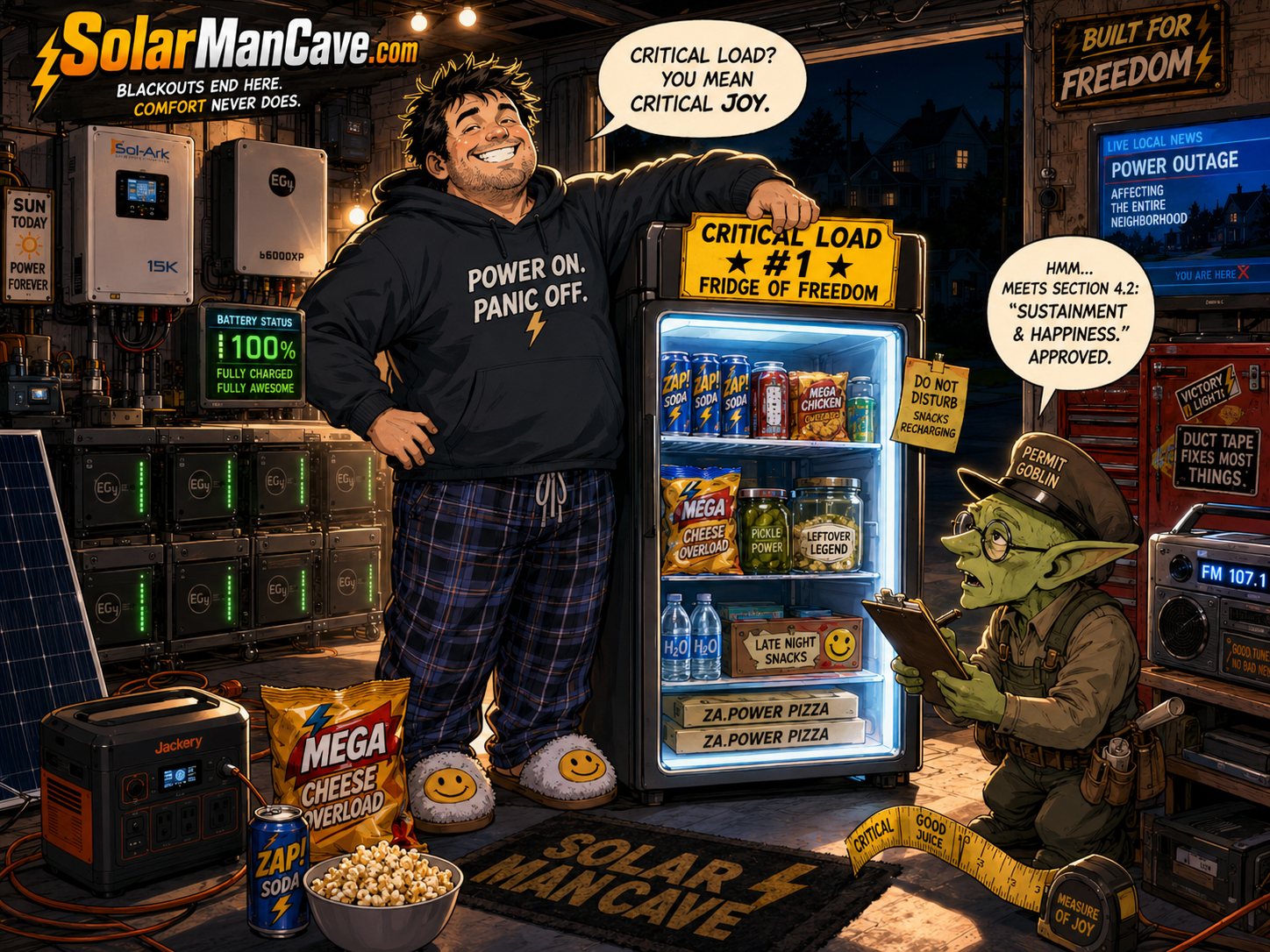
In the Solar Man Cave universe, even the snack fridge faces inspection. The Permit Goblin arrives with a clipboard, a tape measure, and one question: is this mini-fridge truly critical infrastructure?
Bureaucracy meets snacks
The Permit Goblin is the tiny official who appears whenever comfort becomes too confident. He carries a clipboard, measures things nobody asked him to measure, and treats the mini-fridge like it might violate some ancient electrical snack ordinance.
The joke is obvious. But the design question underneath is useful: which appliances belong on backup power, and why?
A mini-fridge is funny because it feels optional. Nobody wants to admit that cold drinks, leftovers, snacks, or comfort supplies are “critical.” But refrigeration is one of the easiest protected-load ideas for people to understand.
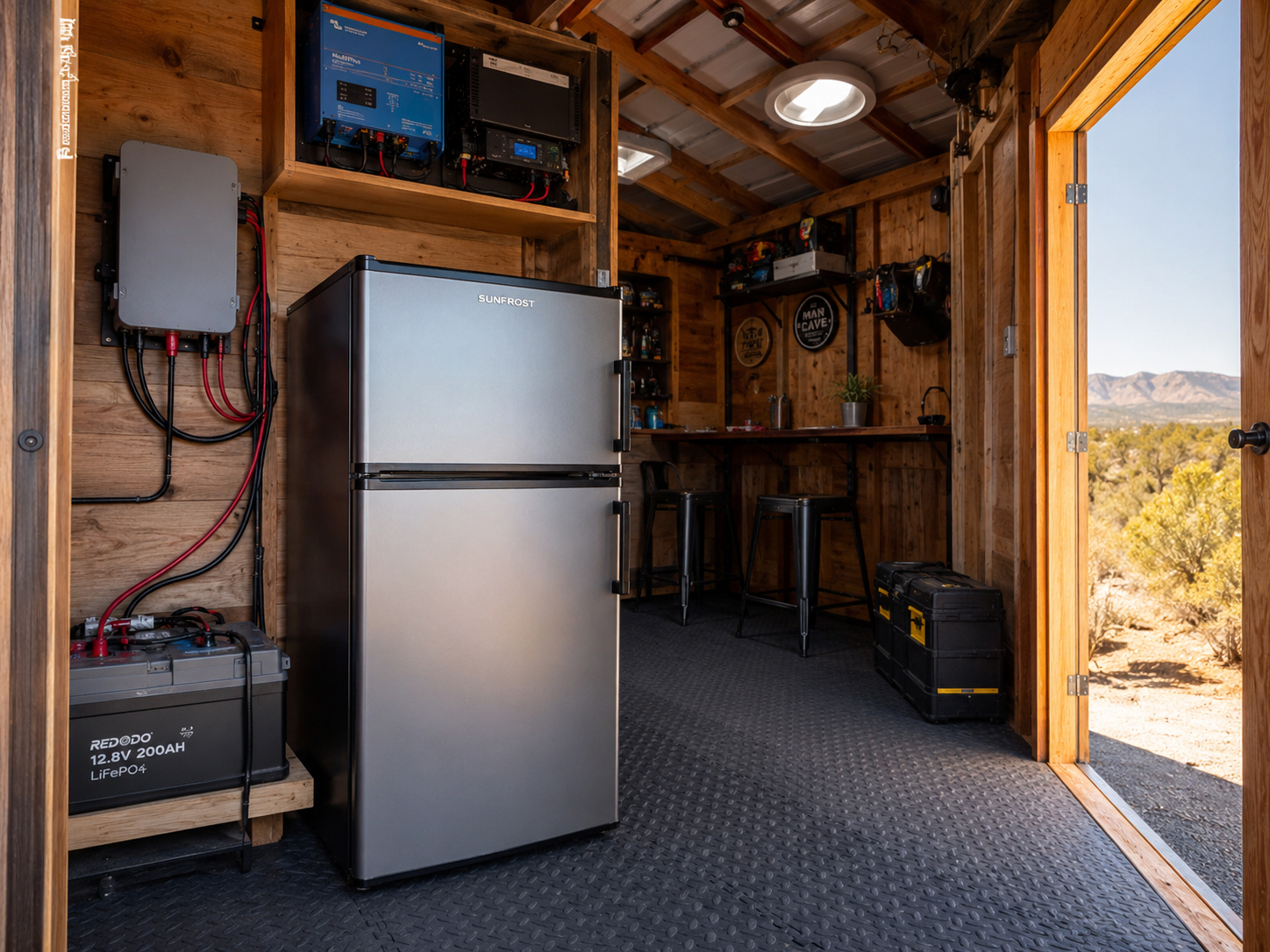
The original Solar Man Cave already proved this with the SunFrost DC refrigerator/freezer. That real refrigerator was not comedy. It was a practical load powered by solar and battery equipment. The manga mini-fridge is the exaggerated descendant of the same lesson.
The snack fridge is comedy. Refrigeration backup is engineering.
The Permit Goblin wants a strict answer. The Solar Man Cave gives him a better one: some loads are essential, some are comfort, and some are morale. The design should name them honestly.
That means the mini-fridge may not outrank medical equipment, refrigeration for medicine, communications, fire-system controls, or key lighting. But it can still belong in a protected circuit if the system is designed for it and the customer understands the runtime tradeoff.
Technical version: classify refrigeration loads, estimate daily energy use, place selected circuits on backup, and verify inverter and battery capacity.
Goblin version: show me the fridge, show me the snacks, show me the battery, and explain yourself.
The Permit Goblin is annoying, but his checklist is not useless. A real backup design should ask hard questions before promising that everything will stay on.
Solar and battery work involves rules, permits, inspectors, equipment ratings, panels, inverters, circuits, labels, and safety requirements. That can sound dry. The Permit Goblin gives that whole world a face.
He is not anti-solar. He is not even anti-snack. He simply forces the cave owner to prove that the load belongs on backup. That is good design disguised as comedy.
The goblin may be small, but the load calculation is not optional.
The original Solar Man Cave used a SunFrost DC refrigerator/freezer inside the 8' x 10' R&D shed. That equipment made refrigeration visible as a real solar load. It helped show how efficient appliances, DC power, battery storage, and system sizing can work together.
The Permit Goblin episode should link back to that real history. The mini-fridge gag becomes stronger because the site can say: yes, the joke is silly, but ABC Solar has been testing solar-powered refrigeration for real.
The Permit Goblin makes backup design funny, but his question is serious: what exactly belongs on the protected-load list?
Continue the fridge fight
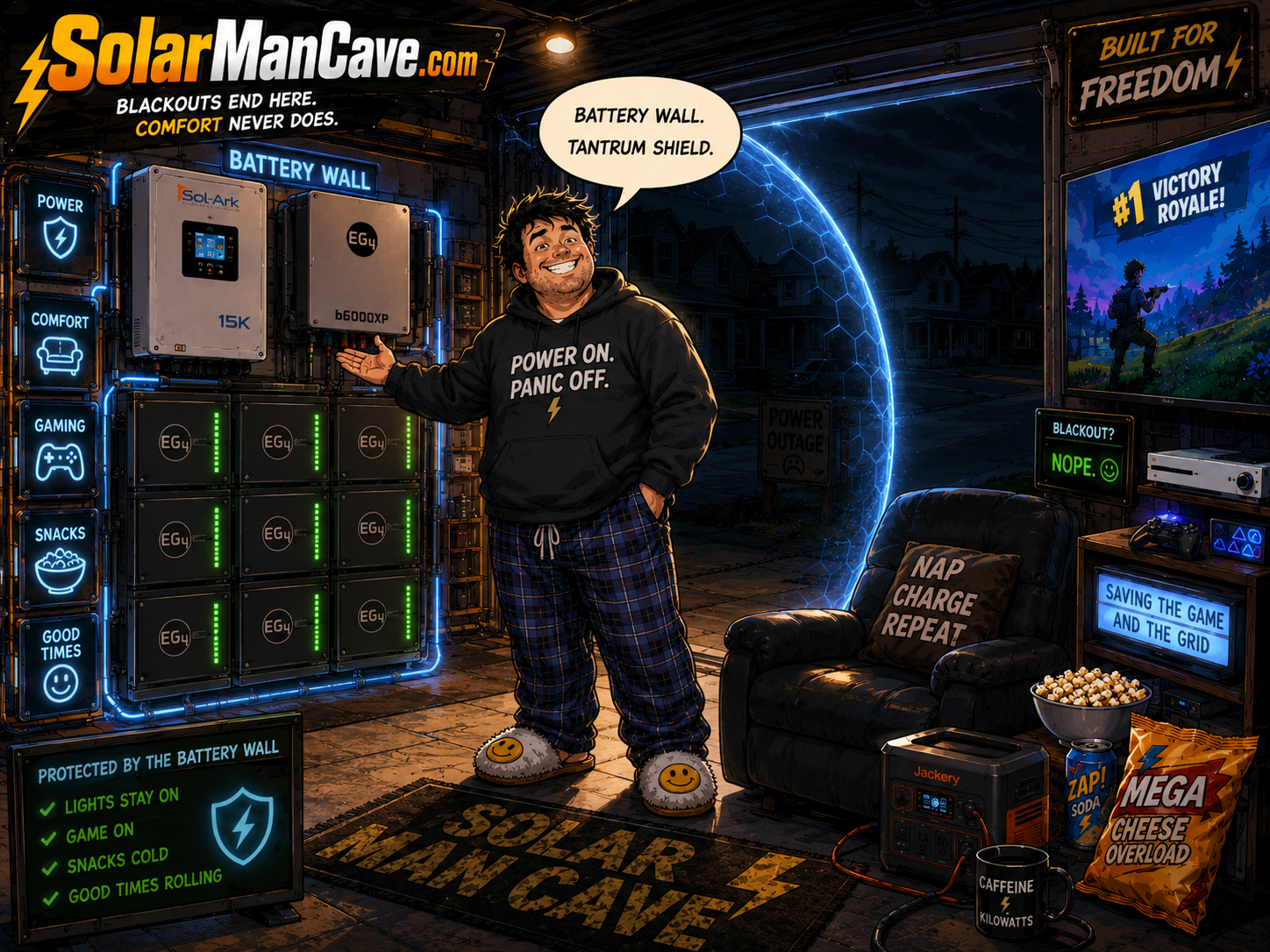
The mini-fridge is only one appliance. The larger issue is deciding what the battery system must protect when the grid fails.
ABC Solar Incorporated
Refrigeration, lights, Wi-Fi, pumps, controls, garage, tools, and comfort all need honest sizing before they belong on battery backup.