
Game Never Dies
The game room is a simple way to explain communications, screens, and comfort loads.
Open
The sacred control room of comfort
This is the Solar Man Cave in full comedy mode: screens glowing, snacks protected, mini-fridge cold, batteries charged, and one grown man acting like his comfort room is a national defense facility.
Comedy first, design underneath
The Adult Man Baby Command Center is the page where Solar Man Cave admits the truth: sometimes backup power is not only about emergency survival. Sometimes it is about morale, comfort, routine, and the sacred human need to keep one room working when everything else has failed.
The joke is the overbuilt room. Multiple screens. Controllers. Speakers. Mini-fridge. Snack station. Battery wall. Recliner. LED lights. The owner treats it like a mission control center because, emotionally, it is.
A battery backup system should begin with an honest inventory. What needs power? What merely wants power? What absolutely cannot lose power? What makes the difference between a tolerable outage and a miserable outage?
The command center makes that conversation visual. It turns protected loads into real objects inside one room.
Technical version: define protected circuits, measure load profiles, size inverter capacity, calculate battery duration, and estimate solar recharge.
Command center version: what stays on when Dad refuses to surrender the remote?
A whole-home battery conversation can get abstract quickly. A room is easier. The room has a door. The room has devices. The room has lights. The room has a refrigerator. The room has a person who expects things to work.
That is why Solar Man Cave uses comedy. It gives homeowners a simple starting point: design the backup around the lived experience, then convert that experience into circuits, loads, battery capacity, and system design.
The room is funny because it is excessive. The design works because it is specific.
Comfort loads can be valid. But they still require discipline. A battery system cannot run everything forever. The command center should not pretend otherwise. It should make the tradeoff easier to see.
The Solar Man Cave question is not “can we power everything?” The better question is: what belongs on backup, what can wait, and what should be excluded?
The original 8' x 10' Solar Man Cave was already a command center in a serious way. It held solar equipment, batteries, refrigeration, thermal controls, pumps, and off-grid fire-protection ideas. The new manga command center simply translates that spirit into a more playful visual language.
The real shed tested useful work. The manga room dramatizes useful work. Both ask the same practical question:
When the grid fails, what work should solar and batteries keep doing?
The phrase is comedy shorthand, not the design goal. The character is a grown man who wants his comfort protected with absurd seriousness. That makes the page memorable. But the design lesson is clean: protected loads should be named before the system is sold.
Solar Man Cave uses the joke to pull people into the real conversation. Once they laugh, they understand the point: the battery wall is only useful if it protects the loads the customer actually cares about.
The Adult Man Baby Command Center is a funny way to say something serious: battery backup should be designed around real rooms, real habits, and real load priorities.
More command center logic
Screens, snacks, lights, refrigeration, rates, and batteries all become easier to explain when they live inside the same room.
The game room is a simple way to explain communications, screens, and comfort loads.
Open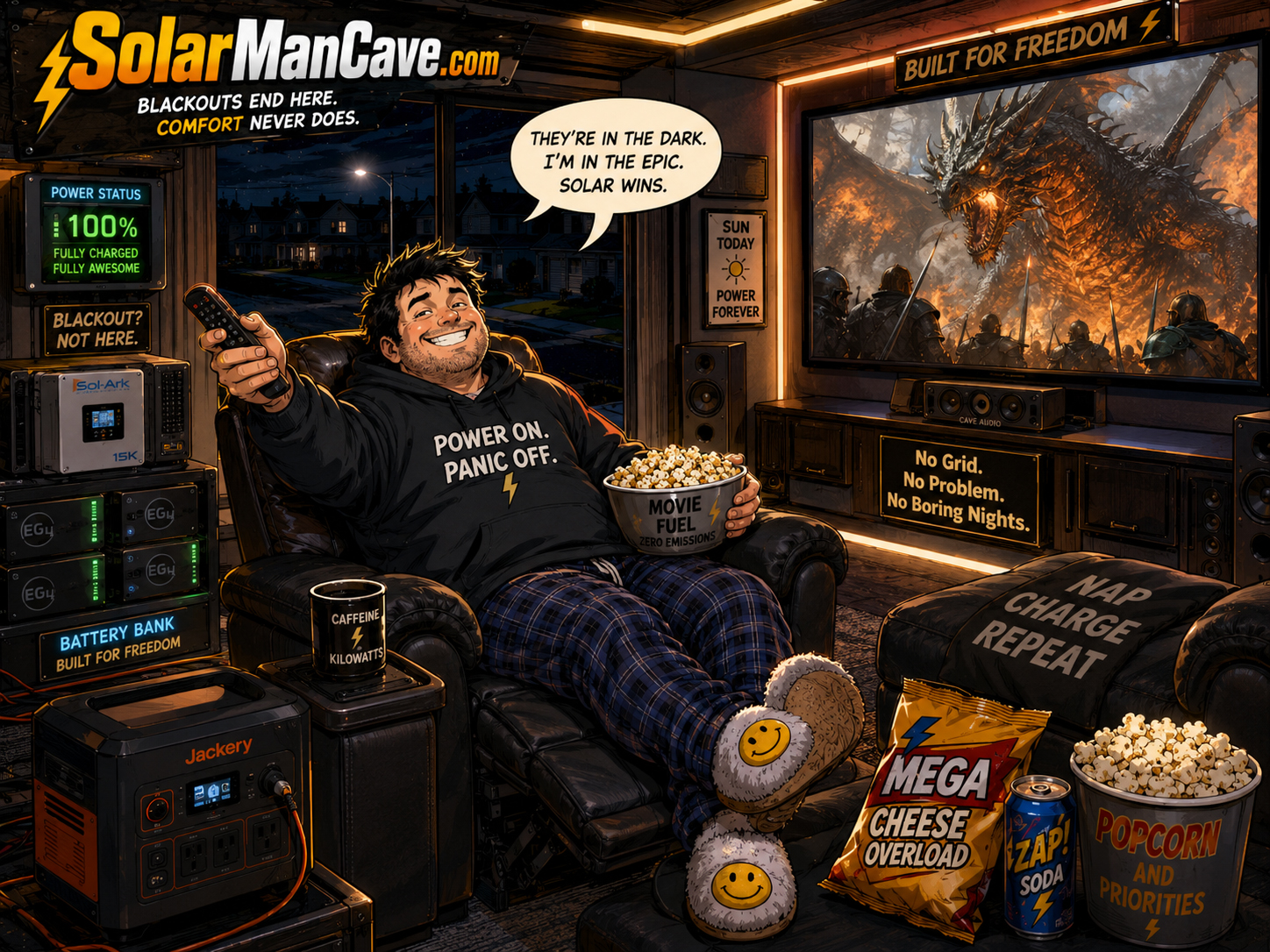
A theater page explains runtime, protected circuits, lighting, and expectations.
Open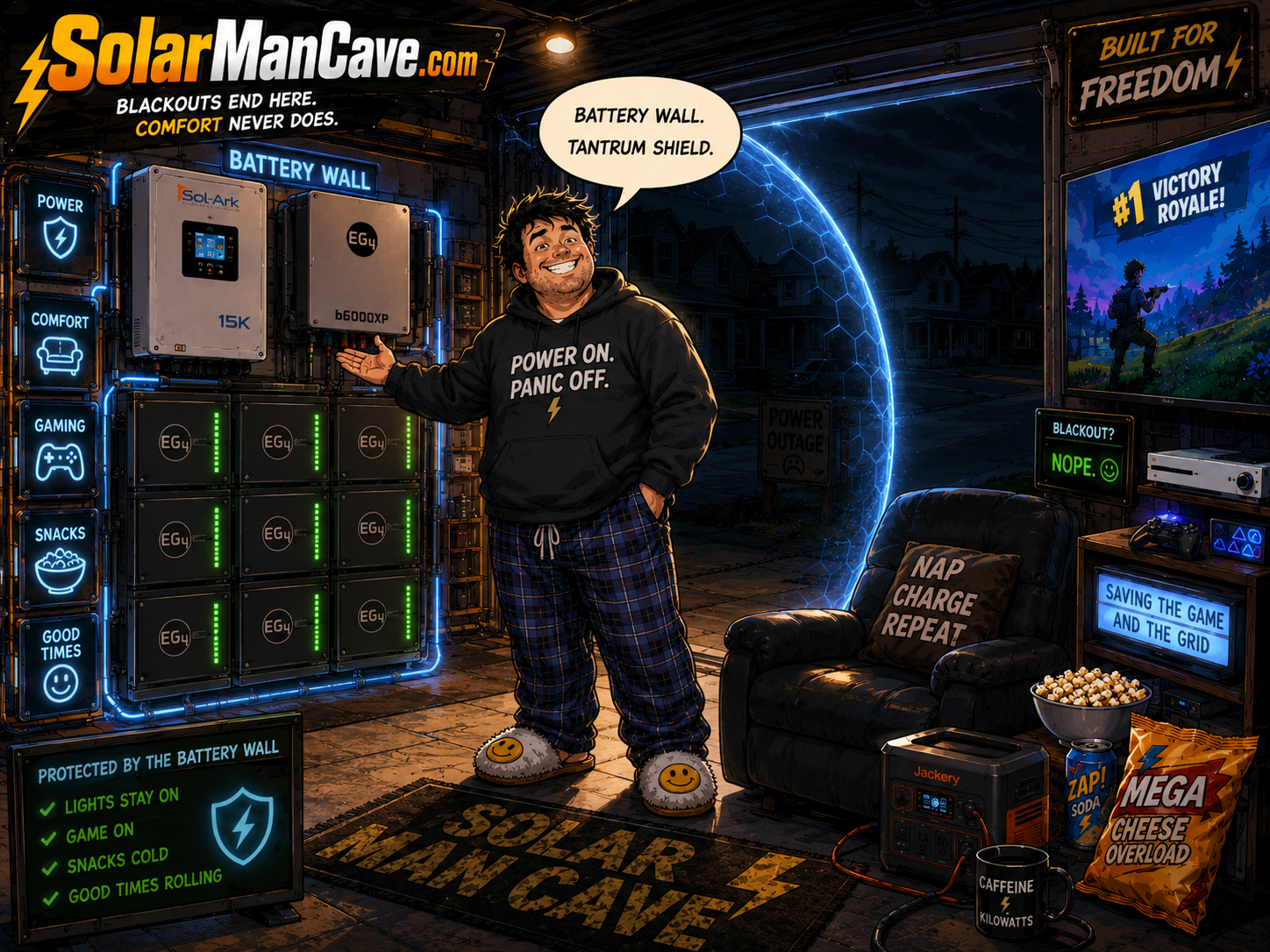
The battery wall is not decoration. It has to support the loads it promises.
OpenABC Solar Incorporated
A good backup design starts with the real room, the real equipment, and the real expectations.