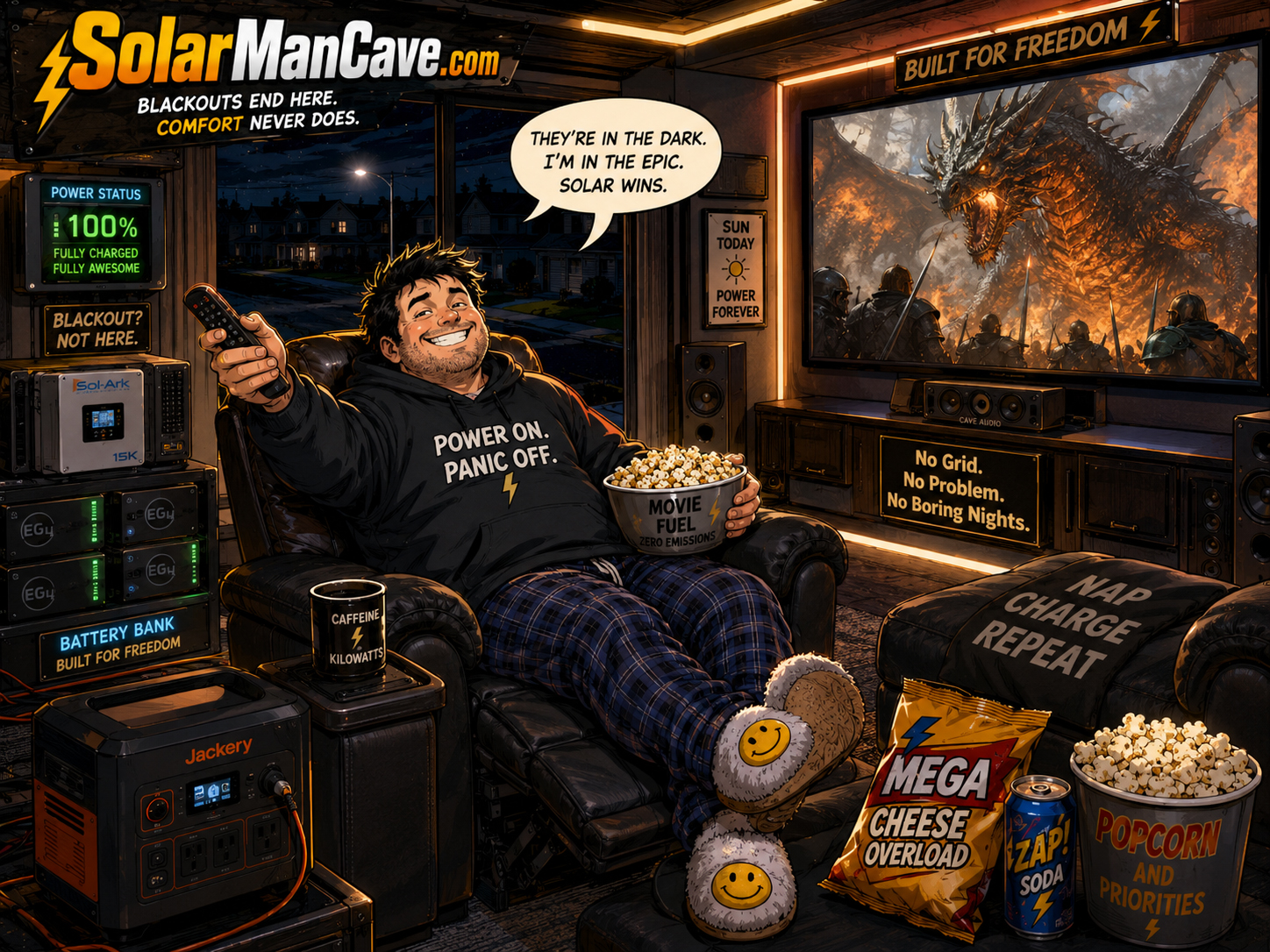
Movie Night Backup
Home theater loads turn runtime, lighting, audio, and comfort into a backup plan.
Open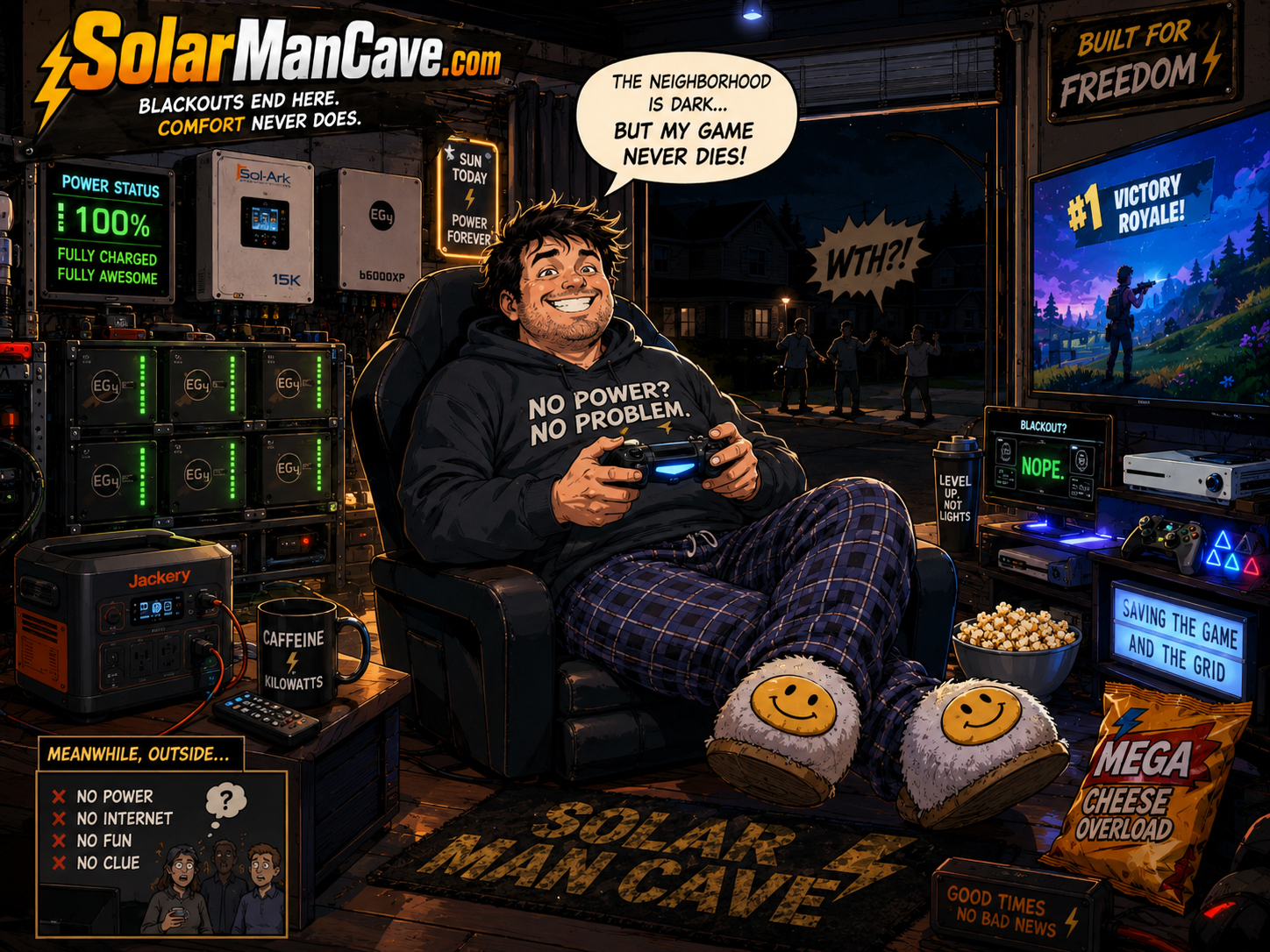
The game refuses to die
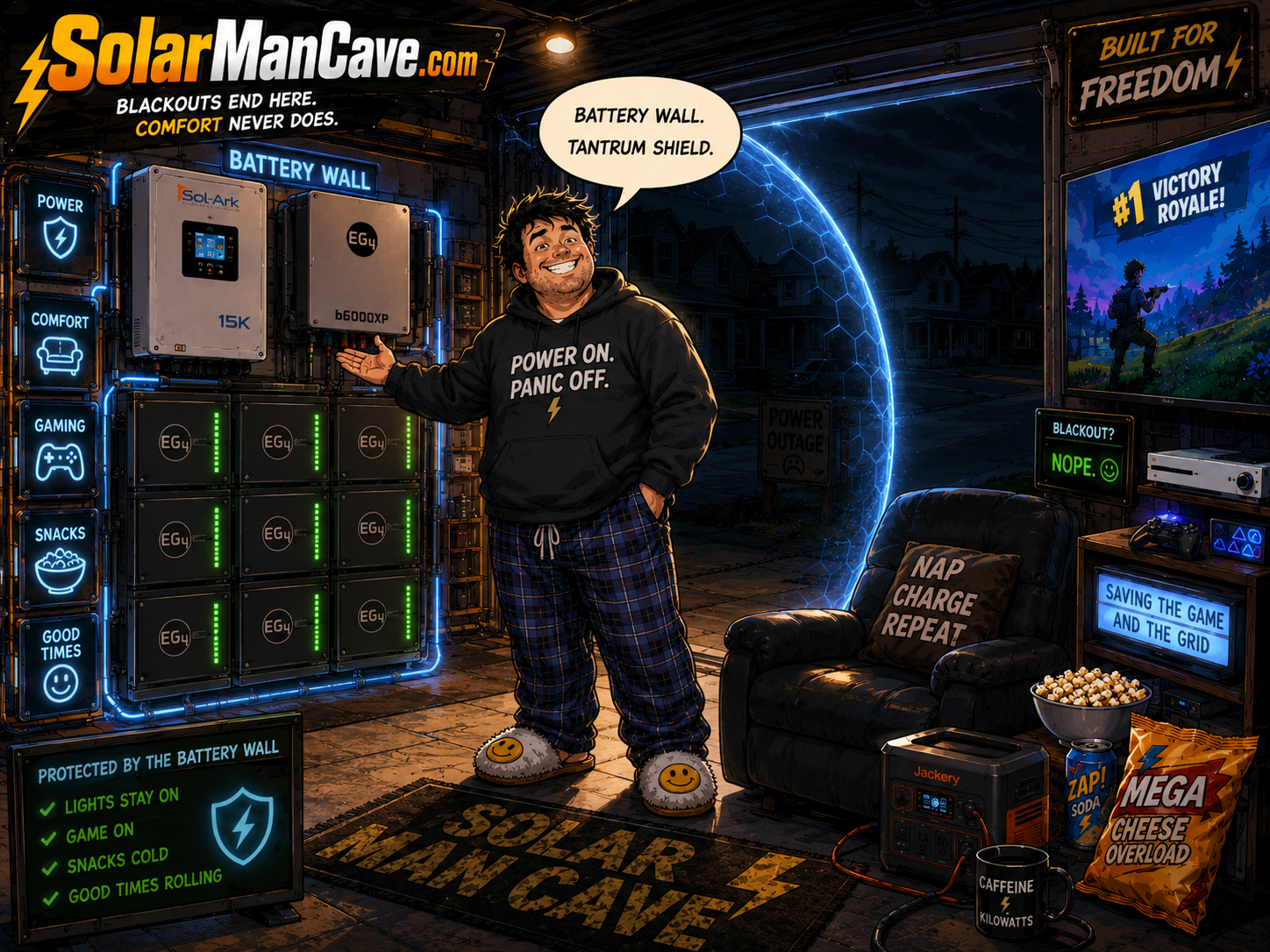
The street goes dark. The neighbors panic. The modem blinks. But inside the Solar Man Cave, the game room stays alive: screen glowing, Wi-Fi running, controller charged, snacks ready, and the battery wall quietly doing the real work.
Entertainment loads meet system design
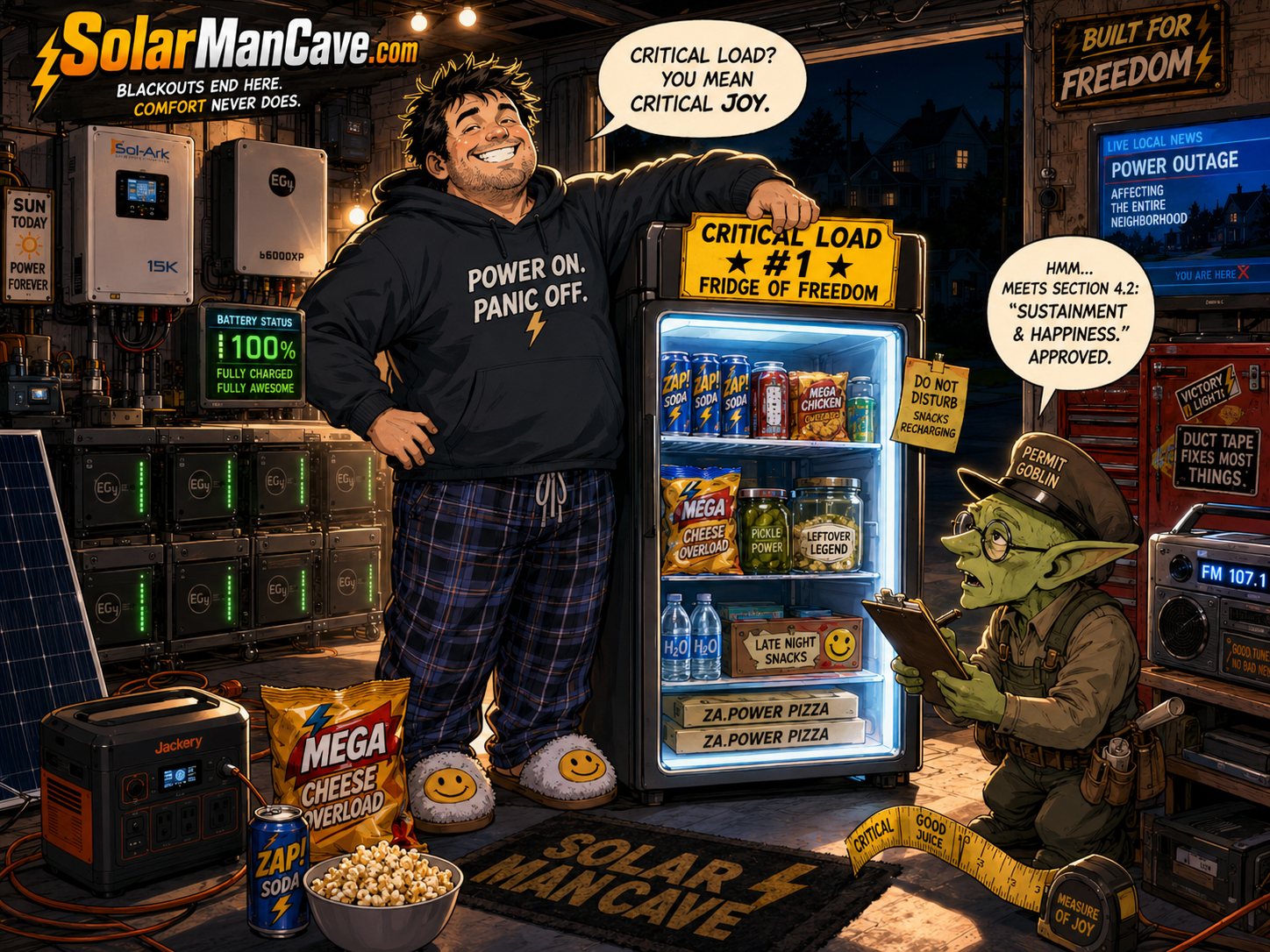
A gaming room is not usually the first thing people call a critical load. Refrigeration, lights, communications, medical equipment, pumps, and controls should come first. But Solar Man Cave exists because not every protected load is about survival. Some loads are about sanity, routine, and getting through a blackout without losing your mind.
The gaming room episode turns a simple joke into a useful design question: if the customer wants one entertainment room protected, what does that actually require?
“Keep the gaming room on” sounds simple, but the load list grows quickly. The room may include a television or monitor, game console, router, modem, network switch, sound system, lighting, device chargers, mini-fridge, fan, and maybe a computer.
A real battery design has to separate the fantasy from the load profile. The more equipment added to backup, the more battery capacity and inverter capability are required.
Technical version: calculate entertainment load draw, communications load, runtime target, inverter capacity, battery storage, and solar recharge.
Gamer version: the neighborhood is dark, but the final boss does not care.
The real protected-load lesson is communications. A game room without Wi-Fi becomes a different room quickly. During an outage, the modem, router, and network equipment may be more important than the entertainment system because they support communication, updates, work, and emergency information.
Solar Man Cave can use the gaming joke to explain that communications loads are often small but valuable. They should be named clearly in the protected-load plan.
The console is comfort. The network may be critical.
A battery-backed gaming room has to face the same enemy as every backup system: time. It is one thing to run the room for thirty minutes. It is another thing to run it through the evening, overnight, or through a multi-day outage.
That is why the gaming room is a good teaching page. It lets ABC Solar explain that battery backup is not just about turning something on. It is about how long it should stay on and what must be turned off if the outage continues.
A protected gaming room is not the same as backing up the entire house. That distinction should be clear. Solar Man Cave makes it easier to explain: you can protect one room, several critical circuits, or a larger portion of the home, but each choice affects cost, complexity, and runtime.
The gaming room is useful because it is specific. Specific rooms create specific load lists. Specific load lists create better designs.
A blackout-proof gaming room is funny, but it teaches a serious design rule: backup power starts with named loads and realistic runtime expectations.
The original Solar Man Cave tested real loads: solar panels, batteries, inverter equipment, a DC refrigerator, thermal systems, pumps, and fire-protection controls. The gaming room is the manga version of the same method.
Put the load in a room. Make it visible. Decide if it matters. Size the system honestly. That is the Solar Man Cave way.
More blackout-proof rooms
Each comfort room teaches a different backup lesson: runtime, load priority, communications, refrigeration, lighting, and battery limits.
ABC Solar Incorporated
Gaming, Wi-Fi, lights, refrigeration, tools, pumps, and controls all need a real load plan before they belong on battery backup.