Home Theater
Movie Night Backup
Solar Battery Runtime
When the grid quits, the epic continues
Home Theater Solar Backup
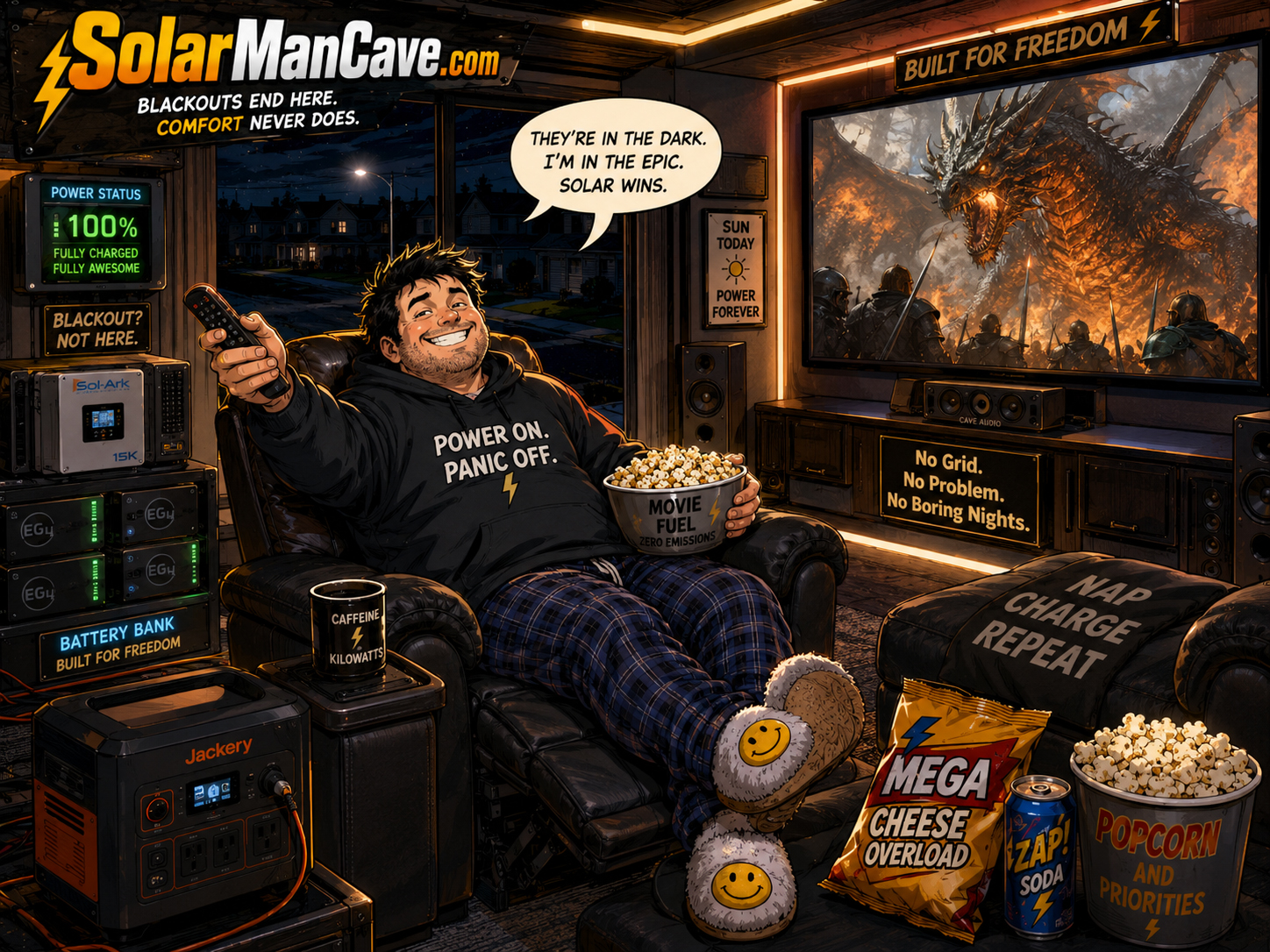
The blackout hits. The neighborhood goes silent. But inside the Solar Man Cave theater, the screen glows, the speakers boom, the popcorn survives, and the battery wall quietly proves that comfort loads still need real engineering.
Cinema meets protected loads
A home theater is not essential. Unless morale matters.
The Home Theater Solar Backup episode is classic Solar Man Cave: ridiculous on the surface, practical underneath. Nobody wants to say the movie room is “critical infrastructure.” But during a blackout, one powered room can change the entire household mood.
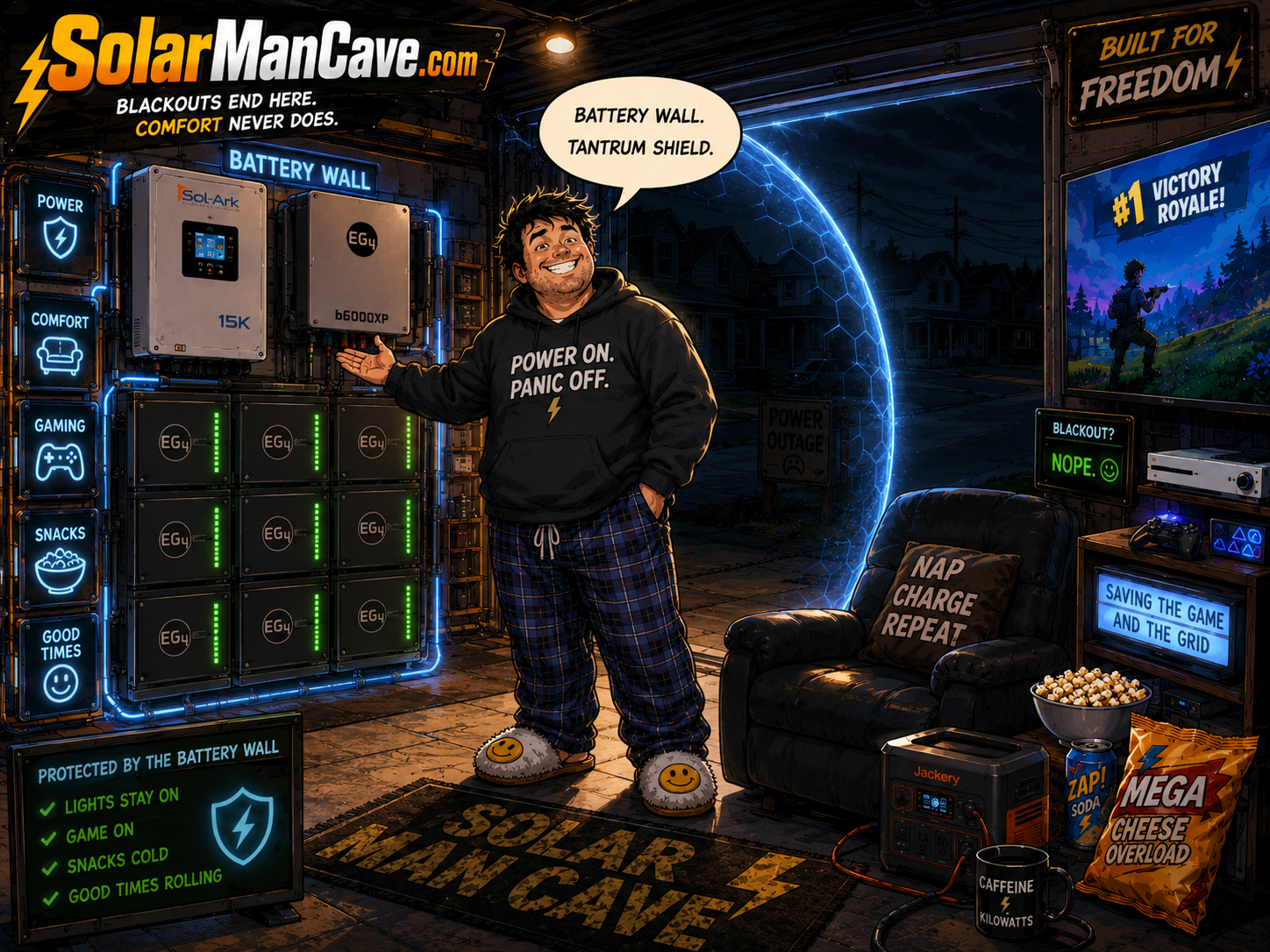
The page teaches a simple battery lesson. Comfort loads can be protected, but they must be named, measured, prioritized, and designed honestly. A theater room is not just “a TV.” It can include display equipment, speakers, receiver, lighting, streaming devices, router, popcorn machine, mini-fridge, recliners, and chargers.
The load list behind movie night.
A blackout-proof theater starts with the same question as every protected-load system: what needs to stay powered, and for how long?
- Large TV or projector.
- Streaming device, media player, or computer.
- Receiver, amplifier, and surround sound.
- Router and modem if streaming is expected.
- Room lighting and pathway lighting.
- Recliner controls, chargers, or small comfort devices.
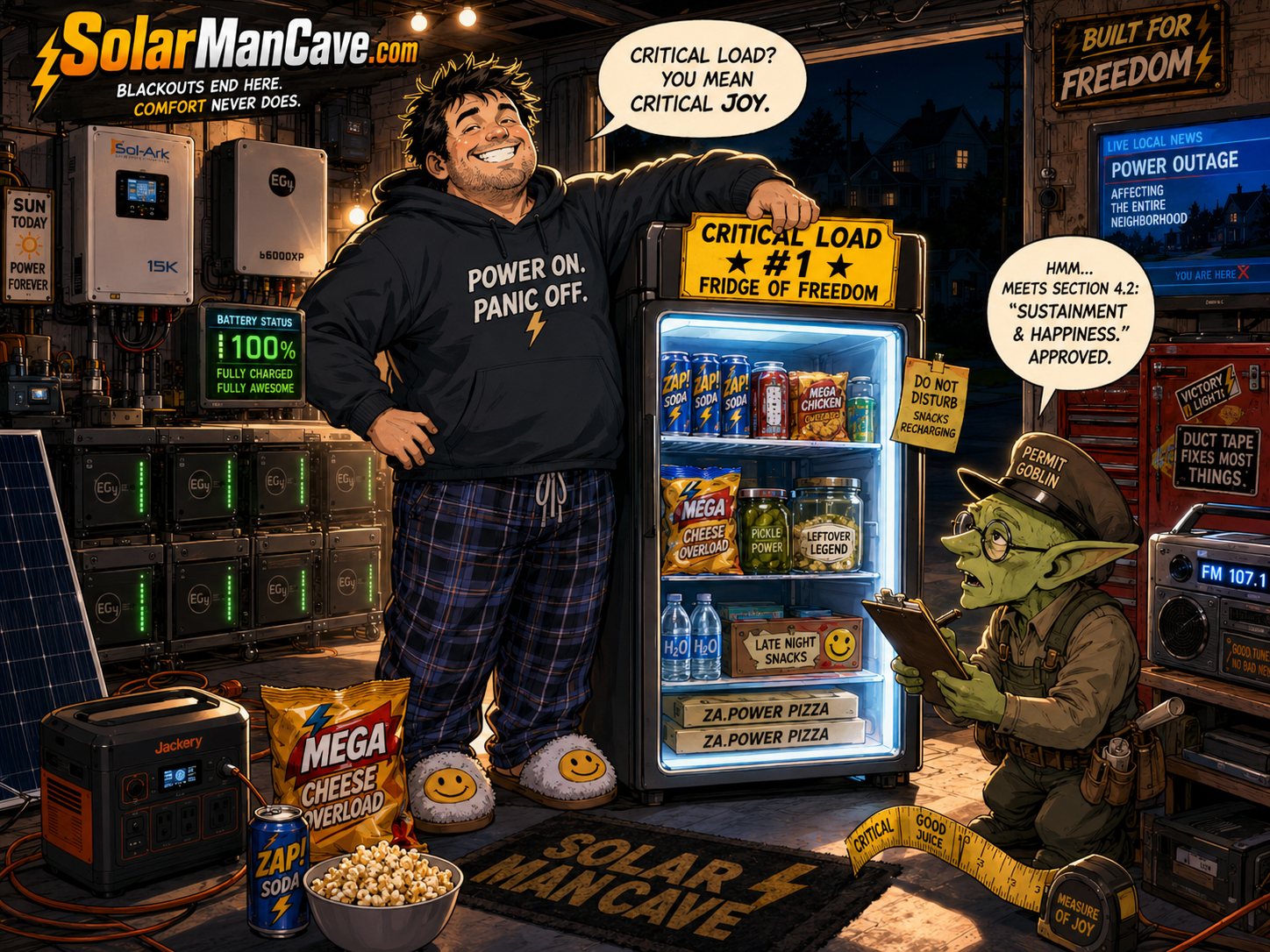
- Optional snack loads such as popcorn machine or mini-fridge.
Solar Man Cave translation
Technical version: entertainment load profile, protected circuits, inverter sizing, battery duration, and solar recharge.
Theater version: the dragon battle cannot end just because the grid got weak.
Audio can be sneakier than the screen.
Many people think only about the television or projector, but theater audio can become a meaningful load. Receivers, amplifiers, subwoofers, powered speakers, and media equipment all add up.
That does not mean a theater cannot be backed up. It means the load list needs to be honest. The battery system should be designed around the equipment actually used, not a vague idea of “keep the TV on.”
A home theater backup system starts with the movie room, but it must end with math.
Runtime is the real plot twist.
A battery-backed theater may work beautifully for a short outage. The real question is what happens when the outage lasts longer than one movie. Runtime is where comfort meets discipline.
If the battery is needed for refrigerator, lights, modem, pumps, controls, or medical equipment, the theater may need to step aside during longer outage conditions. Solar Man Cave can make that tradeoff understandable without making it boring.
- Short blackout: movie night may continue.
- Long blackout: reduce loads to essentials.
- Nighttime outage: the battery carries the room without solar recharge.
- Cloudy days: recharge may be limited.
- High entertainment loads: runtime drops faster.
Streaming depends on communication loads.
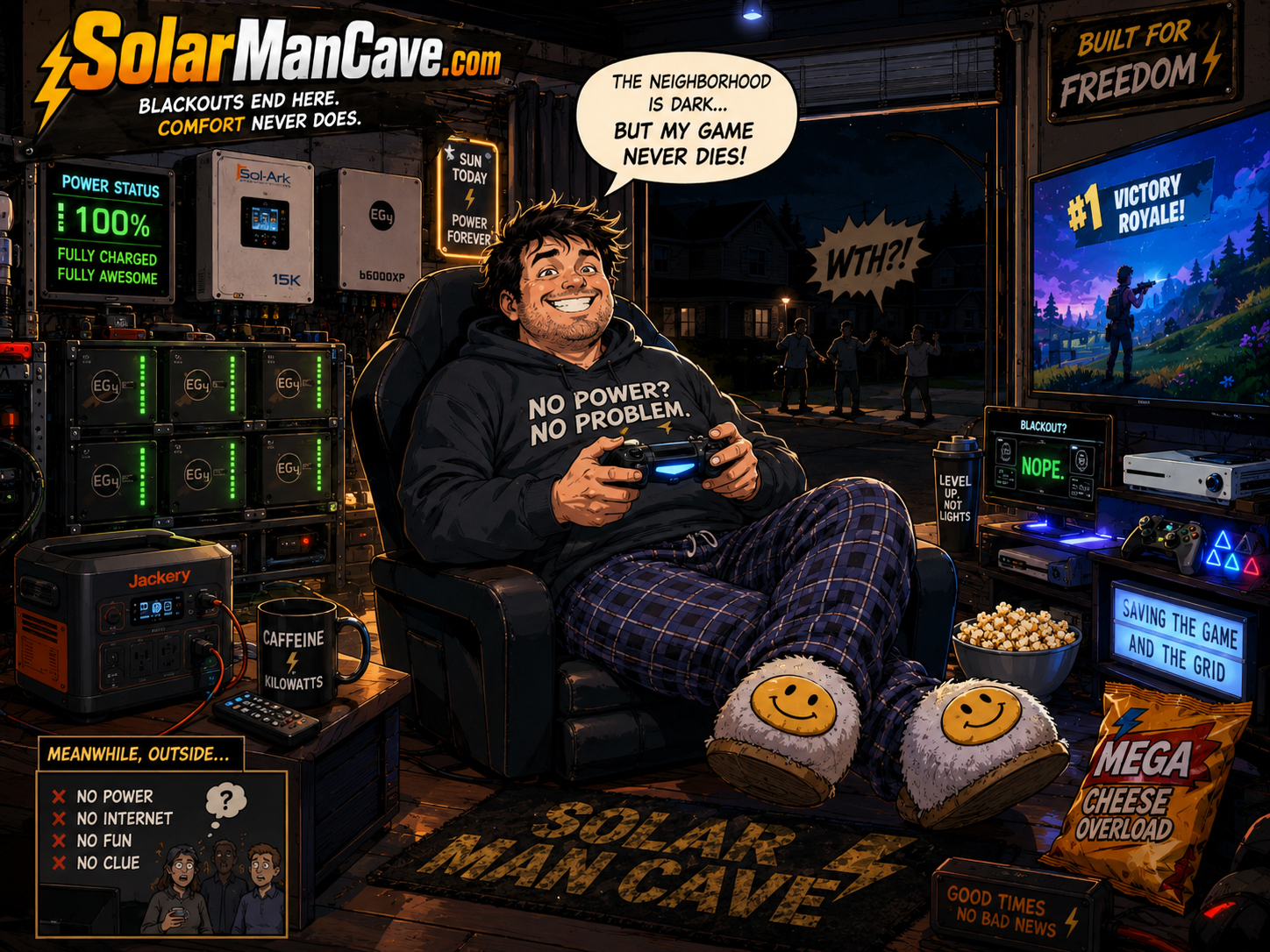
The theater page also explains an easy-to-miss point: streaming needs internet. A powered TV does not help much if the modem, router, and network equipment are not on backup too.
That makes the home theater a good doorway into communications backup. The same modem that supports movie night may also support emergency updates, work, voice-over-Wi-Fi, and household coordination.
The useful design question
Is the theater room a comfort backup zone, a communications zone, or both? The answer changes what belongs on the protected-load panel.
Why the theater belongs in Solar Man Cave.
The original Solar Man Cave was an 8' x 10' R&D shed where useful work was visible: panels, batteries, refrigeration, thermal storage, pumps, controls, and resilience. The home theater is the manga version of that same method.
Put the load in a room. Make the load visible. Decide how important it is. Size the system around the truth.
That is why this page works. The movie room is funny, but the design lesson is serious. Battery backup should not be sold as magic. It should be designed around named loads, real usage, and realistic runtime.
The page takeaway
A blackout-proof home theater is comedy, but it teaches a real battery rule: comfort loads are allowed, as long as they are honestly counted.
More blackout-proof comfort
The cave has more than one kind of entertainment load.
Gaming, theater, mini-fridge, and battery-wall pages all explain the same principle: name the loads before promising the backup.