Protecting the Man Cave
The garage only works if the battery wall is designed around real loads.
Open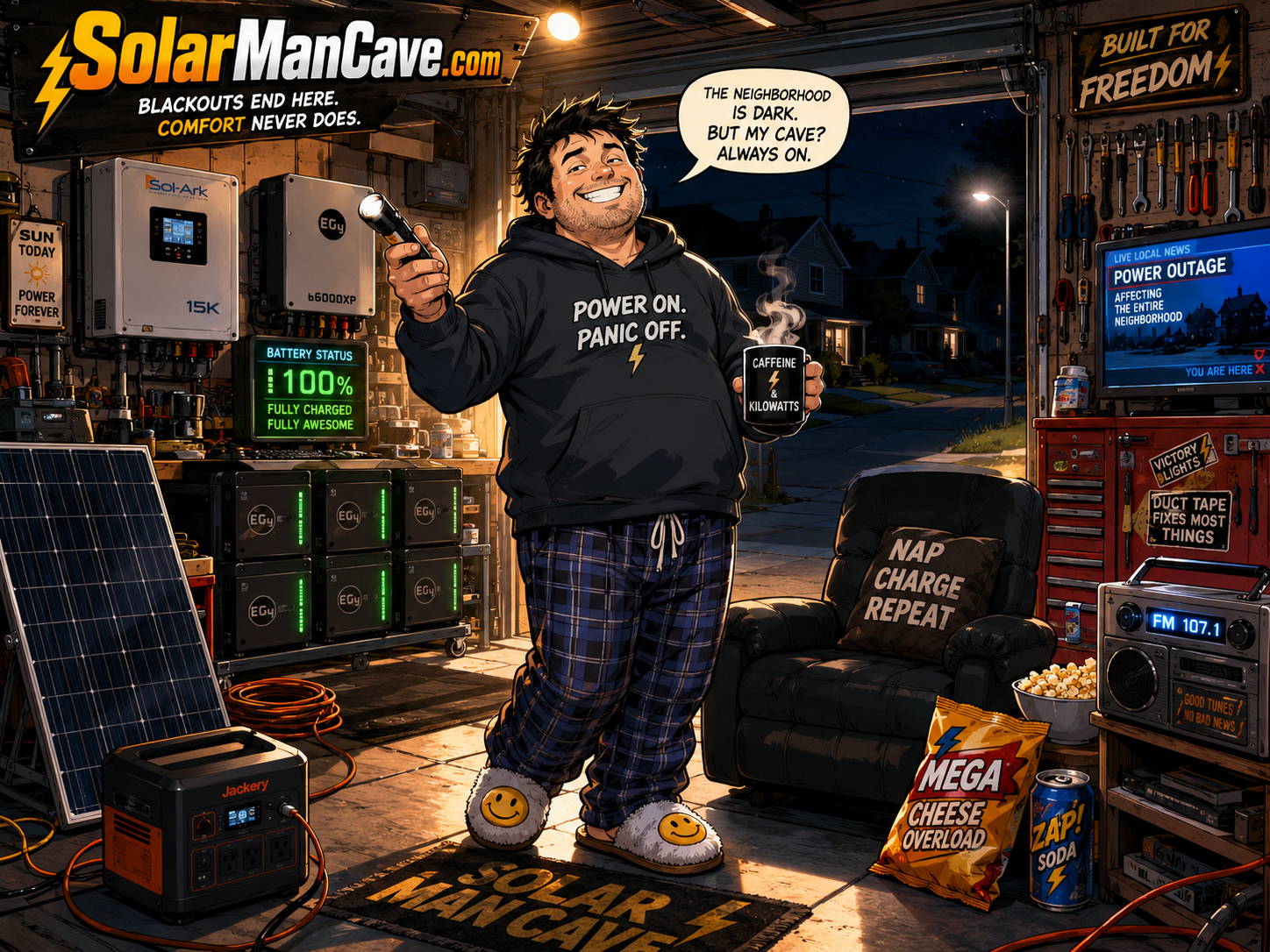
Where the tools stay awake
The house may be dark. The neighborhood may be confused. But the garage workshop is still glowing: lights on, chargers humming, tools ready, battery wall steady, and one man acting like his workbench is mission control.
Blackout-proof tools and task lighting
The Garage Solar Battery Workshop episode expands Solar Man Cave beyond the recliner. A garage can hold tools, chargers, work lights, battery equipment, communications gear, storage, and emergency supplies. When the power fails, the garage may become one of the most useful rooms in the house.
The joke is the man treating his garage like a command bunker. The real lesson is that garage loads deserve planning. Some are comfort loads. Some are work loads. Some may be emergency loads.
A garage is often where useful power lives. It may have the main electrical panel, subpanels, inverters, battery equipment, EV charging, tool chargers, freezers, garage-door openers, lighting, and storage. It may also be the first place a homeowner goes when something fails.
That makes the garage a natural Solar Man Cave page. It is funny because the workshop can become a private kingdom. It is serious because a powered garage can support work, safety, and recovery during an outage.
Technical version: identify garage circuits, tool loads, lighting loads, charger demand, inverter capacity, battery duration, and protected-load panel design.
Workshop version: keep the lights on, the tools charged, the door working, and the project alive.
A garage workshop may include loads that behave differently from entertainment equipment. Power tools, compressors, saws, pumps, chargers, and garage-door openers can have startup surges or short bursts of higher demand. That matters for inverter sizing.
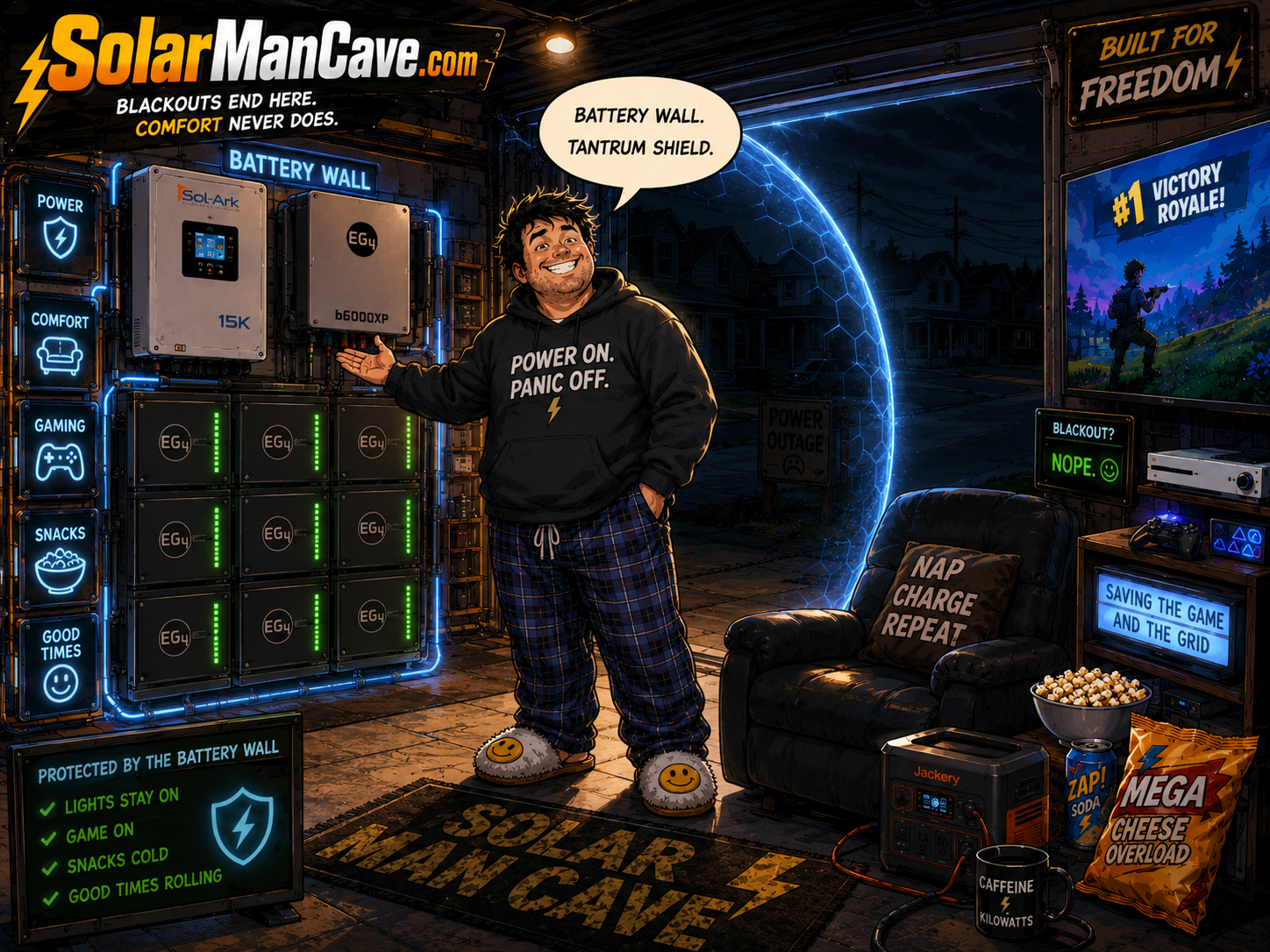
The Solar Man Cave battery wall should not be treated like magic. If the workshop is part of the backup plan, the design must consider the real behavior of the equipment.
A battery can protect a workshop only if the workshop tells the truth about its loads.
During a blackout, the garage may become more than a hobby space. It can be the place where batteries are checked, flashlights are found, pumps are controlled, tools are used, and emergency supplies are organized.
That is why the Solar Man Cave garage page belongs next to the fire-station control hub. Both pages ask the same question from different angles: what needs to work when the normal house is no longer normal?
Of course, this is Solar Man Cave. The garage workshop is not allowed to be purely serious. There is a recliner in the corner, a snack shelf, a radio, maybe a small TV, and definitely a proud owner who believes “organized tools” includes three different places to hide the remote.
That is the charm. The page can explain protected garage loads without losing the comedy. Tools and snacks can share a room. The design just has to know which one matters when the battery gets low.
A battery-backed garage workshop is not only a convenience. It can be a practical work zone during outages — if the loads are identified, sized, and prioritized correctly.
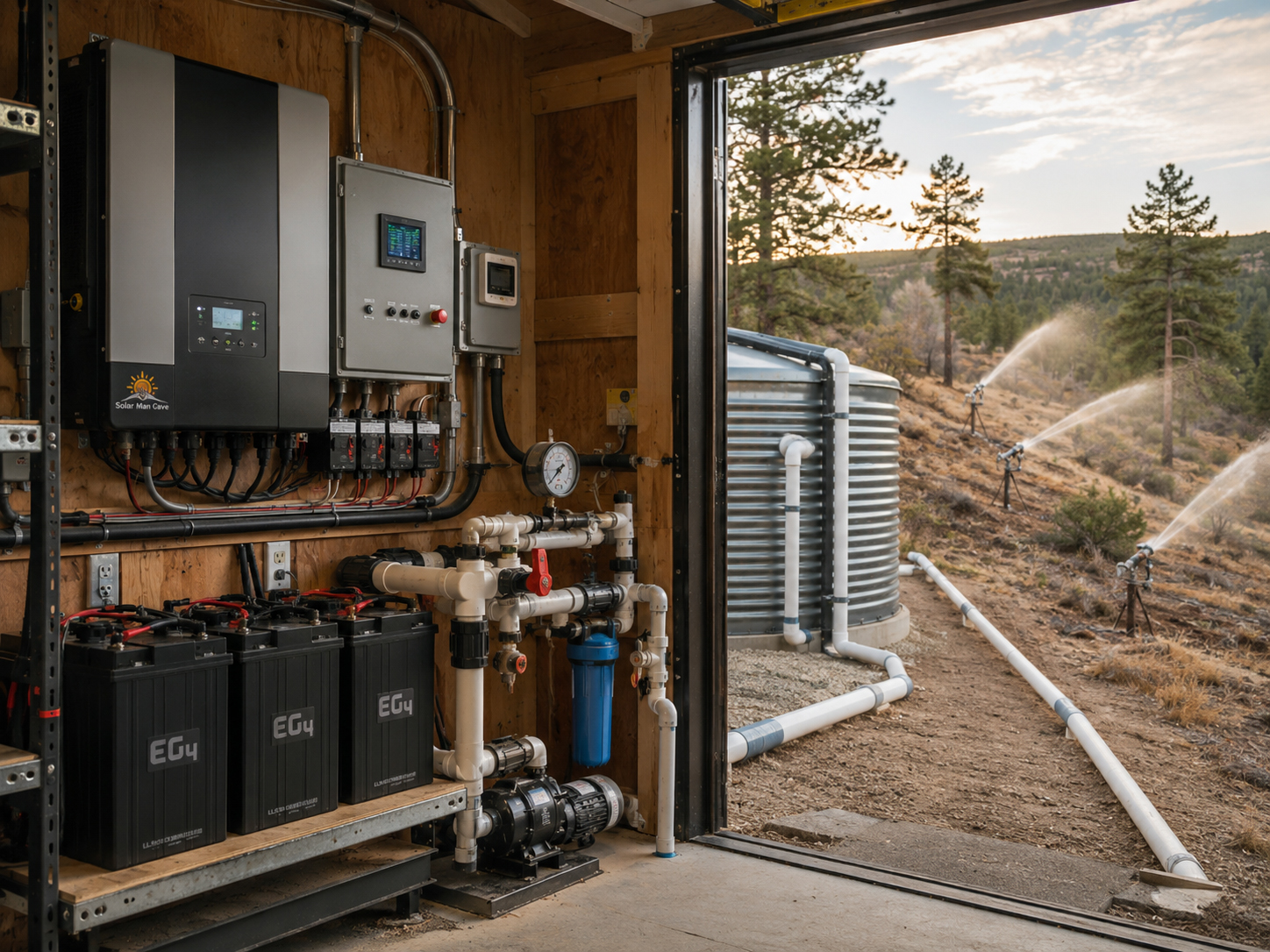
The original 8' x 10' Solar Man Cave was a small R&D shed filled with real hardware: solar panels, batteries, inverter equipment, a DC refrigerator, thermal systems, and off-grid fire-protection thinking.
The garage workshop is the modern cousin of that shed. It keeps the same spirit: practical equipment, visible energy, real loads, and a little too much pride in keeping the lights on.
More protected-load rooms
Solar Man Cave turns each room into a simple load-design story: what works, what matters, and how long it should stay on.
ABC Solar Incorporated
Garage lighting, tool chargers, freezers, doors, pumps, and control equipment all need honest sizing before they go on backup.